





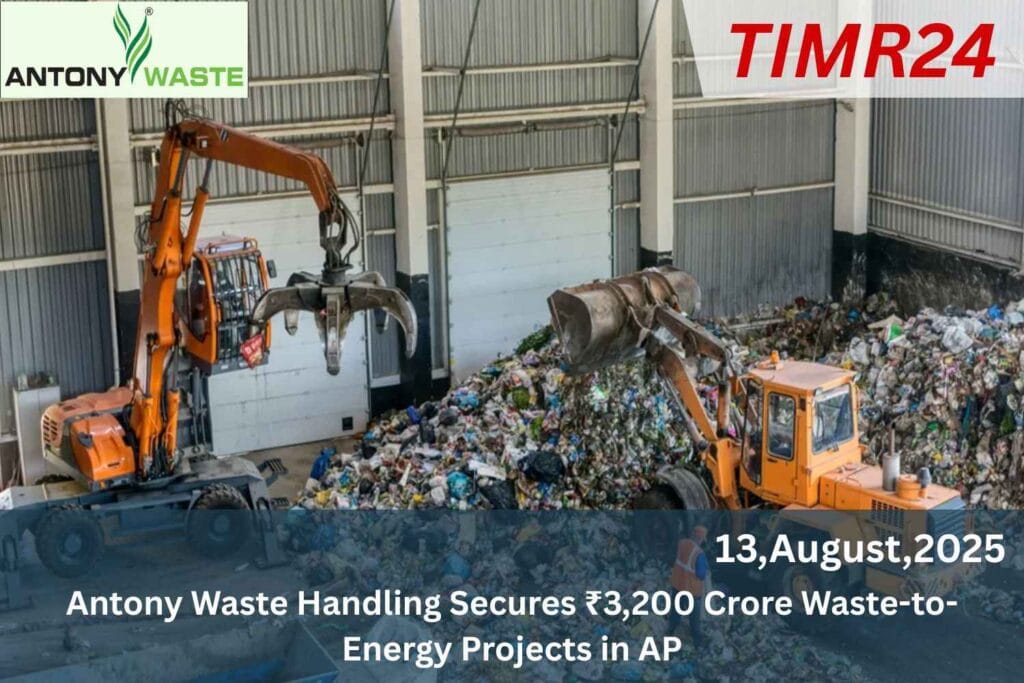
Antony Waste Handling Cell Limited (AWHCL) has been awarded two significant Waste-to-Energy (WTE) projects in Andhra Pradesh by the New & Renewable Energy Development Corporation of Andhra Pradesh Ltd. The projects, valued at approximately ₹3,200 crore, will have a construction period of around 24 months. The concession period will last 20 years, with the Andhra Pradesh Southern Power Distribution Company Limited purchasing the generated power at ₹8.10 per unit. The facilities will include an advanced Material Recovery Facility for processing mixed municipal solid waste before energy conversion. The projects will contribute to India’s renewable energy capacity targets and the Swachh Bharat Mission.
Antony Waste Handling, a leading player in waste management solutions, has announced a major milestone with the securing of ₹3,200 crore worth of waste-to-energy projects in Andhra Pradesh. This development marks a significant step toward integrating sustainable waste (Solar Power) disposal with renewable energy generation, helping the state tackle urban waste challenges effectively. Antony Waste Handling is known for its expertise in solid waste management, landfill operations, and advanced waste processing technologies The company has a track record of delivering high-quality municipal waste solutions across India. Its operations range from collection and transportation to scientific disposal, recycling, and now, large-scale energy production from waste.
Project Overview in Andhra Pradesh
The newly secured projects will focus on converting municipal solid waste into energy using advanced waste-to-energy (WtE) technology. Andhra Pradesh has been facing challenges in managing growing waste volumes, especially in urban areas. These WtE plants will not only reduce landfill dependency but also provide a cleaner source of power for local consumption.
Waste-to-energy technology plays a crucial role in tackling two critical environmental issues:
- Waste Reduction: By processing non-recyclable waste, these plants significantly reduce the waste sent to landfills. Energy Generation The process produces clean electricity, reducing reliance on fossil fuels.
- This aligns with India’s national renewable energy mission and Swachh Bharat Abhiyan goals, making it a win-win for the environment and the economy.
The ₹3,200 crore investment will generate employment, both during construction and in ongoing operations. Economically, it will reduce municipal waste management costs. Environmentally, it will help lower greenhouse gas emissions and promote circular economy principles, where waste is seen as a resource rather than a problem. The upcoming plants will use incineration-based WtE technology combined with emission control systems to ensure compliance with environmental norms. Modern sorting and segregation techniques will be applied to maximize efficiency and minimize harmful by products. The Andhra Pradesh government has been proactive in promoting clean energy projects. Supportive policies.
Incentives for renewable energy, and public-private partnership models have made it possible for companies like Antony Waste Handling to invest on such a large scale. Once operational, these waste-to-energy plants will set a benchmark for similar projects across India. The initiative could inspire other states to adopt WtE solutions, moving closer to India’s goal of achieving 500 GW of renewable energy capacity by 2030. The ₹3,200 crore waste-to-energy projects in Andhra Pradesh are not just about waste disposal (Antony Waste) they represent a paradigm shift toward a sustainable, energy-secure future. Antony Waste Handling’s commitment to innovation and environmental responsibility positions it as a key player in India’s green growth journey.
Q1. What is the value of Antony Waste Handling’s new projects in Andhra Pradesh?
The projects are worth ₹3,200 crore.
Q2. What type of projects has Antony Waste Handling secured?
They are waste-to-energy projects.
Q3. How will these projects benefit Andhra Pradesh?
They will improve waste management and generate renewable energy.
Q4. Is this part of India’s sustainability goals?
Yes, it aligns with national clean energy and waste reduction initiatives.
Q5. When are the projects expected to start?
Project timelines are yet to be officially announced.