













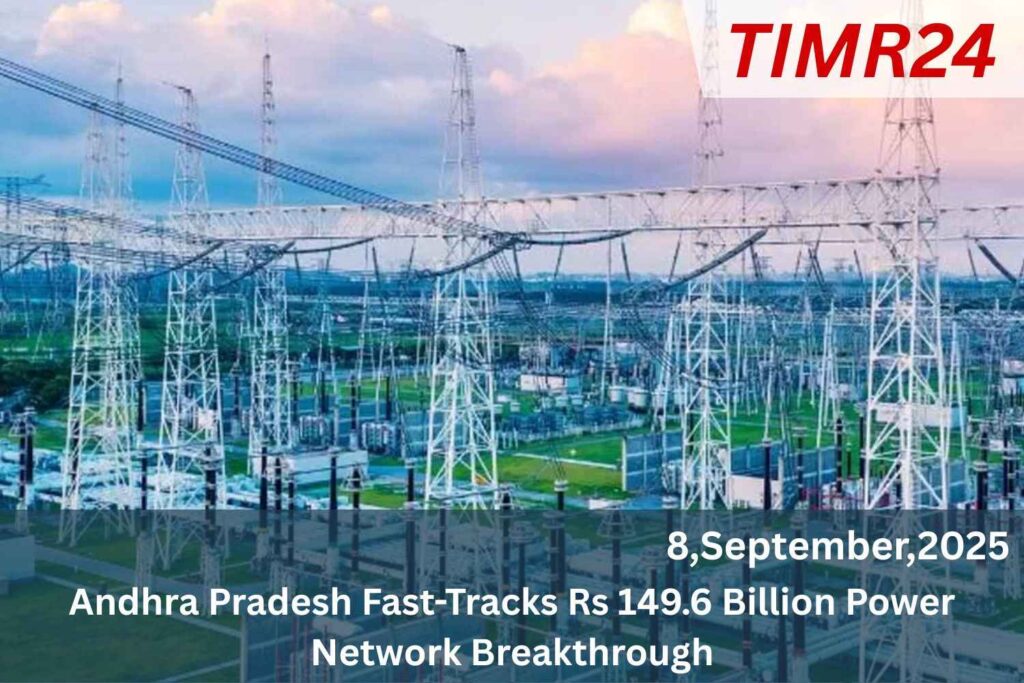
Andhra Pradesh Energy Minister Gottipati Ravi Kumar has announced a Rs 149.6 billion transmission network expansion to meet rising electricity demand. The state aims to complete Rs 60 billion worth of projects by 2027, with regular reviews to address implementation challenges. Priority will be given to port-linked infrastructure, industrial zones, and the capital region, while supporting aqua farmers and addressing state-wide tripping concerns. Plans are underway to supply 132 kV power to Machilipatnam Port and an extra-high tension line to Ramayapatnam Port. APTRANSCO is also advancing Battery Energy Storage Systems (BESS), with tariff-based bidding for a 2,000 MWh.
Project. Andhra Pradesh has taken a transformative step in the energy sector by fast-tracking a ₹149.6 billion power network project designed to modernize infrastructure, expand capacity, and ensure seamless access to electricity across urban and rural regions. The scale of this initiative makes it a landmark moment in the state’s journey toward becoming a robust energy hub, supporting industrialization, rural development, and renewable integration. The project is not just about laying down new power lines or upgrading substations; it represents a forward-looking vision of making energy both reliable and sustainable.
Building Modern Grid Infrastructure
At the core of this initiative lies the modernization of the transmission and distribution network. By adopting smart grid technologies and advanced monitoring systems, Andhra Pradesh is aligning with best practices followed in global power economies. These systems will help reduce energy theft, minimize line losses, and improve fault detection. This level of efficiency ensures that urban households, commercial establishments, and industries receive uninterrupted electricity. In many ways, it mirrors the efforts being made in other states, such as the upgrades undertaken by Maharashtra’s smart power projects, but with a sharper focus on renewable integration.
Readers interested in other large-scale infrastructure moves can look at how (Cabinet Clear) for metro, rail, and roads, showcasing a similar government intent of holistic growth. A significant portion of the project has been earmarked for strengthening rural access to power. Farmers in Andhra Pradesh have long faced challenges due to unreliable electricity for irrigation pumps, and this project aims to resolve those gaps. By expanding feeder lines, installing new distribution transformers, and reducing load shedding, rural households will see tangible benefits. The improved network will also enable small businesses and agro-industries to flourish. Initiatives like this resonate with.
Central schemes such as Sau Bhagya, which emphasized household-level electrification. In fact, the approach here is more comprehensive, ensuring not just electrification but also the quality and stability of supply. For readers tracking rural growth initiatives, the (NBCC) provides another perspective on how infrastructure can empower communities at the grassroots level Andhra Pradesh, with its vast coastal belt and sunny climate, has the potential to emerge as a renewable powerhouse. The current project acknowledges this by creating infrastructure that can integrate solar and wind power seamlessly into the grid. Smart grids and advanced substations will make it easier to.
Balance fluctuating renewable supply with demand. By taking this step, Andhra Pradesh is aligning with India’s national target of achieving 500 GW of renewable capacity by 2030. This move is also environmentally significant, as it reduces dependency on coal-based power. Linking renewable initiatives with robust transmission networks ensures that clean energy does not remain stranded due to lack of evacuation facilities. If one looks at other states making parallel moves, highlights how energy diversification is becoming central to India’s overall energy roadmap. Industries thrive on reliable power, and Andhra Pradesh’s push will directly support its manufacturing and IT.
Industrial Growth and Investment Potential
Sectors The state government is targeting new industrial corridors and export hubs, and dependable electricity is a non-negotiable requirement for such growth. By reducing downtime and power fluctuations, the state is sending a strong message to investors about its readiness for large-scale projects. In the long run, this initiative could position Andhra Pradesh alongside states like Gujarat, which has long benefited from its industrial power policy. Improved grid efficiency will also attract foreign investors seeking stable environments for manufacturing and logistics. The demonstrates how industrial infrastructure is tied closely with energy availability, and Andhra Pradesh’s project plays into this same logic of building confidence among investors.
Urban Infrastructure and Smart Cities
The project is not limited to rural or industrial needs; it also extends to modernizing supply in urban centers. With growing cities like Visakhapatnam and Vijayawada, electricity demand is on the rise due to commercial complexes, data centers, and housing expansions. Smart meters, underground cabling, and automation in distribution are being planned to match this demand. This aligns with India’s Smart Cities Mission, where reliable electricity is considered the backbone of sustainable urban development. Just as (MMRDA’s Metro) is redefining mobility in Mumbai, Andhra Pradesh’s power project will redefine the ease of living in its urban landscapes.
Energy infrastructure upgrades of this magnitude are also about aligning with long-term sustainability goals. Andhra Pradesh has committed to reducing transmission and distribution losses, which not only makes financial sense but also ensures energy efficiency. Additionally, by facilitating renewable energy, the state reduces its carbon footprint and positions itself as a responsible stakeholder in global climate action. Initiatives like these mirror efforts seen in where industrial and state players alike are prioritizing environmental responsibility alongside growth.
Policy Support and Governance
Strong governance has played a crucial role in accelerating this project. Streamlined approvals, central-state coordination, and partnerships with private firms are ensuring that delays are minimized. The focus is not just on implementation but also on maintenance, with provisions for capacity building and training of local workforce. The National Energy Policy framework supports such initiatives, and Andhra Pradesh is leveraging it fully to move ahead faster. Similarly, in road safety, the demonstrates how policy-led capacity building can transform infrastructure sectors The cumulative impact of this project is expected to be far-reaching. Improved power availability will boost industrial.
Output, enhance agricultural productivity, and improve living standards. Over time, these benefits will translate into higher GDP contributions from the state, stronger job creation, and improved social infrastructure. Reliable electricity also opens doors for digital education, healthcare, and e-governance, ensuring holistic development. Just as is unlocking regional connectivity and economic opportunities, Andhra Pradesh’s power project is set to unlock socio-economic potential through reliable energy access The ₹149.6 billion investment in Andhra Pradesh’s power network is more than just an infrastructure upgrade; it is a comprehensive strategy that addresses energy security.
Economic development, sustainability, and rural empowerment. By combining modern technology, renewable energy integration, and strong governance, the state has set a benchmark for other regions to follow. The successful implementation of this project will not only make Andhra Pradesh a leader in power reforms but also contribute significantly to India’s larger vision of sustainable growth and energy independence.
Q1. What is the total cost of Andhra Pradesh’s new power network project?
The project involves an investment of ₹149.6 billion.
Q2. How will this power network upgrade benefit the people of Andhra Pradesh?
It ensures reliable electricity, better rural access, and supports industrial growth.
Q3. Will renewable energy be part of this project?
Yes, the plan includes integrating solar and wind energy with smart grids.
Q4. When is the project expected to be completed?
Timelines will be phased, with major upgrades targeted within the next 5 years.
Q5. How does this initiative connect with India’s national energy goals?
It supports the broader vision of energy transition, sustainability, and reducing losses.