













IST - Tuesday, April 7, 2026 2:50 pm
Hot News

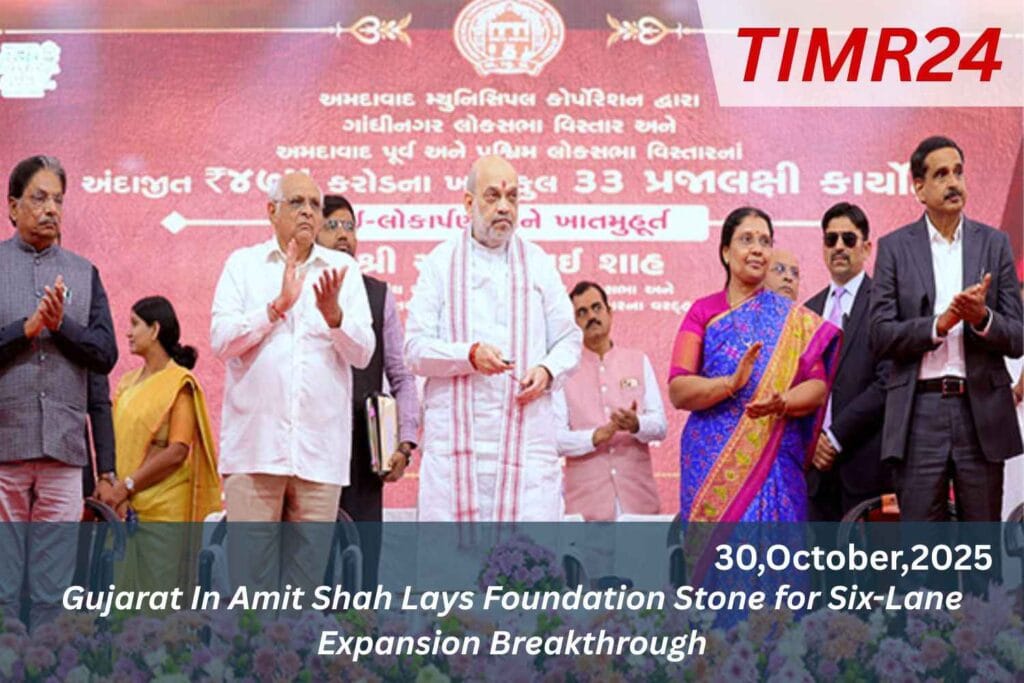
Gujarat In Amit Shah Lays Foundation Stone for Six-Lane Expansion Breakthrough

Soniya Gupta

Updated on:

Gujarat

Union Home Minister Amit Shah laid the foundation for the six-lane expansion of the Shantipura-Khoraj GIDC road in Gujarat on October 23, 2025. This Rs 8.05 billion project aims to alleviate traffic congestion in the industrial region of Sanand by widening a 28.8-kilometre section to accommodate an average daily vehicle count of 43,014. The plan includes service roads, flyovers, underpasses, and 13 bridge widenings, along with the construction or upgrading of 172 culverts. Once completed, the expansion will benefit key industrial hubs, enhance connectivity, reduce accidents, and save travel time for commuters. Shah and Chief Minister Bhupendra Patel also engaged with local citizens during the event.

Union Home Minister has laid the foundation stone for the six-lane expansion of the Sarkhej–Gandhinagar Chillida National Highway in Gujarat, marking a major milestone in India’s infrastructure development under the central government’s Bharatmala Pariyojana. This ambitious project is set to enhance road capacity, improve logistics efficiency, and stimulate industrial and regional (NHAI) growth in one of India’s fastest-developing states. The event signifies not just a road expansion, but a strategic step toward building a robust transport ecosystem aligned with the PM GatiShakti National Master Plan.

Strengthening Gujarat’s Infrastructure Network

The six-lane expansion project aims to decongest one of Gujarat’s busiest highway stretches, which links Ahmedabad and Gandhinagar two vital economic and administrative centers. Currently, the highway experiences heavy traffic from industrial, commercial, and passenger vehicles due to the continuous growth of industrial zones such as Sanand, Bechara, and Mehsana. Once completed, this project will significantly reduce travel time, improve road safety, and support seamless movement of goods across Gujarat and neighboring states The expansion aligns with India’s long-term infrastructure vision of connecting urban clusters through high-quality expressways. and national highways.

Role of Bharatmala Pariyojana in Road Development

The National Highways Authority of India (NHAI) has been at the forefront of executing such projects, ensuring sustainable designs, modern toll systems, and efficient connectivity The Bharatmala Pariyojana, launched by the Government of India, plays a crucial role in optimizing freight and passenger movement across the country. The Gujarat six-lane expansion forms part of this larger network, which aims to develop over 65,000 kilometers of highways nationwide. With the inclusion of this project, Gujarat further strengthens its contribution to India’s highway modernization plan Through Bharatmala, corridors like Delhi–Mumbai Expressway, Ahmedabad–Dholera Expressway, and Surat–Nashik.

Ahmednagar corridor have been planned to reduce logistic costs, encourage trade, and improve export competitiveness. The inclusion of the Sarkhej Gandhinagar stretch ensures better integration of Gujarat’s industrial belt with national and international trade routes During the foundation stone ceremony emphasized the government’s commitment to transforming Gujarat into an infrastructural powerhouse. He highlighted how the state’s development journey is closely tied to the vision of Prime Minister Narendra Modi, who as the former Chief Minister of Gujarat, laid the foundation for rapid industrialization Amit Shah stated that enhanced.

Connectivity will not only boost economic growth but also open new employment opportunities for youth and improve regional accessibility. The project complements other major infrastructure undertakings, including the Sabarmati Riverfront development, GIFT City expansion, and the Ahmedabad Mumbai Bullet Train project, all of which position Gujarat as a global investment destination The six-lane expansion will have a far-reaching impact on Gujarat’s economic and industrial landscape. With smoother transportation corridors, industries will benefit from reduced logistics costs and improved supply chain efficiency. The route will connect industrial clusters such as Sanand, Kalol, and Mehsana.

Which are home to major automobile and manufacturing units Moreover, the project will stimulate development of logistics parks, warehousing hubs, and service centers along the corridor. This will strengthen Gujarat’s position as a logistics hub, complementing the Dedicated Freight Corridor (DFC) and the Delhi–Mumbai Industrial Corridor (DMIC) projects. By improving multimodal (PM GatiShakti Group) connectivity, it will ensure that both exports and domestic goods move swiftly across markets.

Integration with PM GatiShakti Master Plan

Environmental impact The project will also incorporate advanced Intelligent Transport Systems (ITS) for traffic management, accident prevention, and real-time monitoring Improved road safety standards are central to this expansion. The new design includes better drainage systems, pedestrian zones, and well-marked service roads to minimize accidents. These measures support the government’s goal under the National Road Safety Policy, ensuring that infrastructure growth goes hand in hand with public safety The project aligns with the PM GatiShakti National Master Plan, which integrates transport infrastructure across rail, road, air, and waterways.

Under this plan, the Gujarat highway expansion will act as a key link connecting industrial corridors, ports, and airports. For instance, it will facilitate smoother connectivity to Mundra Port, Pipavav Port, and the Dholera Special Investment Region (SIR) Through this integration, the government aims to boost economic efficiency by ensuring faster goods movement and reducing travel time by up to 30%. The project also complements the National Logistics Policy, which focuses on reducing overall logistics costs from 13% of GDP to below 8%—a significant step toward making India globally competitive Apart from industrial benefits, the six-lane expansion is expected to give a strong push to.

Tourism and regional development. The corridor connects cultural and historical landmarks such as Akshardham Temple, Sabarmati Ashram, and Adalaj Stepwell, which attract tourists from across India and abroad. Improved accessibility will help boost hospitality, local crafts, and tourism-related employment The highway will also enhance rural connectivity by linking smaller towns and villages to major cities, ensuring equitable growth. This will promote local markets and improve access to education, healthcare, and employment opportunities for semi-urban and rural populations India has witnessed unprecedented growth in infrastructure.

Spending over the past decade. According to the Union Budget, capital investment outlay for 2025–26 stands at record levels, with special emphasis on highways, railways, and renewable energy. The Gujarat expansion project adds to this momentum by contributing to regional and national growth The government’s focus remains on building resilient and inclusive infrastructure, where projects are not only built faster but also maintained with global standards. The use of digital technologies such as Drone Monitoring, BIM (Building Information Modelling), and GIS-based planning ensures transparency and accountability in execution.

The six-lane expansion of the Sarkhej–Gandhinagar Chiloda corridor represents a vision of modern India fast, sustainable, and connected. Once operational, it will stand as a symbol of Gujarat’s continued progress and India’s commitment to infrastructure excellence. The project will also inspire similar developments across other states under Bharatmala and GatiShakti, accelerating India’s journey toward becoming a $5-trillion economy For more information on India’s road infrastructure development like this not only connect cities but also connect aspirations paving the way for an economically stronger and more connected India.

Q1. What is the purpose of the six-lane highway expansion in Gujarat?
A1. The project aims to enhance road capacity, reduce travel time, and promote trade efficiency across Gujarat’s industrial corridors.

Q2. Which cities will benefit most from this project?
A2. Ahmedabad, Gandhinagar, and Vadodara will benefit significantly due to improved connectivity and logistics networks.

Q3. Under which government scheme is this project developed?
A3. It’s part of the Bharatmala Pariyojana, India’s national road and highway development initiative.

Q4. Who inaugurated the project and when?
A4. The foundation stone was laid by Union Home Minister Amit Shah to boost Gujarat’s transport infrastructure.

Q5. How will this expansion help the economy?
A5. It will boost trade, generate employment, and reduce logistics costs, supporting Gujarat’s long-term economic growth.