















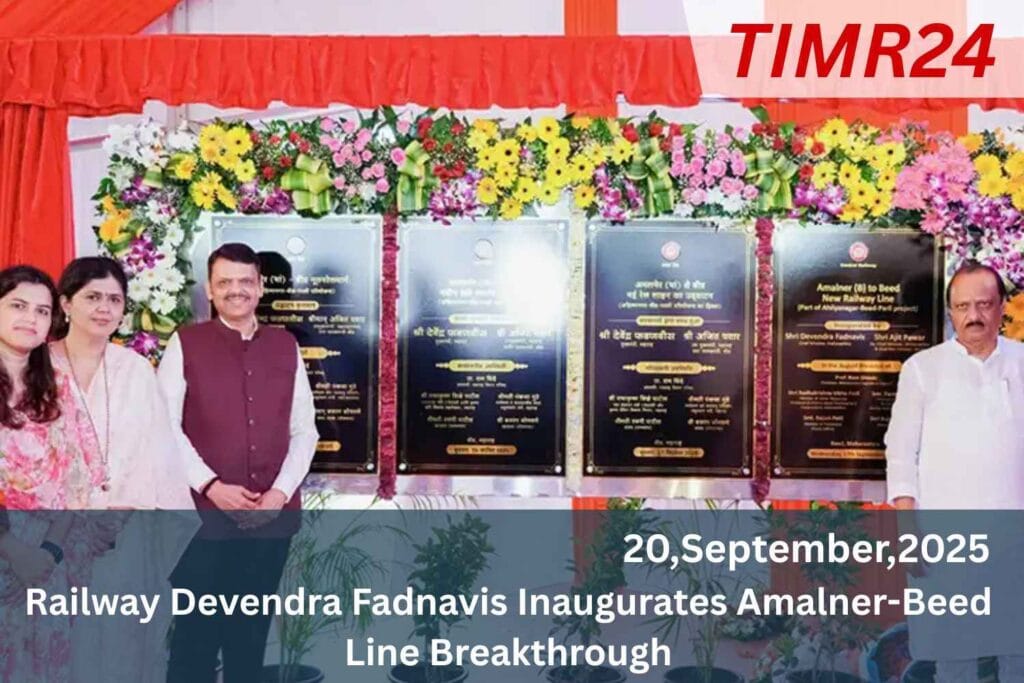
Maharashtra Chief Minister Devendra Fadnavis inaugurated the Amalner-Beed railway line at Beed, overcoming challenges like land acquisition and funding. The project, supported by leaders and officials, promises prosperity and a brighter future for Marathwada. The inauguration of the Amalner-Beed railway line by Maharashtra Chief Minister Devendra Fadnavis marks a transformative moment for the state’s transportation and regional development landscape. This new rail corridor, spanning roughly 150 kilometres, connects Amalner in Jalgaon district with Beed, enhancing connectivity in the interior regions of Maharashtra. The project is a significant part of.
The state government’s broader vision to improve infrastructure, stimulate economic growth, and ensure equitable access to urban centers for semi-urban and rural communities Prior to the inauguration, travel between Amalner and Beed required long road journeys over winding highways, often taking several hours. The new railway line drastically reduces travel time and provides residents with a safer, faster, and more reliable alternative. For students, professionals, and daily commuters, the line opens up new opportunities for education, employment, and social engagement. Local businesses stand to benefit as well, as the line enables smoother and more cost-effective.
Transport of goods to major markets in cities such as Mumbai, Pune, and Nagpur. This development is poised to stimulate trade, particularly in agricultural products and small-scale industries, by connecting producers in rural areas directly to urban consumers and industrial centers During the inauguration ceremony, CM Devendra Fadnavis highlighted the importance of infrastructure in empowering communities and facilitating inclusive growth. He emphasized that the Amalner-Beed line is not merely a transport project but a catalyst for regional development. By creating better access to markets, healthcare, and educational institutions, the railway line strengthens.
Social and economic ties across districts. Moreover, the project demonstrates the government’s commitment to employing modern engineering and sustainable practices, including environmentally conscious construction methods and plans for electrification, which align with Indian Railways’ green initiatives. For further insights on modernization efforts, the (Indian Railways) provides detailed project information The route of the railway line passes through several towns and semi-urban areas that previously had limited connectivity. Villages and small towns along the track now have direct access to larger urban centers, enhancing mobility for people and goods.
This infrastructure boost also plays a key role in regional tourism development. Beed and surrounding districts, rich in historical, cultural, and religious significance, are expected to see an increase in tourist arrivals, which will benefit local hospitality, retail, and service sectors. The improved accessibility can also help preserve local culture by bringing attention and resources to heritage sites and promoting responsible tourism practices From a technical standpoint, the Amalner-Beed line incorporates modern railway technologies to ensure operational efficiency and passenger safety. Electrified tracks, smart signaling systems, and upgraded stations provide the foundation for faster.
Safer trains, and accommodate increased traffic over time. The integration of these advanced systems ensures that the railway line meets contemporary standards, supporting both passenger and freight operations. Freight services on this line are expected to enhance the supply chain efficiency for agricultural produce, industrial goods, and local handicrafts, providing a lifeline to businesses seeking to expand their markets The railway line is also strategically important for Maharashtra’s broader connectivity network. It strengthens links between the northern and central regions of the state, contributing to a more integrated transportation system. By connecting to larger rail hubs.
Passengers can seamlessly travel to major metropolitan centers, and freight operators can move goods efficiently across the state and beyond. Such connectivity enhances regional economic competitiveness, attracting investment and encouraging industrial growth. For more information on Maharashtra’s rail development initiatives, you can refer to In addition to economic and logistical benefits, the Amalner-Beed railway line contributes to social development. Easier access to cities allows residents to avail better healthcare facilities, educational institutions, and employment opportunities. This is particularly impactful for women, students, and marginalized communities who face mobility.
Challenges. By bridging the gap between rural and urban areas, the railway line fosters a more equitable distribution of resources and opportunities. Moreover, the creation of jobs during the construction phase and subsequent operational requirements provides a direct boost to local employment CM Fadnavis also underscored the environmental benefits of rail transport compared to road transport. With electrified trains and energy-efficient operations, railways reduce carbon emissions and traffic congestion on highways, contributing to sustainable development goals. As India moves toward cleaner and more sustainable transportation options, projects like.
The Amalner-Beed line play a critical role in reducing the environmental footprint of regional mobility. Reports from highlight similar infrastructure initiatives that prioritize sustainability while promoting economic growth The Amalner-Beed railway line is expected to become a model for other regional rail projects in Maharashtra and across India. It demonstrates how thoughtful planning, government investment, and modern technology can converge to deliver infrastructure that serves multiple purposes: improving connectivity, boosting the economy, fostering tourism, and supporting sustainable development. The line also acts as a catalyst for other developmental projects, such as.
Road improvements, urban planning around stations, and enhanced logistical networks that complement the rail system Communities along the railway route have already expressed optimism about the opportunities this new link provides. Small business owners, farmers, students, and daily commuters anticipate a significant improvement in quality of life. The availability of affordable and reliable rail travel encourages greater interaction between urban and rural populations, fostering knowledge exchange, cultural integration, and socio-economic mobility. The railway line thus not only connects destinations but also connects people, ideas, and opportunities, strengthening the social fabric of the region.
Looking ahead, the Amalner-Beed railway line sets the stage for further infrastructure expansions in Maharashtra. Plans for additional lines, increased frequency of trains, and integration with regional transport hubs are already being discussed. These initiatives aim to create a comprehensive transportation network that balances urban growth with rural development. Internal connectivity improvements like this line also complement national transportation projects, ensuring Maharashtra remains competitive in trade, tourism, and industrial growth. For continuous updates on infrastructure projects across Maharashtra, the (Indian Railways) provides official information and announcements.
In conclusion, the inauguration of the Amalner-Beed railway line by Devendra Fadnavis is more than a ceremonial event it represents a multi-dimensional step toward progress in Maharashtra. By improving connectivity, promoting trade, enhancing tourism, supporting sustainable transport, and empowering local communities, the railway line embodies the transformative potential of strategic infrastructure investment. This development underscores the role of thoughtful governance, planning, and modern engineering in bridging regional disparities and creating a foundation for sustained growth in Maharashtra’s interior regions. With this milestone, the Amalner-Beed railway.
Q1 Who inaugurated the Amalner-Beed railway line?
Maharashtra CM Devendra Fadnavis officially inaugurated the Amalner-Beed railway line in August 2025.
Q2 How long is the Amalner-Beed railway line?
The railway line spans approximately 150 km, connecting Jalgaon district’s Amalner town with Beed.
Q3 What is the purpose of this railway line?
It aims to improve passenger connectivity, facilitate freight movement, boost trade, and support regional development.
Q4 Will the railway line support freight transport?
Yes, the line is designed for both passenger and freight trains, promoting agricultural and industrial trade.
Q5 How will this line impact local communities?
Improved connectivity will enhance access to urban markets, healthcare, education, and tourism, benefiting local residents.