











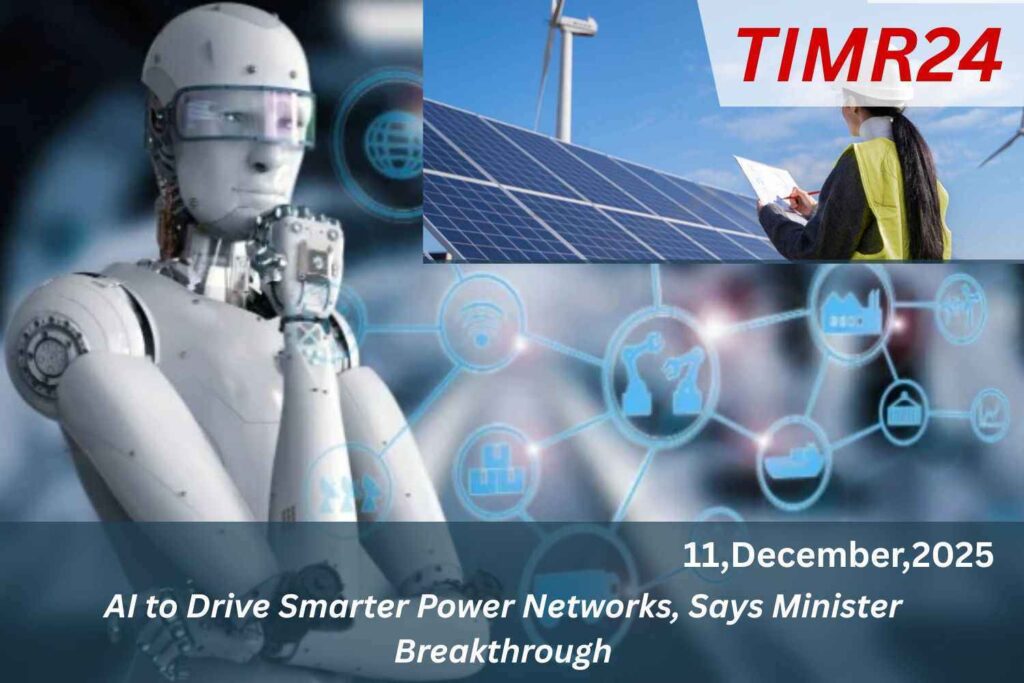
Artificial Intelligence (AI) and Machine Learning (ML) are set to revolutionize power distribution networks, as stated by Power Minister Manohar Lal at a national conference. He emphasized improvements in consumer experience and operational efficiency through solutions like meter analytics and automated outage predictions. The conference showcased participation from various sectors, and the ministry reiterated its commitment to digitalization and scalability of innovative solutions. Notable winners from the innovation call included discoms from Tamil Nadu and Madhya Pradesh, as well as Tata Power among others. Lal also launched STELLAR for long.
Driving Smarter And Efficient Power
Term load resilience and urged collaboration among stakeholders (India) for a transition to smarter systems India’s energy sector is undergoing a transformative shift as the Minister emphasizes the central role of Artificial Intelligence in driving and more efficient power networks across the country. The announcement reflects a strategic direction where AI becomes the backbone of modern utility management, enabling faster decision-making, reduced outages, and a more resilient grid capable of supporting India’s rapidly growing demand. In recent years, the evolution of digital technologies within the power sector has been gradual, but the Minister’s.
Remarks have accelerated a national-level conversation about how, automation, IoT sensors, and real-time data analytics can form a next-generation grid that not only meets today’s needs but also prepares for the renewable-heavy future India is moving toward. As the government envisions a technology-driven power ecosystem, this shift aligns perfectly with ongoing initiatives such as the Smart Meter Mission and the National Smart Grid Mission, both of which are laying essential digital foundations The Minister highlighted that AI would enhance grid stability by predicting fluctuations and preventing outages before they occur. This is crucial in a country where power disruptions still affect millions.
Invaluable Tool For Decision Makers
Especially in fast-growing urban zones and remote rural regions. AI’s ability to process massive datasets from across the grid transformer health, substation load, consumer consumption patterns, and renewable energy feed-in makes it an invaluable tool for decision-makers and power utilities. By integrating AI models that can forecast peak loads hours or even days in advance, utilities can better allocate electricity, reduce losses, and prevent equipment burnout The shift towards intelligent load distribution is particularly significant as India continues to add more renewable energy sources like solar and wind, which are inherently variable and require constant.
Balancing The Minister further stressed that would play an essential role in managing renewable energy integration, a priority for India as it expands its clean energy footprint globally. AI-driven forecasting tools can analyze weather patterns, solar irradiance, and wind flows to predict renewable generation with high accuracy. This helps grid operators schedule backups and stabilize voltage, preventing grid collapse during sudden dips in output. For instance, a cloudy day or low wind speed can dramatically reduce renewable supply, but with AI-based predictions, utilities can pre-adjust and maintain seamless electricity for consumers.
Analyze Consumer Demand
The government’s focus on achieving large-scale renewable expansion is deeply connected to digital transformation efforts AI will revolutionize consumer services by providing real-time alerts, faster grievance redressal, This shift empowers households and industries to take greater control over their energy usage, contributing to nationwide conservation efforts. The Minister explained that AI-powered dashboards will allow utilities to visualize grid stress points, analyze consumer demand, and respond immediately through automated switching and load shedding mechanisms that avoid full blackouts.
Moreover is set to redefine predictive maintenance, replacing traditional manual inspections with continuous monitoring through IoT sensors and machine learning models. Transformers, cables, and substations will be equipped with devices that report temperature, vibration, voltage, and equipment wear, enabling repairs before failures occur. This approach extends the lifespan of critical infrastructure and lowers operational costs for power utilities. The Minister underscored that digital twins virtual replicas of physical assets will soon be deployed to simulate grid behavior, identify vulnerabilities, and test emergency responses.
AI Adoption Indian Startups Specializing
Such innovations are not just futuristic ideas they are already being implemented in advanced countries, with resources available through global organizations like the International Energy Agency. As India adopts these innovations, the power sector will become far more efficient, transparent, and scalable The Minister also spoke about the importance of collaboration between public (Solar) institutions, private companies, and global technology partners to accelerate adoption. Indian startups specializing in machine learning, automation, and smart energy solutions are being encouraged to participate in national-level projects.
Research institutions are working closely with the government to develop indigenous models tailored to India’s unique energy challenges. Initiatives like the ones highlighted by NITI Aayog and the Ministry of Power provide guidance for establishing a multi-layered digital infrastructure capable of supporting millions of smart energy devices. As investments continue flowing into grid modernization, India’s power sector will become a hub for innovative solutions that can set global benchmarks Finally, the Minister emphasized that driven power reforms are not only technological upgrades but also essential steps toward meeting India’s climate commitments and sustainable development goals.
Intelligent Grid Operations
A grid reduces carbon emissions by optimizing renewable usage and minimizing wastage. With rising electricity demand, electrification of mobility, and the integration of rooftop solar systems across urban India, the need for intelligent grid operations is more urgent than ever stands at the center of this transformation, offering precision, speed, and predictive power that manual systems cannot match. India’s journey toward an powered energy future promises not just improved infrastructure but also a cleaner, more reliable, and consumer-friendly electricity ecosystem for decades to come.
Q1. How will AI improve India’s power networks?
AI will optimize load management, reduce outages, and enable predictive maintenance.
Q2. Will help with renewable energy integration?
Yes, AI can forecast solar/wind output and stabilize the grid.
Q3. What technologies will be used?
IoT sensors, automation, machine learning, digital twins, and smart meters.
Q4. How will consumers benefit?
They will get faster restoration, accurate billing, and stable electricity.
Q5. Is India investing in smart grid R&D?
Yes, government agencies and private companies are collaborating to scale smart-grid technologies.