













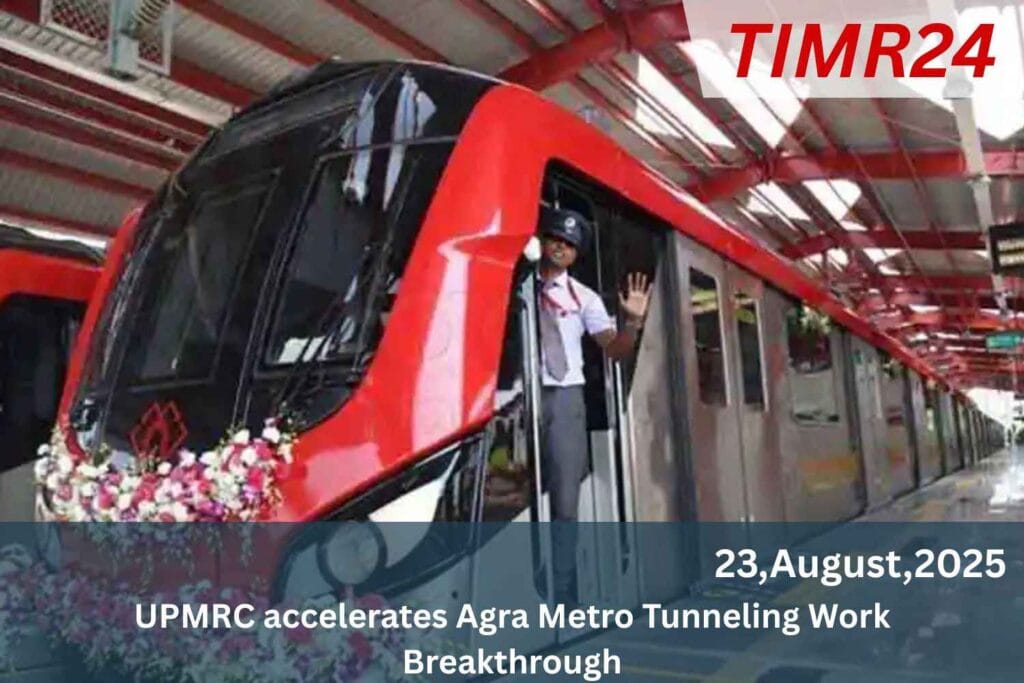
The Uttar Pradesh Metro Rail Corporation (UPMRC) has completed the tunnelling work for the Agra Metro Rail Project, with the TBM ‘Yamuna’ achieving its last breakthrough at Taj Mahal Metro Station. The project’s underground section is progressing smoothly, with civil work for all underground stations already underway. The metro corridor will be commissioned in August 2024, ahead of schedule. The three elevated stations and train depots are ready, and metro train testing is being conducted successfully. The Agra Metro project has reached a significant milestone as the Uttar Pradesh Metro Rail Corporation (UPMRC) accelerates tunnelling operations.
Marking a breakthrough in the city’s ambitious transport infrastructure plan. Agra, globally renowned for the Taj Mahal and other Mughal-era monuments, has long faced challenges of rising population, growing traffic congestion, and environmental concerns. With the rapid progress tunnelling of (Tunnelling) work, UPMRC aims to deliver a world-class metro network that will not only improve urban mobility but also boost tourism and economic growth in the region The tunnelling work in Agra represents one of the most critical phases of the metro development, as it involves deploying advanced Tunnel Boring Machines (TBMs) beneath heritage zones and densely populated urban areas.
These machines are designed to ensure precision and safety, minimizing vibration and disturbance to historic structures while laying a robust foundation for the underground network. This breakthrough highlights UPMRC’s commitment to adopting global best practices, similar to successful metro projects in Lucknow, Kanpur, and Delhi. The underground corridor passing through key points like Taj Mahal East, Jama Masjid, and Agra Fort requires a delicate balance between speed and preservation, making the tunnelling achievement a moment of pride for engineers and citizens alike.
Beyond its engineering marvel, the accelerated tunneling work holds wide social and economic significance. For daily commuters, the metro is expected to reduce travel time drastically, offering an efficient alternative to congested roads. Local residents who currently rely on buses, autos, and private vehicles will benefit from safer and eco-friendly mobility options. Tourists visiting the Taj Mahal, Agra Fort, or Mehtab Bagh will experience seamless travel from stations near these iconic landmarks, ensuring smoother access without the hassle of road traffic. The development is particularly important for Agra, where urban planning often has to account for the delicate coexistence of heritage preservation and modern infrastructure.
From an economic perspective, the metro project is poised to generate new opportunities for local businesses, real estate development, and employment. Markets surrounding metro stations are expected to witness increased footfall, while commercial hubs in areas like Sadar Bazaar and MG Road will benefit from better connectivity. Moreover, the project contributes to India’s broader goal of sustainable urban growth, aligning with the government’s vision of modern, eco-conscious cities. As metro rail has already transformed mobility in cities such as Delhi and Bangalore, Agra is on its way to joining the list of Indian cities where efficient public transit redefines lifestyle and commerce.
The tunneling breakthrough also reflects UPMRC’s coordination with multiple stakeholders, including Archaeological Survey of India (ASI), Uttar Pradesh government bodies, and local civic authorities. Ensuring that metro tunnels pass safely beneath UNESCO World Heritage Sites like the Taj Mahal required advanced structural monitoring systems, continuous inspections, and transparent communication with preservation experts. This coordination has instilled confidence among citizens, showing that progress and preservation can move forward hand in hand. For instance, just as the Delhi Metro successfully integrated stations near heritage-rich Old Delhi, Agra Metro aims to replicate the model with equal care.
Environmentally, the project is set to bring relief from vehicular pollution, which has been a persistent issue in Agra. By shifting commuters to a reliable electric-powered metro system, the city expects a significant reduction in carbon emissions and fuel consumption. This eco-friendly approach not only benefits residents but also protects the fragile marble of the Taj Mahal, which has long suffered from pollution-induced yellowing. Cleaner air, reduced noise levels, and better road space management are among the indirect benefits of the tunneling progress.
Looking ahead, UPMRC has planned phased openings of metro corridors, with priority sections likely to be operational by 2026. Once completed, the network will connect major city hubs such as Sikandra, Raja Ki Mandi, and ISBT with cultural landmarks and commercial zones (UPMRC) This integration of old and new Agra is expected to create a transformative urban experience, bridging gaps between heritage tourism and modern mobility. With the tunnelling work already moving faster than expected, hopes are high that the metro will arrive on schedule, bringing much-needed relief to the city the acceleration of tunnelling work by UPMRC in the Agra Metro project is more than.
Q1. What is the latest update on Agra Metro tunneling?
UPMRC has accelerated tunnelling work to meet project deadlines faster.
Q2. Which areas of Agra will benefit first from the tunneling progress?
Key stretches near Taj Mahal and central Agra will see early benefits.
Q3. When is the expected completion of the Agra Metro project?
The project aims for phased completion by 2026.
Q4. How will tunneling work impact local traffic in Agra?
Traffic diversions are in place, but UPMRC is minimizing disruptions.
Q5. What are the advantages of the Agra Metro for commuters?
Faster, eco-friendly travel with reduced road congestion and better city connectivity.