






IST - Tuesday, April 7, 2026 3:17 pm
Hot News

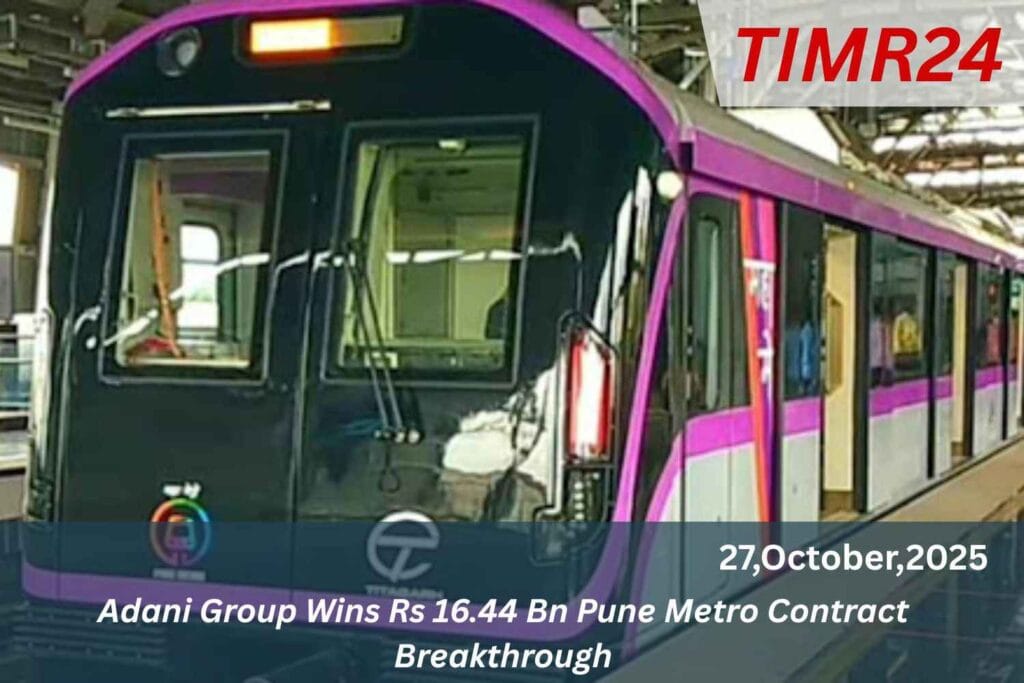
Adani Group Wins Rs 16.44 Bn Pune Metro Contract Breakthrough

Soniya Gupta

Updated on:

Adani

Adani Group has secured a Rs 16.44 billion contract to construct the 5.4 km underground section of Pune Metro’s Swargate Katraj line, which includes twin tunnels and three underground stations, as part of Pune Metro’s Phase II expansion The Adani Group has achieved another major infrastructure milestone by securing a ₹16.44 billion contract for the Pune Metro expansion project, adding another feather to its growing portfolio in India’s urban mobility landscape. This latest win reinforces Adani’s commitment to building smart, sustainable, and future-ready transport systems that align with India’s rapid urbanization goals. With Pune emerging as one of Maharashtra’s.

Fastest-growing metropolitan regions, this project marks a crucial step toward redefining the city’s public transport network and reducing its dependency on road-based commuting. The Adani Group has long been at the forefront of India’s infrastructure development journey (MMRC) From managing airports to handling ports and renewable energy, the conglomerate has steadily expanded its expertise into metro rail construction and operations. The Pune Metro contract, awarded by the Maharashtra Metro Rail Corporation Limited (Maha-Metro), will see Adani Infrastructure undertake vital construction and system integration works across several key corridors.

This contract is part of Pune Metro’s Phase II expansion, designed to connect fast-growing suburbs such as Hinjewadi, Waked, Shivajinagar, Swargate, and Katraj, improving connectivity for lakhs of daily commuters. By integrating smart technology and eco-friendly construction, Adani aims to deliver a metro system that enhances mobility while supporting environmental sustainability The Pune Metro expansion is a central component of Maharashtra’s broader vision to modernize its public transportation ecosystem. The ₹16.44 billion contract will include the design and construction of elevated viaducts, metro stations, electrical traction systems, and automatic signaling infrastructure.

The metro corridor under this contract is expected to significantly decongest Pune’s busy arterial roads, especially during peak hours, and reduce the city’s carbon footprint. Moreover, the project will introduce Automatic Train Operation (ATO) technology, Platform Screen Doors (PSDs), and real-time passenger information systems, ensuring a world-class commuting experience This aligns with the government’s push under the Smart City Mission and the National Urban Transport Policy (NUTP) to enhance connectivity while promoting sustainable mobility solutions For comparative insight.

Economic Growth and Job Creation

global best practices in construction and automation to improve efficiency and commuter safety One of the most significant outcomes of the Pune Metro expansion will be its contribution to employment generation and local economic growth. The construction phase is expected to create thousands of direct and indirect jobs, spanning civil engineering, design, architecture, and project management. Local suppliers and MSMEs will also benefit through increased demand for materials and logistics services Furthermore, the project’s operational phase will open opportunities for skilled manpower in metro management, technical operations, and maintenance.

Environmental Sustainability and Green Construction

The Adani Group’s Pune Metro project is not just about improving urban connectivity it’s also a symbol of sustainable urban transformation. The company has emphasized the use of eco-friendly building materials, energy-efficient escalators, solar rooftops, and rainwater harvesting systems to reduce energy consumption This approach mirrors Adani’s broader sustainability goals as seen in its renewable energy and clean infrastructure businesses. The Pune Metro is designed to be a low-emission transport mode, encouraging citizens to shift from private vehicles to public transportation, thereby lowering pollution levels across Pune’s metropolitan zones.

Technology and Innovation in Metro Design

Adani’s sustainability model aligns with UN Sustainable Development Goal (SDG) 11, which advocates for “sustainable cities and communities.” The integration of green technology in metro construction also resonates with the government’s Atmanirbhar Bharat initiative, encouraging domestic innovation and resource efficiency A standout feature of the Adani-led Pune Metro expansion is its focus on technology-driven design and commuter convenience. The project will implement digital ticketing, contactless payment systems, and AI-powered monitoring for operational safety. Additionally, the metro stations will feature smart lighting, CCTV.

Enabled security, and energy-efficient designs Adani Group has previously demonstrated similar technological innovation in projects like the Ahmedabad Metro and Lucknow Metro. These advancements have significantly improved commuter experience, making Indian metros comparable to global systems such as London Underground and Singapore MRT. These developments highlight how infrastructure investments like Pune Metro have a ripple effect across multiple sectors, strengthening the state’s economy and empowering communities.

Pune has witnessed unprecedented growth in the past decade, with booming IT parks, education hubs, and manufacturing units. However, the city’s traffic congestion has also increased dramatically. The Pune Metro project, once fully operational, will revolutionize public commuting by providing fast, reliable, and eco-friendly transit options for residents and professionals The (MMRC) Adani Group’s involvement ensures that the project benefits from world-class engineering and operation

Q1. What is the total value of the Adani Group Pune Metro contract?
A1. The contract is worth ₹16.44 billion, focused on metro expansion, signaling, and sustainable development.

Q2. Which organization awarded the project to Adani Group?
A2. The project was awarded by the Maharashtra Metro Rail Corporation Limited (MAHA-METRO).

Q3. When will the Pune Metro expansion be completed?
A3. The project is expected to be completed by 2027, with operations beginning in stages from 2026.

Q4. How will this project benefit Pune residents?
A4. It will reduce congestion, improve public transport efficiency, and support eco-friendly urban growth.

Q5. What other metro projects is Adani involved in?
A5. Adani Group is also engaged in projects in Ahmedabad, Mumbai, and Lucknow, focusing on smart metro infrastructure.