





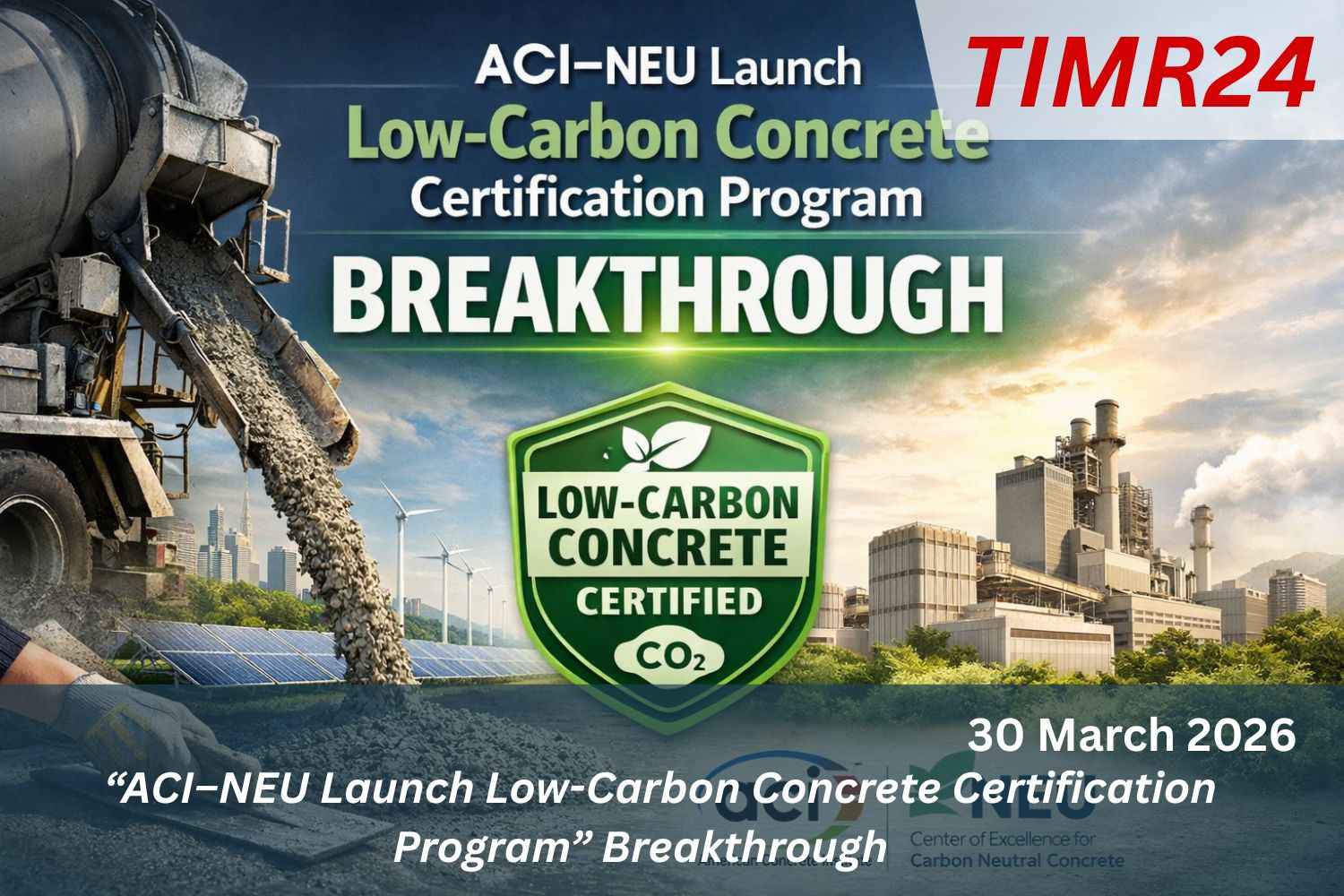







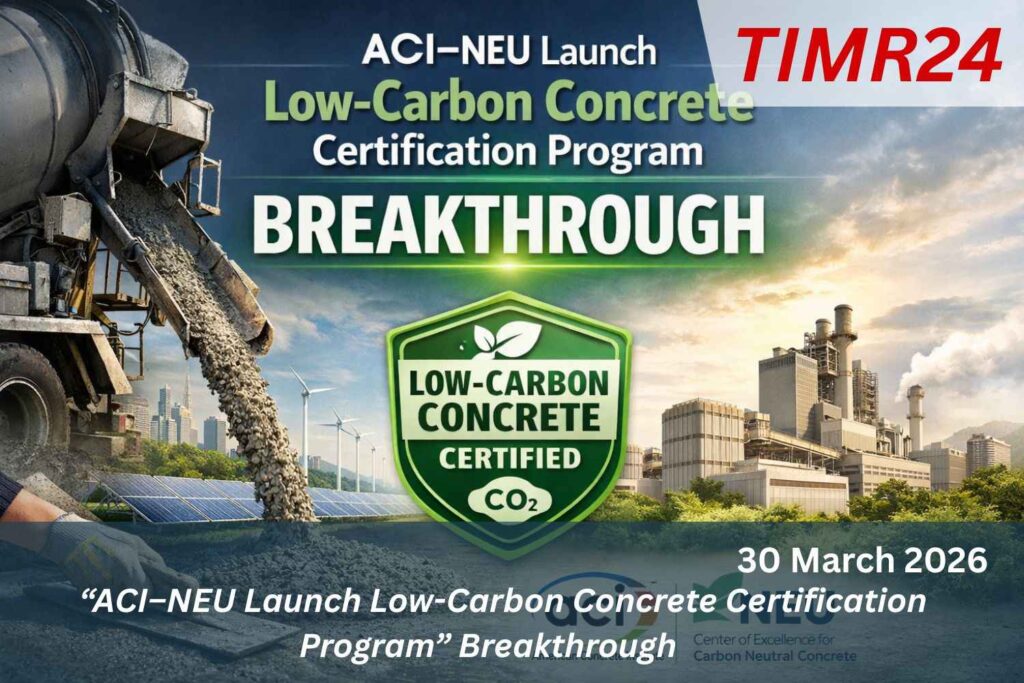
The American Concrete Institute (ACI) has launched a new Certificate Program, Low-Carbon Concrete: Quantification, Design, and Compliance, in partnership with ACI University and NEU. This program aims to educate participants on methods to understand, quantify, and reduce embodied carbon in concrete. It covers the integration of carbon considerations into concrete design, material selection, and construction while ensuring performance and durability. Participants will earn up to 11 Professional Development Hours (PDHs) and learn about the foundations of embodied carbon, the role of cementitious binders, and tools such as.
Global Construction Industry’s Transition
Life Cycle Assessments (LCAs) and Environmental Product Declarations (EPDs). The program also discusses relevant codes like ACI CODE-323-24, strategies for reducing environmental impact, and innovations in sustainable concrete practices The launch of the ACI–NEU Low-Carbon Concrete Certification Program marks a significant step forward in the global construction industry’s transition toward sustainability. As infrastructure development continues to expand rapidly across the world, the environmental impact of construction materials especially concrete has become a major concern. Concrete is one of the most widely used materials in the world, but it is also responsible for.
A considerable share of carbon dioxide emissions. Recognizing this challenge, leading institutions have come together to develop a certification program that equips professionals with the knowledge and skills needed to reduce the carbon footprint of concrete while maintaining structural performance and durability This certification program is designed to bridge the gap between traditional construction practices and modern sustainability requirements. It introduces participants to advanced concepts such as low-carbon material selection, optimized mix design, and lifecycle assessment techniques. These elements are crucial for reducing emissions throughout the entire lifecycle of a construction project.
Supplementary Cementitious Materials
One of the most important aspects of the ACI–NEU certification is its focus on practical implementation. Instead of only providing theoretical knowledge, the program emphasizes real-world applications that professionals can integrate into their projects immediately. This includes strategies for reducing cement content, incorporating supplementary cementitious materials, and using recycled aggregates. These techniques not only lower carbon emissions but also improve cost efficiency in many cases Another key highlight of the program is its emphasis on compliance and regulatory standards. As governments and international organizations tighten environmental regulations.
Construction companies must adapt quickly to remain compliant. The certification provides detailed insights into global standards and frameworks related to carbon emissions and sustainable construction practices. This knowledge is especially valuable for professionals working on large-scale infrastructure projects, where compliance is critical for project approval and funding The collaboration between ACI and NEU brings together academic excellence and industry expertise. This ensures that the curriculum is both technically robust and aligned with industry needs. Participants benefit from a structured learning approach that combines research-based knowledge with practical case studies.
Reduce Greenhouse Gas Emissions
This makes the certification highly relevant for engineers, architects, project managers, and sustainability consultants who are involved in modern construction projects Low-carbon concrete is not just a trend; it is a necessity for the future of construction. With increasing awareness about climate change and the urgent need to reduce greenhouse gas emissions, the demand for sustainable building materials is growing rapidly. Governments, developers, and investors are now prioritizing projects that align with environmental goals. This shift is creating new opportunities for professionals who have expertise in sustainable construction practices.
By earning this certification, individuals can position themselves as leaders in this evolving field The program also highlights the importance of lifecycle thinking in construction. Instead of focusing only on the initial phase of a project, it encourages professionals to consider (India) the environmental impact over the entire lifespan of a structure. This includes material production, construction processes, maintenance, and eventual demolition or recycling. By adopting this holistic approach, it becomes possible to significantly reduce the overall carbon footprint of infrastructure projects. Such strategies are already being implemented in advanced economies and are gradually gaining traction in developing countries as well.
Balance Performance, Cost, And Sustainability
In addition to technical knowledge, the certification program also promotes a mindset shift within the construction industry. It encourages professionals to think beyond conventional methods and adopt innovative solutions that balance performance, cost, and sustainability. This is particularly important in today’s competitive environment, where clients are increasingly demanding eco-friendly solutions without compromising on quality or timelines. As a result, certified professionals are likely to have a competitive advantage in the job market the ACI–NEU initiative aligns with global sustainability goals and supports the transition toward net-zero emissions.
Organizations such as the World Green Building Council and the International Energy Agency have emphasized the need for low-carbon materials in achieving climate targets. By providing specialized training in this area, the certification program contributes to a larger global effort to make construction more sustainable and environmentally responsible The ACI–NEU Low-Carbon Concrete Certification Program is a timely and impactful initiative that addresses one of the most pressing challenges in the construction industry.
It combines technical expertise, practical knowledge, and regulatory awareness to create a comprehensive learning experience for professionals. As the industry (India) continues to evolve, certifications like this will play a crucial role in shaping the future of infrastructure development. For anyone looking to build a career in sustainable construction or enhance their existing skills, this program offers a valuable opportunity to stay ahead in a rapidly changing landscape.
Q1. What is the ACI–NEU Low-Carbon Concrete Certification Program?
It is a professional certification focused on sustainable concrete design, materials, and compliance standards.
Q2. Who can apply for this certification?
Civil engineers, contractors, sustainability professionals, and construction managers can apply.
Q3. What topics are covered in the program?
Low-carbon materials, lifecycle analysis, carbon reduction techniques, and compliance frameworks.
Q4. Why is low-carbon concrete important?
It helps reduce greenhouse gas emissions and supports sustainable infrastructure development.
Q5. Is this certification globally recognized?
Yes, it is backed by leading institutions and has strong global relevance in construction.