









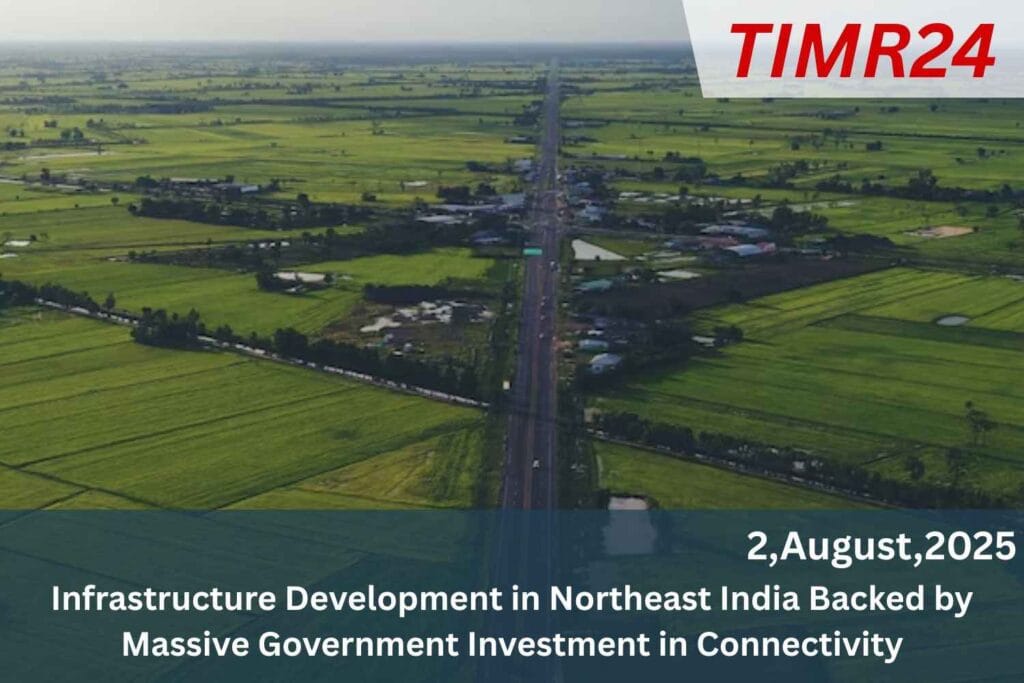
India is accelerating infrastructure development in the North Eastern Region (NER) through various schemes. The Ministry of Road Transport and Highways has constructed 16,207 km of National Highways, while the Ministry of Railways has sanctioned 12 railway projects. Under the Pradhan Mantri Gram Sadak Yojana, 17,637 road projects have been approved, with 16,469 completed. Digital infrastructure improvements include service-ready Gram Panchayats and mobile towers. Civil aviation has operationalized 90 routes. The Ministry of Development of NER is funding these projects through five Central Sector Schemes.
The Government of India has intensified its focus on the comprehensive development of the North-eastern region by launching a series of transformative projects in highways, railways, and tourism. These initiatives are expected to not only enhance regional connectivity and economic growth but also integrate the Northeast more closely with the national development agenda under the Act East Policy.
1. Expansion of Highway Network
One of the key pillars of this development drive is the expansion of highways across the Northeast. The Ministry of Road Transport and Highways has approved multiple projects under the Bharatmala Pariyojana, including new national highways and upgrades to existing roads in Assam, Arunachal Pradesh, Manipur, and Nagaland. These projects aim to improve connectivity between remote towns, border areas, and major trade routes.
According to the (Highways), the focus is on creating all-weather roads that reduce travel time, increase safety, and support the movement of goods and services. For instance, the ongoing four-laning of the Guwahati–Sachar highway is expected to significantly ease congestion and promote inter-state commerce.
2. Boost to Rail Infrastructure
Railway connectivity is also being scaled up through new lines and gauge conversion projects under the umbrella of Indian Railways’ Northeast Vision 2030. Recent projects include the construction of the Sivok–Rangpo line in Sikkim and the Jiribam–Imphal line in Manipur. These will bring rail access to areas that have long remained isolated due to terrain and security concerns.
The outlines how electrification, doubling of lines, and the integration of automated signaling systems are being implemented to modernize the region’s rail network. These efforts not only connect Northeast India to mainland rail routes but also support strategic defence and disaster management logistics. To ensure transparency and coordination, all projects are being monitored under the (North Eastern Council NEC) and aligned with the framework for multi-modal connectivity.
3. Tourism and Eco-Infrastructure
To leverage the region’s natural beauty and cultural richness, the government has sanctioned a series of tourism and eco-infrastructure projects. Under the Swadesh Darshan 2.0 scheme by the destinations like Tawing, Zero Valley, Majola, and Chakrapani are being developed with improved roads, visitor centres, eco-lodges, and guided trails.
These tourism-focused efforts also prioritize sustainability. The North East’s fragile ecology is being protected through low-impact development strategies, including the use of green building materials, solar energy installations, and waste management systems. Improved tourism infrastructure is expected to boost local employment, especially for youth and women.
4. Socioeconomic Impact
Together, these infrastructure projects are poised to transform the socio-economic landscape of the Northeast. Improved access to markets, healthcare, and education will empower local communities and reduce migration. Investments in roads, rail, and tourism also create substantial job opportunities and foster entrepreneurship in tribal and border areas. With strategic backing from central ministries and coordinated implementation by state governments, the Northeast is on track to emerge as a connected, prosperous, and vibrant region that plays a central role in India’s growth story.
q1. What is the aim of the new infrastructure projects in Northeast India?
To improve connectivity, promote tourism, and support economic growth in the region.
q2. Which sectors are covered under the development push?
Highways, railways, and tourism infrastructure are the main focus areas.
q3. Which major highway schemes are being implemented?
Projects are being developed under the Bharatmala Pariyojana.
q4. How is the railway network being expanded in the Northeast?
New rail lines like Sevak–Rango and Jiri am–Imphal are under construction.
q5. What tourism scheme is driving development in the region?
The Swadesh Darshan 2.0 scheme is enhancing eco- and cultural tourism infrastructure.