



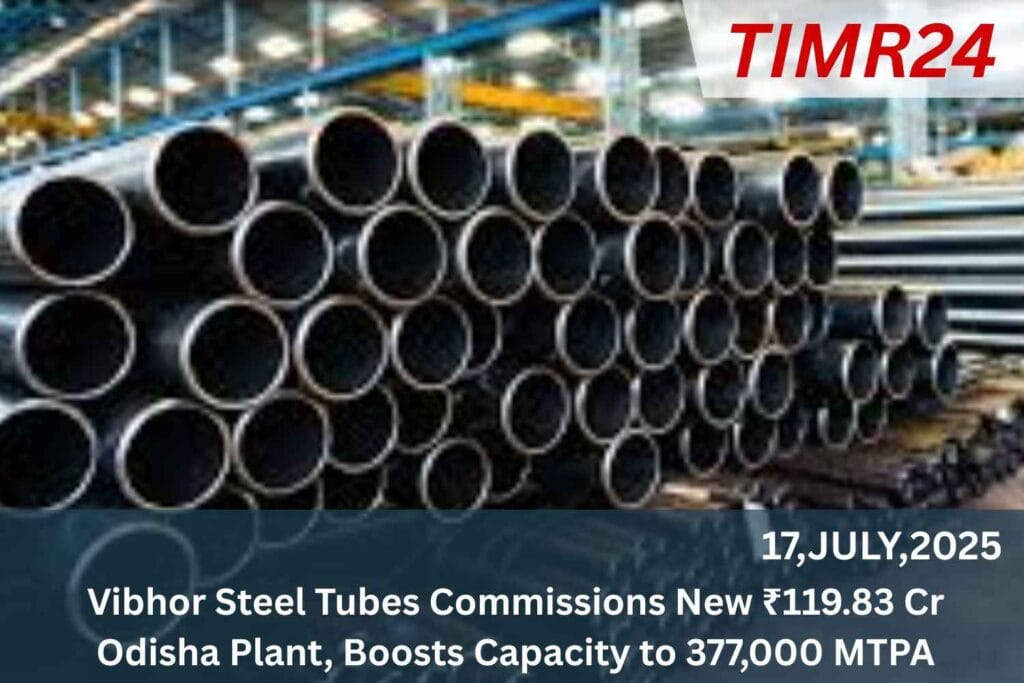
Vibhor Steel Tubes Ltd (VSTL) has increased its production capacity to 377,000 metric tonnes per annum (MTPA) with the commissioning of a new 156,000 MTPA greenfield facility in Sundargarh, Odisha. The Unit III plant, built with an investment of ₹119.83 crore, will cater to growing market demand in Eastern India and produce specialized products like crash barriers and high mast lighting poles. The shift to grid power at the Odisha plant is expected to enhance operational efficiency and optimize costs.
Introduction
Vibhor Steel Tubes Limited, one of India’s prominent steel pipe manufacturers, has successfully commissioned its new manufacturing facility in Odisha. With an investment of ₹119.83 crore, this new plant significantly enhances the company’s production capacity, taking it up to 377,000 metric tonnes per annum (MTPA). This milestone positions the company to better serve the growing demand for steel tubes across sectors such as construction, infrastructure, and oil & gas.
Strategic Expansion in Odisha
The newly launched plant is located in Odisha’s strategic industrial corridor, offering logistical advantages for both raw material sourcing and product distribution. Odisha, known for its mineral-rich belt and investor-friendly policies, has become a hotspot for steel and allied manufacturing industries. Vibhor Steel’s decision to set up a facility in the region aligns with the state’s growing appeal as a steel manufacturing hub.
This expansion adds to a broader wave of industrial investments in eastern India, similar to Nirmala Sitharaman’s recent launch of ₹1,087 Cr development projects in Meghalaya aimed at improving regional infrastructure and economic connectivity.
Capacity Enhancement and Production Goals
With this plant, Vibhor Steel Tubes has expanded its total manufacturing capacity to 377,000 MTPA. The company aims to cater to increasing domestic and export demand for high-quality ERW (Electric Resistance Welded) pipes and tubes. The plant is equipped with advanced automation, quality assurance systems, and environment-friendly technologies to support sustainable manufacturing.
The commissioning comes at a time when India’s steel demand is on the rise, driven by public infrastructure other infrastructure players like NCC projects, urban development, and private sector construction. The new capacity will also help Vibhor strengthen its presence in South Asian and Middle Eastern markets.
Employment and Regional Development
Beyond production, the Odisha plant is expected to generate direct and indirect employment in the region. Local communities will benefit from job opportunities, skill development initiatives, and vendor partnerships. The company has also indicated plans to collaborate with state skill development missions to upskill the local workforce. This approach mirrors how other infrastructure players like NCC are contributing to regional job creation through major public projects like the Mumbai Metro worth ₹2,269 Cr.
Sustainability and Future Plans
Vibhor Steel has emphasized that the new plant adheres to sustainable production standards, with provisions for waste management, energy efficiency, and low emissions. The company is also exploring the possibility of integrating renewable energy sources to power part of its operations, in line with India’s climate goals.
Looking ahead, Vibhor Steel Tubes aims to further expand its product range and tap into high-growth sectors such as water infrastructure, green energy, and smart cities, aligning with the nation’s economic and environmental vision.
Q1. What is the investment value of the new plant?
₹119.83 crore.
Q2. Where is the new Vibhor Steel plant located?
In the state of Odisha, India.
Q3. What is the total production capacity after the expansion?
377,000 metric tonnes per annum (MTPA).
Q4. What products will the plant manufacture?
Mainly ERW steel pipes and tubes for infrastructure and industrial use.
Q5. How will the plant benefit the region?
It will create jobs, support local industries, and boost regional development.