












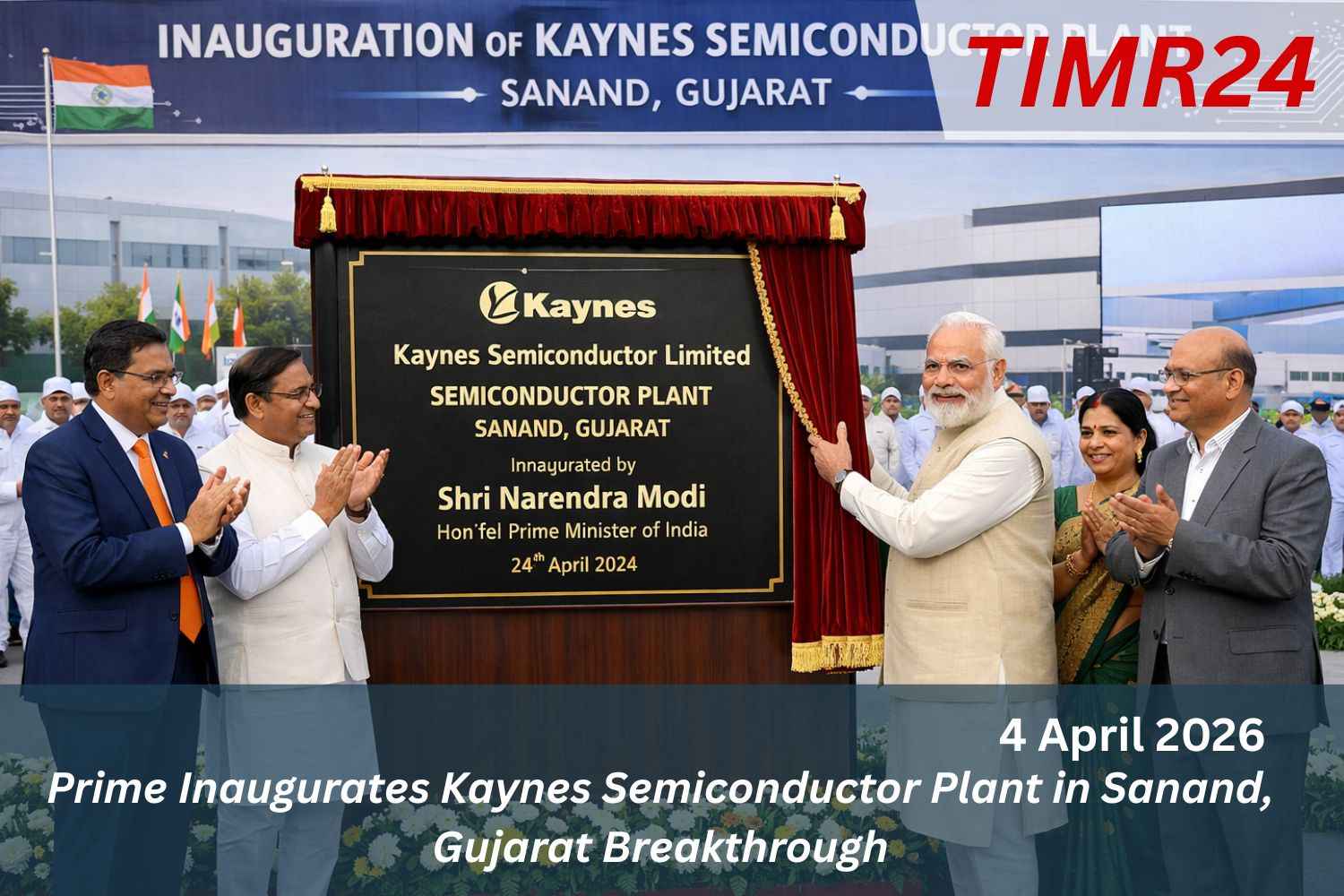





Prime Minister Narendra Modi inaugurated Kaynes Technology India Limited’s semiconductor manufacturing facility in Sanand, which will produce Intelligent Power Modules crucial for electric vehicles and industrial uses. This facility aims to enhance India’s role in the global semiconductor supply chain, with a significant output intended for exports. It is part of the India Semiconductor Mission, focusing on strengthening domestic chip design and manufacturing. The inauguration signifies a vital development in high-tech manufacturing, supporting India’s ambition to be a global semiconductor production hub India is steadily emerging as a global hub for advanced.
India’s Semiconductor Ecosystem
Manufacturing, and the inauguration of the Kaynes Semiconductor Plant in Sanand, Gujarat, marks a major milestone in this journey. The facility, launched by Prime Minister Narendra Modi, represents a strategic push toward strengthening India’s semiconductor ecosystem, which has become increasingly important in the digital age. Semiconductors are the backbone of modern technology, powering everything from smartphones and laptops to automobiles and industrial machinery. With global supply chains facing disruptions in recent years, countries around the world have started focusing on domestic chip production, and India is now actively positioning itself as a key player in this space.
The Kaynes Semiconductor Plant is part of a broader vision to promote self-reliance in critical technologies under initiatives like Make in India and Digital India. Located in Sanand, one of Gujarat’s fastest-growing industrial zones, the plant benefits from strong infrastructure, connectivity, and policy support from both state and central governments. Gujarat has already established itself as a manufacturing powerhouse, and projects like this further strengthen its position as a preferred destination for high-tech investments. The Sanand region, which has seen major investments in automotive and electronics manufacturing, is now expanding into semiconductor production, creating a complete industrial ecosystem.
Dependency Not Only Affects Supply Chain
One of the key advantages of the Kaynes Semiconductor Plant is its ability to reduce India’s dependency on imported chips. Currently, a large portion of semiconductors used in India is imported from countries like Taiwan, South Korea, and China. This dependency not only affects supply chain stability but also increases costs for domestic manufacturers. By producing semiconductors locally, India can ensure a more reliable supply, reduce import bills, and enhance its strategic autonomy. This is especially important in sectors like defense, telecommunications, and automotive manufacturing, where secure and uninterrupted access to chips is critical.
The plant is expected to cater to multiple industries, including consumer electronics, automotive systems, telecommunications, and industrial applications. As electric vehicles and smart devices become more common, the demand for semiconductors is rising rapidly. The Kaynes facility is well-positioned to meet this growing demand and support India’s transition toward a technology-driven economy. Additionally, the plant is likely to encourage other global and domestic players to invest in semiconductor manufacturing in India, creating a ripple effect that can transform the entire industry Another important aspect of this project is employment generation.
Contributing To Economic Growth
The semiconductor industry requires a highly skilled workforce, including engineers, technicians, and research professionals. The establishment of the Kaynes Semiconductor Plant will create direct and indirect job opportunities, contributing to economic growth in the region. It will also encourage the development of supporting industries, such as equipment manufacturing, logistics, and supply chain services. This will further strengthen the industrial ecosystem in Gujarat and beyond The Indian government has been actively promoting semiconductor manufacturing through various incentives and policy measures. Programs such as.
The Production Linked Incentive (PLI) scheme have been designed to attract investments and encourage companies to set up manufacturing units in the country. The Kaynes project aligns perfectly with these initiatives and demonstrates the effectiveness of (India) government policies in attracting high-value investments. It also highlights India’s commitment to becoming a global leader in electronics manufacturing From a global perspective, the semiconductor industry is highly competitive and technologically advanced. Countries like the United States, Taiwan, and South Korea have dominated this sector for decades. However, with increasing geopolitical tensions and supply chain challenges.
Development Opens Up New Opportunities
There is a growing need for diversification. India’s entry into semiconductor manufacturing is a step toward creating a more balanced and resilient global supply chain. The Kaynes Semiconductor Plant is an important addition to this effort and showcases India’s capabilities in high-tech manufacturing For businesses and investors, this development opens up new opportunities. Companies involved in electronics manufacturing, automotive production, and technology services can benefit from a reliable domestic supply of semiconductors. It also creates opportunities for collaboration, innovation, and research in advanced technologies. As the ecosystem grows, India can become a hub.
For semiconductor design, manufacturing, and export, contributing significantly to the economy These projects collectively highlight India’s rapid progress in infrastructure, logistics, and manufacturing sectors success of the Kaynes Semiconductor Plant will depend on continuous innovation, skilled workforce development, and strong industry collaboration. The government, private sector, and academic institutions must work together to build a robust semiconductor ecosystem. Investments in research and development, as well as partnerships with global technology leaders, will be crucial in achieving long-term success.
The inauguration of the Kaynes Semiconductor Plant in Sanand is more than just a single project; it is a symbol of India’s ambition to become a global technology powerhouse. By focusing on domestic manufacturing, reducing import dependency, and creating (India) employment opportunities, this initiative sets the stage for a brighter and more self-reliant future. As the demand for semiconductors continues to grow worldwide, India’s strategic investments in this sector will play a key role in shaping the global technology landscape.
Q1. What is the Kaynes Semiconductor Plant project?
It is a semiconductor manufacturing facility developed by Kaynes Technology in Sanand, Gujarat.
Q2. Who inaugurated the plant?
Prime Minister Narendra Modi inaugurated the plant.
Q3. Why is this plant important for India?
It will boost domestic chip manufacturing and reduce reliance on imports.
Q4. Where is the plant located?
The plant is located in Sanand, Gujarat, a major industrial hub.
Q5. Which industries will benefit from this plant?
Automotive, telecom, electronics, and industrial manufacturing sectors.