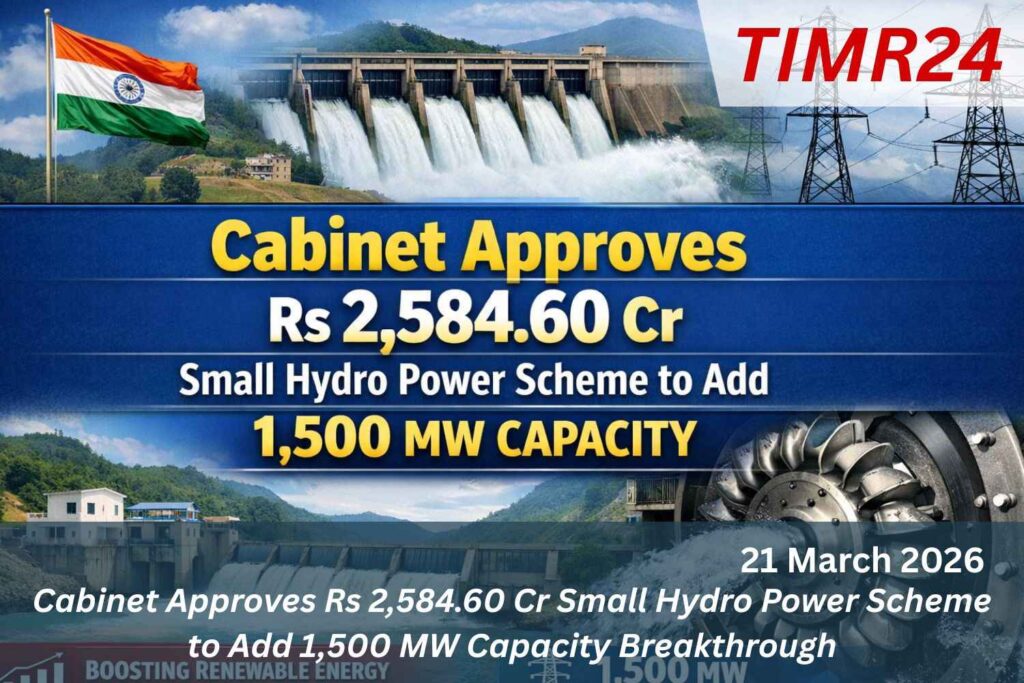
The Government of India has taken a significant step toward strengthening the country’s renewable energy sector by approving a ₹2,584.60 crore Small Hydro Power Scheme aimed at adding 1,500 MW of capacity. This decision reflects the government’s long-term vision of transitioning toward clean and sustainable energy sources while reducing dependency on fossil fuels. With increasing concerns around climate change and energy security, the push for small hydro projects is both timely and strategic, especially for a country like India where water resources remain underutilized in many regions Small hydro power projects are typically defined as.
Infrastructure Development Is Often Difficult
Those with a capacity of up to 25 MW and are considered one of the most environmentally friendly forms of energy generation. Unlike large hydroelectric dams, these projects require minimal land acquisition and cause less disruption to local ecosystems. This makes them particularly suitable for remote and hilly regions where large-scale infrastructure development is often difficult. The newly approved scheme will encourage the development of such projects across multiple states, providing a balanced approach to energy generation and environmental conservation One of the key objectives of this initiative is to boost renewable energy capacity.
While supporting regional development. Many areas in India, particularly in the Himalayan belt and northeastern states, have abundant water resources but lack proper infrastructure to harness them effectively. By promoting small hydro projects in these regions, the government aims to not only generate clean electricity but also improve local economies. Increased investment in such areas can lead to better roads, improved connectivity, and new employment opportunities for local communities The scheme is expected to play a vital role in achieving India’s renewable energy targets. The country has already made significant progress in solar and wind energy, but hydro power remains an.
India Continues To Expand Its Renewable Energy
Important component of the overall energy mix. Small hydro projects offer a reliable and consistent source of energy, unlike solar and wind which depend on weather conditions. This makes them an essential part of a stable and diversified energy system. As India continues to expand its renewable energy portfolio, integrating small hydro power will help ensure round-the-clock electricity supply Another important aspect of the scheme is its potential to attract private sector participation. The government has designed policies that encourage investment from both public and private players. Financial incentives, subsidies, and easier approval processes are expected to make.
These projects attractive to developers. This collaborative approach will accelerate the pace of project implementation and ensure efficient utilization of resources. In addition, it will reduce the financial burden on the government while promoting innovation and competition in the sector Environmental sustainability is at the core of this initiative. Small hydro projects have a relatively low carbon footprint compared to conventional energy sources such as coal and natural gas. By investing in such projects, India is taking a step toward reducing greenhouse gas emissions and combating climate change This aligns with global commitments and strengthens.
Small Hydro Power Plants Is Expected
The country’s position as a leader in renewable energy adoption The scheme also emphasizes the importance of modern technology and efficient project management. Advanced turbines, improved water management systems, and digital monitoring tools will be used to enhance the performance and reliability of these projects. This will not only increase energy output but also reduce operational costs over time. As technology continues to evolve, the efficiency of small hydro power plants is expected to improve further, making them even more viable in the long run In addition to energy generation, the scheme is likely to have a positive impact on rural electrification.
Many remote villages still face challenges in accessing reliable electricity. Small hydro projects can be developed close to these communities, reducing transmission losses and ensuring a steady power supply. This will improve the quality of life for residents by enabling better (India) education, healthcare, and economic activities. Access to electricity is a key driver of development, and this initiative will contribute significantly to bridging the energy gap in underserved areas The government’s focus on renewable energy is also reflected in its broader policy framework. Initiatives such as solar parks, wind energy projects, and green hydrogen missions are part of a comprehensive strategy to.
Employment Opportunities From Project Planning
Transform India’s energy landscape. The small hydro power scheme complements these efforts by addressing a specific segment that has immense potential but has not been fully explored. By diversifying its renewable energy sources, India is building a more resilient and sustainable energy system, the scheme is expected to create a wide range of employment opportunities. From project planning and construction to operation and maintenance, small hydro projects require skilled and unskilled labor. This will generate jobs at the local level and contribute to overall economic growth. Training and skill development programs may also be introduced to prepare the workforce for.
These opportunities, ensuring long-term benefits for communities involved in the projects The successful implementation of this scheme will depend on effective coordination between central and state governments. Clear guidelines, timely approvals, and transparent processes will be essential to avoid delays and ensure smooth execution. Public awareness and community participation will also play a crucial role in gaining support for these projects. By involving local stakeholders in the planning and development process, the government can address concerns and build trust, leading to more sustainable outcomes.
Renewable Energy Landscape, Particularly
The approval of the ₹2,584.60 crore Small Hydro Power Scheme marks an important milestone in India’s journey toward clean energy. With a target of adding 1,500 MW of capacity, the initiative has the potential to transform the renewable energy landscape, particularly in remote and hilly regions. It offers a balanced approach to development by combining economic growth, (India) environmental sustainability, and social welfare. As the country continues to move toward a greener future, small hydro power will play a crucial role in ensuring energy security and supporting sustainable development.