














Uralungal Labour Contract Co-operative Society (ULCCS) has successfully completed three major infrastructure projects in India worth Rs 453 crore, including a coastal protection system, a major bridge, and a climate-resilient highway corridor. These projects showcase ULCCS’s engineering expertise in challenging environments, enhancing regional connectivity, and addressing climate resilience. The coastal system mitigates erosion using marine engineering techniques, while the water-crossing bridge enhances access for isolated communities. The semi-elevated highway corridor is designed to operate during floods, maintaining connectivity during adverse weather.
ULCCS’s achievements highlight the cooperative model’s potential in delivering robust infrastructure and supporting economic growth across India India’s infrastructure sector is increasingly focusing on resilience, sustainability and advanced engineering to meet the challenges posed by climate change and growing mobility demands. One of the most recent examples of this transformation is the completion of major infrastructure projects worth ₹453 crore by Uralungal Labour Contract Co‑operative Society (ULCCS). The cooperative infrastructure organization has successfully delivered a set of complex projects that include coastal protection.
Infrastructure, a large bridge built over water bodies and a climate-resilient road corridor designed to withstand seasonal flooding and extreme weather conditions These projects demonstrate the increasing importance of climate-adapted infrastructure planning in India. Coastal regions, riverine areas and flood-prone transport corridors require engineering solutions that go beyond conventional road construction. The ULCCS projects combine advanced marine engineering techniques, structural bridge design and resilient transportation planning to improve connectivity while protecting communities from environmental risks.
Infrastructure projects of this scale also highlight how cooperative models can deliver large-scale public works efficiently. ULCCS has evolved into one of India’s largest worker-owned infrastructure organizations, with expertise in roads, bridges, coastal structures and public development projects. Its recent achievements reflect the growing role of such organizations in India’s infrastructure expansion and modernization efforts.
Coastal Protection Infrastructure to Prevent Shoreline Erosion
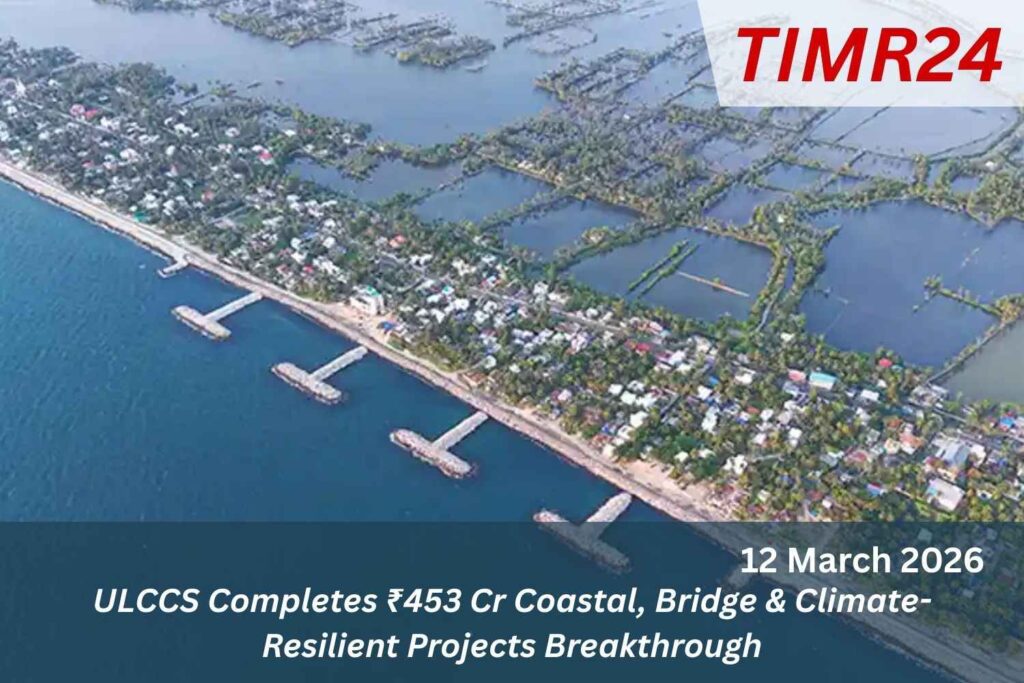
One of the key components of the ₹453-crore project portfolio is a large coastal protection system designed to reduce shoreline erosion and protect communities from sea intrusion. Coastal erosion has become a major concern in several Indian states where rising sea levels, strong waves and changing sediment patterns threaten coastal settlements and infrastructure The coastal protection project involved the construction of a 7.31-kilometre long system designed to stabilize the shoreline and reduce wave energy before it reaches inhabited areas. The engineering work required large quantities of protective materials and marine construction techniques.
Approximately 1.25 lakh tetrapods and around 8.5 lakh tonnes of granite armour units were placed along the coastline to absorb wave impact and prevent erosion. These structures work together with groyne formations that regulate sediment movement and help maintain the natural balance of sand along the coast Such coastal protection measures are increasingly critical as climate change intensifies extreme weather events and coastal flooding. Governments and infrastructure developers are now prioritizing shoreline protection projects to safeguard fishing villages, transport infrastructure and tourism zones. Similar initiatives have also been implemented in various.
Coastal states where large investments are being directed toward building resilient coastal corridors and protective barriers Beyond protecting coastal land, these systems also help preserve economic activities that depend on stable shorelines. Fisheries, tourism and port operations often suffer significant losses when erosion damages beaches, roads and harbor facilities. By stabilizing coastal regions, infrastructure like tetrapod sea walls and granite armour systems ensure long-term environmental and economic sustainability.
Engineering a Complex Over Water Bridge for Connectivity
Another major highlight of the ULCCS infrastructure portfolio is the construction of a long over-backwater bridge that significantly improves connectivity between mainland regions and island communities. Bridges built over water bodies require specialized design and construction methods because engineers must deal with tidal variations, deep foundations and navigation clearances for boats and inland waterways The bridge constructed under the project extends approximately 1,755 meters and is considered one of the longest over-backwater road bridges in South India. Most of the structure was built over water using marine construction techniques that involved barges, floating platforms and specialized heavy-lifting equipment.
These methods allow engineers to construct bridge spans without disturbing water channels or navigation routes The bridge includes multiple long spans along with 55-meter bow-string arch spans designed to maintain sufficient clearance for waterway traffic. This design allows boats and small vessels to pass beneath the bridge safely while ensuring structural strength and stability. Such engineering solutions are particularly important in regions with dense backwater networks where waterways remain an essential transport route.
Connectivity improvements resulting from the bridge are expected to benefit local communities that previously depended on ferry services or long detours to reach the mainland. With a reliable road link in place, travel time will reduce significantly, enabling better access to healthcare, education and economic opportunities. Infrastructure projects like this bridge also support tourism and regional trade by improving transport efficiency.
Climate Resilient Road Corridor for Flood Prone Regions
The third major project delivered by ULCCS focuses on building climate-resilient road infrastructure. Many transport corridors in India pass through low-lying or flood-prone areas where heavy rainfall and rising water levels frequently disrupt connectivity. Traditional road construction methods often fail in such regions because roads become submerged or damaged during monsoon seasons To address this challenge, the project involved constructing a semi-elevated highway corridor designed to remain operational even during seasonal flooding. Critical sections of the road were raised above expected flood levels, ensuring uninterrupted connectivity throughout the year.
This approach allows vehicles to continue operating even when surrounding areas experience water accumulation Climate-resilient infrastructure is becoming a priority for transportation planners worldwide. By integrating elevation design, improved drainage systems and stronger structural materials, modern highways can withstand extreme weather conditions more effectively. Such solutions reduce maintenance costs and prevent disruptions that can affect economic activity and emergency services In flood-prone regions, resilient road corridors also play a vital role in disaster response. Elevated highways can serve as evacuation routes and emergency supply corridors during severe weather events.
Importance of Climate-Adaptive Infrastructure in India
As climate change increases the frequency of extreme rainfall and flooding, infrastructure planners are increasingly adopting resilient road designs to maintain transport continuity. The completion of these projects highlights the growing shift toward climate-adaptive infrastructure in India. Traditional infrastructure planning focused primarily on connectivity and economic efficiency. However, modern infrastructure must also consider environmental risks, disaster resilience and long-term sustainability Coastal protection systems are now being implemented in several states where erosion threatens settlements and ecosystems. Similarly, elevated highways and flood-resistant roads are becoming.
Common in areas that frequently experience heavy rainfall or river flooding. These projects demonstrate how engineering innovation can reduce climate-related risks while maintaining economic growth Large-scale infrastructure initiatives across the country are incorporating similar strategies. Coastal highways, bridge corridors and smart transport networks are increasingly designed to withstand extreme environmental conditions. Such investments ensure that infrastructure remains functional even during adverse weather events, protecting both communities and economic activities.
Role of Cooperative Infrastructure Models
Another notable aspect of the ULCCS projects is the cooperative organizational model behind them. Unlike traditional private contractors, ULCCS operates as a worker-owned cooperative organization where employees collectively manage operations and share benefits. This model has allowed the organization to build strong technical expertise while maintaining a long-term focus on quality and sustainability Over the decades, ULCCS has expanded its operations beyond regional projects to national-level infrastructure development. Its portfolio includes highways, bridges, housing projects and urban infrastructure works. The organization is also involved in sustainable.
Construction initiatives and technological innovation aimed at improving infrastructure resilience and efficiency The successful completion of the ₹453-crore projects (India) demonstrates that cooperative institutions can effectively deliver complex infrastructure projects. By combining engineering expertise with collaborative management practices, such organizations can contribute significantly to national infrastructure growth.
Future Outlook for Resilient Infrastructure Development
The demand for climate-resilient infrastructure is expected to grow rapidly in the coming years. Rising sea levels, changing rainfall patterns and increasing urbanization are creating new challenges for infrastructure planners. Governments and developers must adopt innovative engineering solutions that can withstand these evolving conditions Projects like those completed by ULCCS illustrate how modern infrastructure can integrate coastal protection, resilient transportation networks and advanced bridge engineering. By prioritizing sustainability and resilience, infrastructure developers can ensure that public investments deliver long-term value for communities and economies.
As India continues to expand its transportation networks and coastal infrastructure, cooperative organizations, private contractors and public (India) agencies will play an important role in building the next generation of resilient infrastructure. These projects not only improve connectivity but also strengthen the country’s capacity to adapt to climate change and environmental challenges.
Q1. What projects were completed under the ₹453-crore ULCCS infrastructure initiative?
The initiative includes coastal protection works, a large over-backwater bridge and a climate-resilient highway corridor designed for flood-prone areas.
Q2. What is the purpose of the coastal protection system?
It helps prevent shoreline erosion and sea intrusion by using tetrapods, granite armour units and groyne structures.
Q3. How long is the over-water bridge constructed in the project?
The bridge spans about 1,755 meters and is designed to maintain navigation clearance for inland waterways.
Q4. What makes the road corridor climate-resilient?
Critical sections of the road are elevated above flood levels to ensure year-round connectivity even during heavy rainfall.
Q5. Who executed these infrastructure projects?
The projects were executed by the cooperative infrastructure organization ULCCS.