




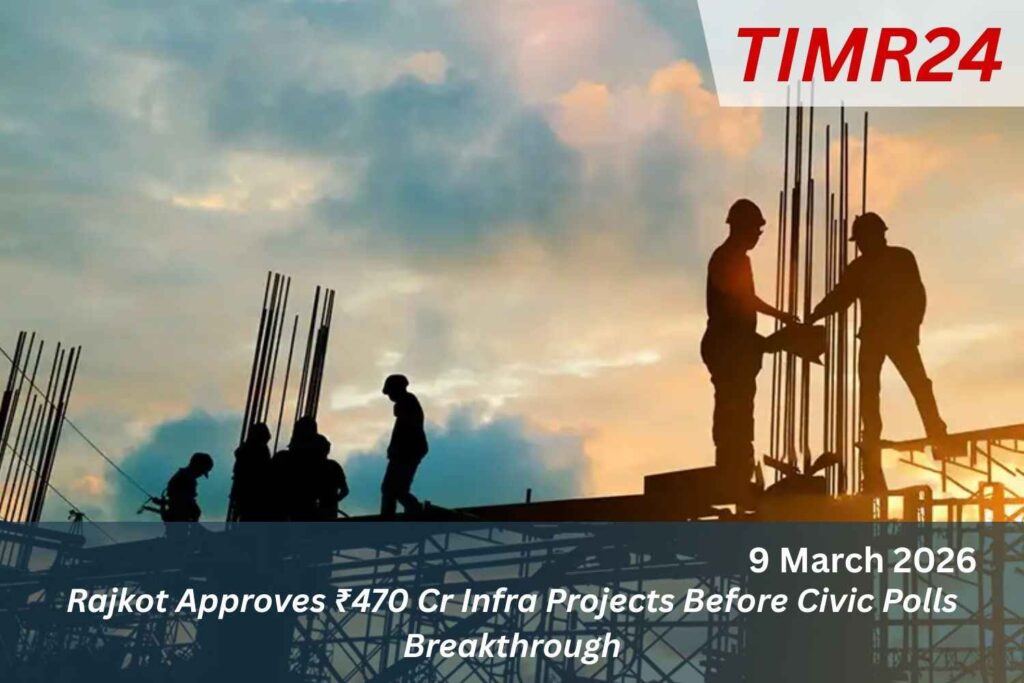
The Standing Committee of Rajkot Municipal Corporation has approved development projects totaling Rs 470 crore ahead of the civic body elections, focusing on infrastructure improvements and public utilities. Key initiatives include constructing a new road to link Raiya Road with the Smart City area to ease traffic congestion, widening the New Ring Road, and building urban health centres in SRP Camp and Manharpur. Additionally, renovations of the Jubilee vegetable market were sanctioned, alongside plans for regular inspections of underpasses and overbridges for maintenance. A new fire station will also be constructed near the Aji Dam traffic police station.
Rajkot Civic Infrastructure Following
Featuring facilities for fire tenders and residential flats for staff The city of Rajkot is set to witness a major boost in its civic infrastructure following the approval of projects worth ₹470 crore by the Rajkot Municipal Corporation. The decision comes at a time when urban centers across India are rapidly expanding and require improved infrastructure to support population growth, economic activity, and better quality of life. Rajkot, one of the fastest-growing cities in Gujarat, has been experiencing increasing pressure on its roads, drainage networks, and water supply systems due to rising urbanization. The newly approved infrastructure projects aim to address.
These challenges by upgrading essential civic facilities and preparing the city for future development. Municipal officials have emphasized that the projects are part of a broader strategy to modernize urban infrastructure and strengthen the city’s long-term growth potential Urban infrastructure plays a crucial role in shaping the development of any city, and Rajkot has emerged as an important economic and industrial hub in western India. With rising industrial activity, real estate expansion, and population growth, the demand for improved civic services has increased significantly. The ₹470 crore investment will focus on multiple areas of development including road widening.
Residents But Also To Support Commercial
Construction of new roads, repair and resurfacing of existing road networks, expansion of drainage systems to prevent waterlogging, and strengthening of water supply pipelines. These projects are designed not only to improve daily life for residents but also to support commercial and industrial activity in the city. Improved roads and drainage systems will enhance connectivity and reduce disruptions during monsoon seasons, while upgraded water infrastructure will ensure a more reliable supply of clean water to households and businesses Another key aspect of the development plan is improving urban mobility within Rajkot. Traffic congestion has become.
A growing concern in many Indian cities, including Rajkot, as the number of vehicles continues to increase each year. By investing in road upgrades and better traffic infrastructure, the municipal corporation aims to reduce travel time and make commuting more efficient for residents. Wider roads, improved intersections, and better drainage systems will also enhance road safety and prevent damage to infrastructure caused by heavy rains. Such improvements are particularly important for supporting economic activities such as trade, logistics, and local businesses that depend on efficient transportation networks The infrastructure push in Rajkot also aligns with.
Sustainable Infrastructure Have Encouraged
Broader national and state-level urban development initiatives. Programs focused on smart cities, urban renewal, and sustainable infrastructure have encouraged municipal bodies to invest in modernizing their cities. Gujarat has been one of the leading states in implementing urban development projects, and cities like Rajkot, Ahmedabad, and Surat have witnessed significant transformation in recent years. The latest round of project approvals highlights the state’s continued focus on strengthening municipal infrastructure to support long-term economic growth and improve the living standards of urban residents In addition to improving physical infrastructure.
The approved projects are expected to create economic opportunities for local contractors, construction companies, and workers. Large infrastructure investments often generate employment in sectors such as construction, engineering, materials supply, and (Solar) project management. As the projects move forward through the tendering and implementation stages, they are likely to contribute to economic activity in the region. Infrastructure development also tends to attract further investment, as better roads and civic services make cities more attractive for businesses, real estate developers, and investors Another important dimension of the infrastructure plan is the focus on.
Municipal Corporation Aims To Minimize
Improving drainage systems across several parts of the city. Urban flooding during heavy rainfall has been a concern in many rapidly growing cities. By upgrading drainage networks and ensuring better water flow management, the municipal corporation aims to minimize waterlogging and reduce damage to roads and buildings during the monsoon season. Improved drainage infrastructure also contributes to better sanitation and public health by preventing the accumulation of stagnant water in urban areas Water supply improvements are also a key component of the ₹470 crore development plan. As cities expand, ensuring a consistent and reliable.
Water supply becomes increasingly important. The municipal corporation plans to strengthen pipeline networks and enhance water distribution systems to ensure that growing residential and commercial areas receive adequate water supply. This investment will help reduce water shortages in certain areas and improve the efficiency of the city’s water infrastructure The timing of the project approvals ahead of civic elections has also drawn attention, as large development announcements often become an important part of local governance discussions. Municipal authorities have stated that the approvals are aimed at accelerating development and addressing long-standing.
Infrastructure needs rather than being purely election-driven initiatives. Regardless of the political context, such projects are expected to have a lasting impact on the city’s development trajectory. Infrastructure investments typically take several years to fully implement, but once completed they can significantly improve the overall urban environment The successful execution of these projects will depend on efficient project management, transparent tendering processes, and effective coordination between different government departments. Large-scale urban infrastructure projects often face challenges such as delays, cost overruns, and logistical issues.
Businesses In Rajkot The municipal Corporation
Ensuring timely completion and maintaining quality standards will be essential for delivering the expected benefits to residents and businesses in Rajkot. The municipal corporation has indicated that the projects will be implemented in phases, allowing authorities to manage resources effectively and monitor progress closely Overall, the approval of ₹470 crore worth of infrastructure projects represents a major step toward strengthening the urban framework of Rajkot. As cities across India continue to grow and evolve, investments in roads, drainage.
Systems, water supply networks, and public infrastructure become critical for sustainable development. By focusing on these core areas, Rajkot is positioning (India) itself to handle future growth while improving everyday life for its residents. If implemented effectively, these projects could play a significant role in shaping the city’s development over the coming years and further establish Rajkot as one of Gujarat’s key urban centers.
Q1. What projects were approved in Rajkot worth ₹470 crore?
The projects mainly include road upgrades, drainage improvements, water supply expansion, and other civic infrastructure developments across multiple wards.
Q2. Which authority approved the projects?
The projects were approved by the Rajkot Municipal Corporation to enhance urban infrastructure and civic services.
Q3. Why were these projects approved before civic elections?
The approvals aim to accelerate development works and address long-pending infrastructure needs before the upcoming municipal elections.
Q4. How will these projects benefit Rajkot residents?
They will improve road connectivity, reduce flooding through better drainage, strengthen water supply systems, and enhance public amenities.
Q5. When will the infrastructure projects start?
The projects are expected to begin in phases soon after administrative approvals and tender processes are completed.