


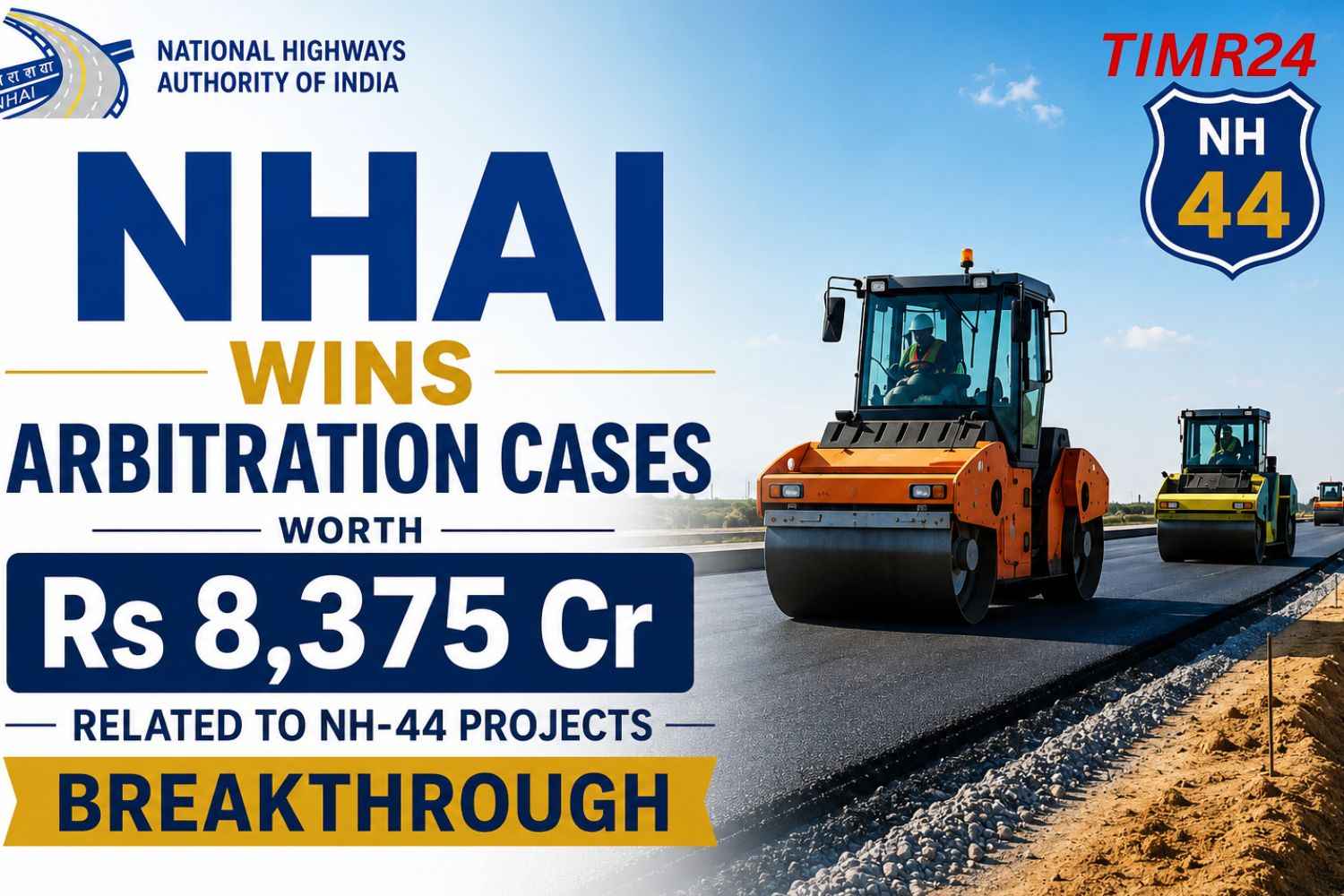







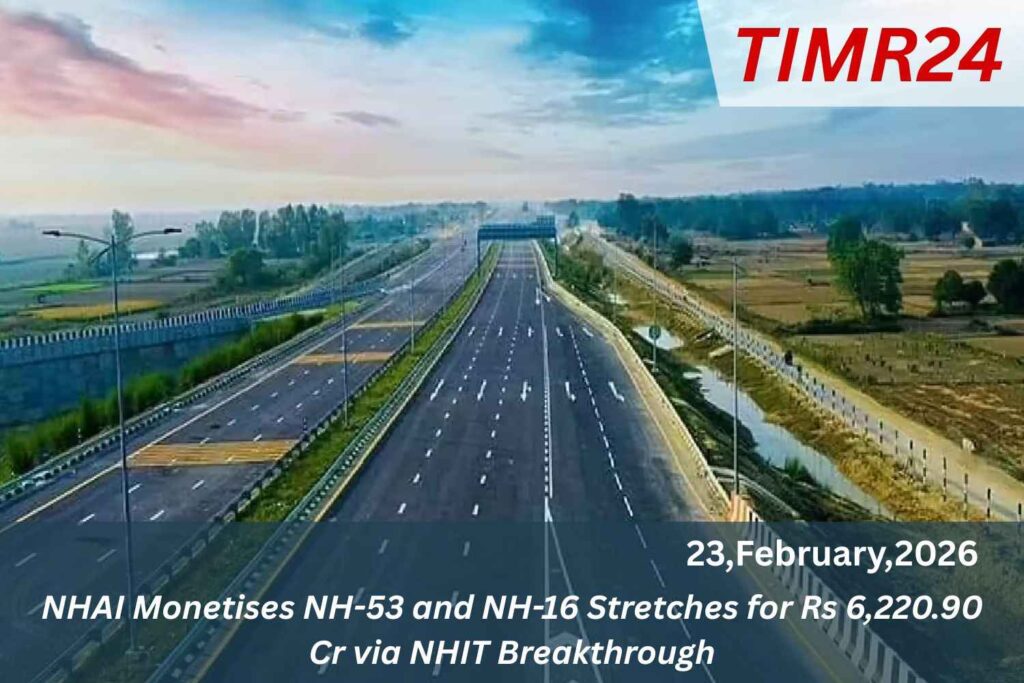
The National Highways Authority of India (NHAI) has accepted a Rs 6,220.90 crore offer from National Highways Infra Trust to monetize two highway stretches totaling 310.35 km in Maharashtra and Andhra Pradesh. This initiative is part of NHAI’s asset recycling strategy to support new infrastructure developments. The monetized sections include NH-53 and NH-16, aiming to enhance private sector engagement in highway operations. NHAI Chairman Shri Santosh Kumar Yadav highlighted that the total assets monetized through the National Highways Infra Trust now amount to Rs 49,858 crore. With significant investor participation and successful fundraising.
Ensuring Financial Sustainability
Asset monetization is a key strategy for unlocking value in existing infrastructure and attracting private investments, thus ensuring financial sustainability and improved highway quality India’s infrastructure sector continues to witness significant transformation with the recent monetisation of highway assets by the National Highways Authority of India (NHAI). The authority has successfully monetised stretches of NH-53 and NH-16 for ₹6,220.90 crore through the National Highways Infra Trust (NHIT). This strategic initiative represents a major step toward strengthening the country’s road infrastructure financing framework while ensuring efficient.
Utilization of public assets. The development aligns with the government’s long-term vision to accelerate infrastructure growth, enhance connectivity, and generate sustainable revenue streams without transferring ownership of critical national assets The monetisation of highway stretches forms part of India’s broader asset monetisation programme introduced to unlock the economic value of existing infrastructure. Under this framework, operational national highways are leased to investors for a specified period, enabling the government to raise funds that can be reinvested into new infrastructure projects. Through this model, the authority ensures continuous.
Ultimately Supports India’s Ambition
Maintenance and operational efficiency while mobilising capital for future expansion. The role of the Ministry of Road Transport and Highways has been crucial in guiding policy implementation and ensuring transparency in asset monetisation processes, which ultimately supports India’s ambition of becoming a global infrastructure leader The involvement of the National Highways Infra Trust is particularly significant because it represents an innovative financing structure designed to attract institutional investors such as pension funds, insurance companies, and global investment entities. Infrastructure Investment Trusts (InvITs) like NHIT allow investors to.
Participate in infrastructure assets by providing predictable returns based on toll collections and operational revenues. This model not only reduces financial pressure on the government but also encourages private sector participation in public infrastructure management. As a result, the monetisation of NH-53 and NH-16 highlights a collaborative approach between public authorities and private investors to strengthen India’s transportation ecosystem Highway monetisation also plays a crucial role in improving logistics efficiency and regional connectivity. NH-53 and NH-16 are important national corridors that facilitate the movement of goods and passengers across.
Contributes Directly To Reduced Travel
Industrial and commercial regions. Improved maintenance, better traffic management systems, and consistent investment in road quality are expected outcomes of this monetisation process. Enhanced highway infrastructure contributes directly to reduced travel time, lower transportation costs, and improved supply chain efficiency. These benefits are particularly important for India’s manufacturing and trade sectors, where seamless connectivity supports economic productivity and competitiveness The economic implications of this initiative extend beyond infrastructure financing. By unlocking capital from existing assets, the government can redirect funds toward.
Greenfield projects such as expressways, economic corridors, and rural connectivity initiatives. This approach supports job creation, stimulates investment, and promotes balanced regional development. Infrastructure development has a multiplier effect on the economy, influencing sectors such as construction, logistics, manufacturing, and real estate. Therefore, the monetisation of highway assets serves as both a financing strategy and an economic growth driverAnother important dimension of highway monetisation is the improvement of service quality for road users. Under structured investment models like NHIT, operators are incentivised to.
Framework Strengthens Accountability
Maintain high standards of road safety, maintenance, and operational efficiency. Investors benefit from stable revenue streams, while users benefit from improved road conditions and better travel experiences. This mutually beneficial framework strengthens accountability and encourages long-term infrastructure sustainability. The emphasis on quality infrastructure reflects India’s broader commitment to modernising transportation networks and enhancing user satisfaction The monetisation strategy also demonstrates the government’s focus on financial innovation and sustainable infrastructure development. Traditional methods of infrastructure financing often rely.
Heavily on public expenditure and borrowing, which can strain fiscal resources. However, asset monetisation enables authorities to generate revenue from operational assets without increasing public debt significantly. This ensures financial stability while supporting ambitious infrastructure expansion plans. The success of the NH-53 and NH-16 monetisation is likely to encourage similar initiatives in other sectors, including railways, airports, and urban infrastructure From an investment perspective, the transaction signals growing confidence in India’s infrastructure sector. Domestic and international investors are increasingly recognising the potential of India’s road network as.
Position As An Attractive Destination
A stable and long-term investment opportunity. The transparent bidding process and structured revenue models associated with NHIT provide assurance to investors regarding returns and regulatory support. This confidence strengthens India’s position as an attractive destination for infrastructure investment and supports the government’s objective of increasing private sector participation in national development projects The initiative also aligns with India’s vision of developing world-class infrastructure under national development programmes. The focus on expanding highway networks, improving connectivity between urban and rural regions, and supporting industrial.
Corridors contributes to overall economic progress. Enhanced transportation infrastructure reduces regional disparities by improving access to markets, education, and employment opportunities. The monetisation of key highway stretches therefore plays an essential role in promoting inclusive growth and national integration Environmental considerations are also becoming increasingly relevant in infrastructure development projects. Improved highway management can contribute to reduced congestion and fuel consumption, which helps lower carbon emissions. Modern highway systems often incorporate sustainable construction practices, energy-efficient.
Lighting, and advanced traffic monitoring technologies. These measures align with India’s broader environmental goals and commitment to sustainable development. By encouraging efficient infrastructure utilisation, monetisation initiatives can indirectly support environmental (India) sustainability The long-term success of asset monetisation depends on effective regulatory frameworks and continuous monitoring. Authorities must ensure that contractual obligations are fulfilled, service standards are maintained, and public interests are protected. Transparent governance mechanisms and performance evaluation systems play a crucial role in achieving these objectives.
Infrastructure Management Philosophy
The implementation of such frameworks strengthens public trust and ensures that infrastructure assets continue to serve national interests while delivering value to investors The monetisation of NH-53 and NH-16 also reflects a shift in infrastructure management philosophy from ownership-based models to efficiency-driven approaches. Rather than focusing solely on asset creation, policymakers are emphasising asset optimisation and performance enhancement. This transition supports efficient resource utilisation and ensures that existing infrastructure contributes maximum economic value. The adoption of modern financing models represents a progressive step toward sustainable infrastructure management in India.
In conclusion, the monetisation of NH-53 and NH-16 by the National Highways Authority of India through the National Highways Infra Trust represents a significant milestone in India’s infrastructure development journey. The initiative demonstrates the effectiveness of (India) innovative financing mechanisms in supporting large-scale infrastructure expansion while maintaining operational efficiency. By attracting private investment, improving service quality, and generating funds for future projects, the transaction contributes to economic growth and enhanced connectivity. As India continues to invest in modern transportation networks, asset monetisation is expected to play.