















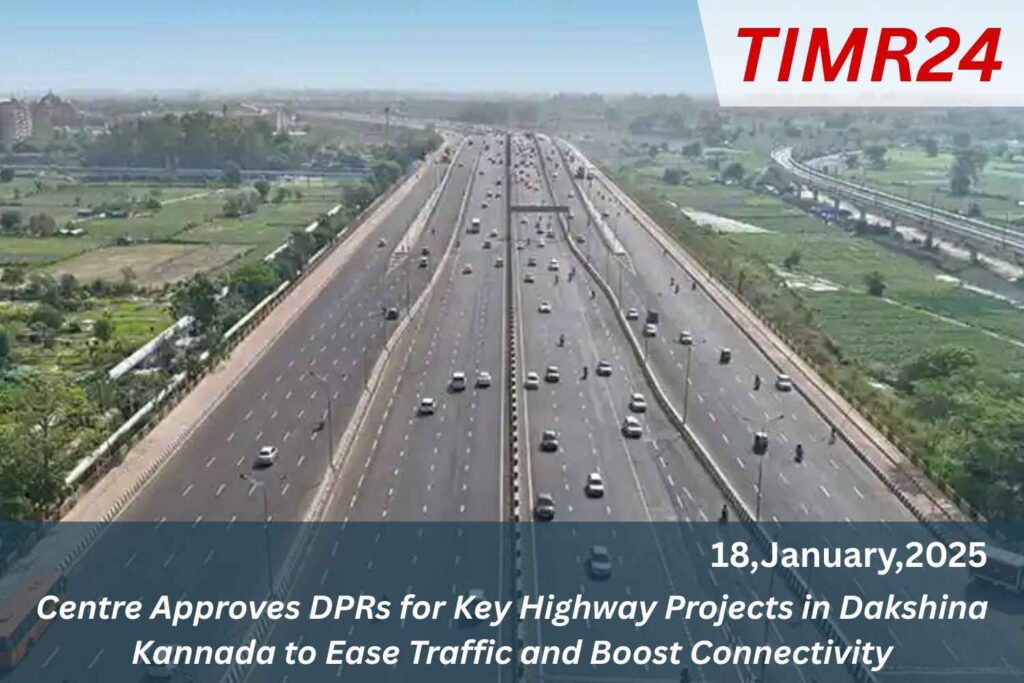
The Centre has approved Detailed Project Reports (DPRs) for significant highway upgrades in Dakshina Kannada, including the widening of the Surathkal–BC Road stretch and the construction of service roads along NH-66. This initiative aims to enhance road infrastructure to alleviate traffic congestion, improve port connectivity, and enhance road safety. The highways are vital for passenger and cargo transport to New Mangalore Port. The DPRs aim to address capacity issues and enhance mobility, logistics efficiency, and urban connectivity in the region.
Region Is Witnessing Rapid Urbanisation
The Government’s approval of Detailed Project Reports (DPRs) for key highway projects in Dakshina Kannada marks a major step forward in strengthening road infrastructure in coastal Karnataka. This decision comes at a time when the region is witnessing rapid urbanisation, increased industrial activity, and a steady rise in vehicular movement. Dakshina Kannada, with Mangaluru as its commercial and port hub, plays a crucial role in connecting Karnataka to Kerala and other southern states. The approval of these DPRs is expected to significantly ease traffic congestion, improve travel efficiency, and support long-term economic growth across the district.
Dakshina Kannada has long faced traffic bottlenecks due to narrow highways, mixed local and long-distance traffic, and increasing freight movement to ports and industrial zones. With the Centre giving a green signal to these DPRs, the groundwork is now set for modern, capacity-enhanced highways that align with national infrastructure standards. These projects are being planned under the guidance of the Ministry of Road Transport and Highways (MoRTH) and the National Highways Authority of India (NHAI), ensuring technical quality and timely execution From a regional perspective, the approval of DPRs is not just an administrative step but a signal of strategic.
Directly Benefit Daily Commuters
Importance being given to Dakshina Kannada. The district serves as a gateway to the western coast and supports major economic activities such as port operations, fisheries, education, healthcare, and tourism. Improved highways will directly benefit daily commuters, long-haul transporters, and emergency services, while also enhancing the overall quality of life for residents. Similar infrastructure-led growth patterns have already been observed in other parts of the country One of the primary objectives of these highway projects is traffic decongestion. At present, several stretches in and around Mangaluru experience peak-hour delays due to limited lane.
Capacity and unplanned intersections. The newly approved DPRs focus on widening existing roads, constructing bypasses, and improving junction designs to ensure smoother traffic flow. By separating local traffic from through traffic, these highways will reduce travel time and (India) fuel consumption, leading to both economic and environmental benefits Connectivity enhancement is another major outcome expected from these projects. Dakshina Kannada connects key towns, ports, and hinterland areas, and better highways will strengthen links between rural and urban regions. Farmers, small businesses, and service providers in interior areas will gain easier access to markets and essential services.
Coastal And Cultural Destinations
This improved accessibility can play a vital role in balanced regional development, ensuring that growth is not limited only to major cities. Enhanced connectivity also supports tourism, as smoother road networks encourage more visitors to explore coastal and cultural destinations across the district The economic impact of these highway projects is likely to be substantial. Construction activities themselves will generate employment opportunities for local workers, contractors, and suppliers. Once completed, improved highways will reduce logistics costs for industries that depend on road transport, including manufacturing units, exporters, and port-linked businesses.
Lower transportation costs improve competitiveness, making the region more attractive for new investments. According to infrastructure development trends highlighted by government agencies, every major highway project has a multiplier effect on the local economy, boosting trade, services, and real estate growth From a policy standpoint, the approval of DPRs reflects the Centre’s commitment to strengthening last-mile and regional connectivity under national infrastructure programmes. DPRs are critical documents that define the technical, financial, and environmental feasibility of a project. Their approval indicates that the proposed highway projects.
Environmental And Safety Considerations
Have met required standards related to design, safety, land acquisition, and cost-effectiveness. This step also brings the projects closer to the tendering and construction phases, reducing uncertainty and delays Environmental and safety considerations have also been integrated into the planning of these highway projects. Modern DPRs include provisions for proper drainage, pedestrian safety measures, service roads, and green buffers where feasible. By adopting better design standards, the projects aim to minimise accident risks and reduce the negative environmental impact often associated with road expansion These measures are in line with MoRTH’s.
Evolving guidelines on sustainable highway development, which are periodically updated on official government platforms For local communities, the long-term benefits of these projects go beyond faster travel. Improved highways enhance access to healthcare, education, and emergency services, particularly for residents of semi-urban and rural areas. Students commuting to educational institutions and patients travelling to major hospitals in Mangaluru are expected to experience safer and reliable journeys. Such social benefits, though less visible than economic gains, play a crucial role in inclusive development and social well-being.
Addressing Long-Standing Infrastructure
In conclusion, the approval of DPRs for key highway projects in Dakshina Kannada represents a decisive move towards easing traffic congestion and boosting connectivity in one of Karnataka’s most important districts. By addressing long-standing infrastructure gaps, these projects (India) are set to transform mobility, support economic activities, and improve daily life for thousands of people. As the projects move into the implementation phase, consistent monitoring and coordination between central agencies, state authorities, and local stakeholders will be essential to ensure timely completion and maximum impact. With strong planning and execution.
Q1. What does DPR approval mean for highway projects?
DPR approval means the project’s technical design, cost estimates, and feasibility have been cleared by the Centre, allowing it to move towards construction.
Q2. Which agencies are involved in these highway projects?
The projects are overseen by the Ministry of Road Transport and Highways and implemented mainly through NHAI.
Q3. How will these projects help daily commuters?
They will reduce congestion, improve road safety, and cut travel time on busy stretches.
Q4. Will these highways support economic growth?
Yes, better roads lower logistics costs, attract investment, and create jobs during and after construction.
Q5. When are these projects likely to start?
After DPR approval, projects typically proceed to tendering and land acquisition before construction begins.