
















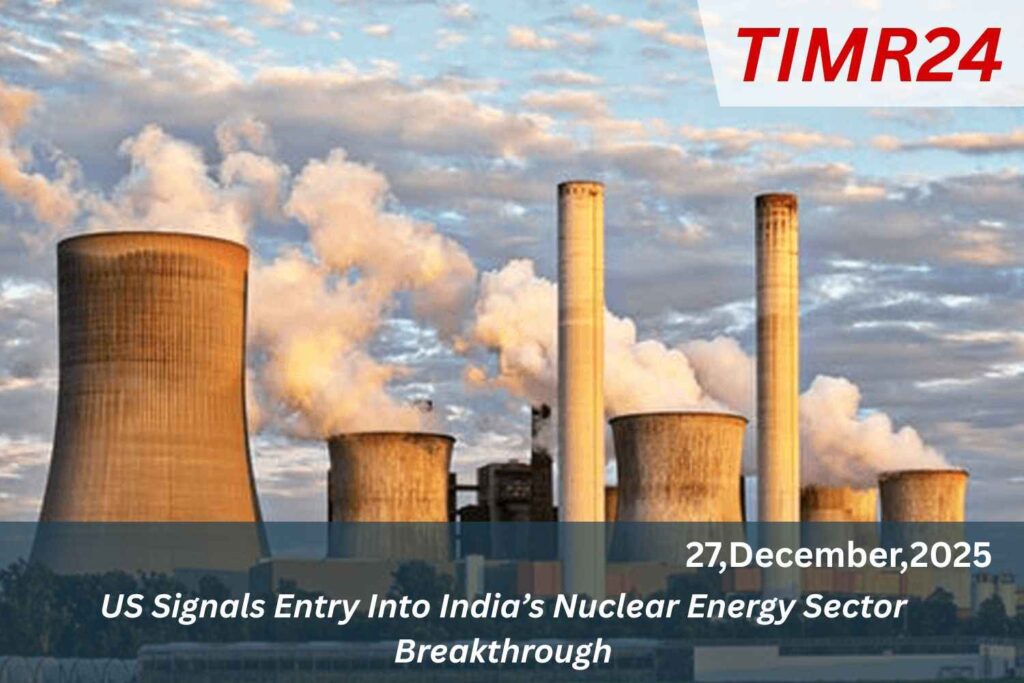
The United States has expressed readiness to engage in India’s nuclear energy sector following legislative reforms that ease liability norms and promote private investments. The US Embassy announced a commitment to joint innovation and research in energy after India’s parliament dismantled a state monopoly in nuclear power. These reforms aim to attract around $214 billion in investments, notably from major Indian conglomerates like the Adani Group, and address long-standing liability laws that previously hindered foreign investment. The new law exempts suppliers from nuclear liability and caps operator liability, while establishing a government fund for claims exceeding these limits.
India’s Nuclear Energy
This initiative is aligned with Prime Minister Narendra Modi’s vision of transforming India into a developed nation by 2047 and positions nuclear energy as a pillar of India’s clean energy strategy amidst rising electricity demands The United States signaling its entry into India’s nuclear energy sector marks a significant turning point in the global clean energy landscape and bilateral strategic relations. This development comes at a time when India is accelerating its transition toward low-carbon energy sources to meet rising power demand while fulfilling its climate commitments Nuclear energy, with its ability to provide stable baseload power and minimal carbon.
Emissions, is increasingly viewed as a critical pillar in India’s long-term energy mix. The US interest reflects not only commercial opportunity but also a broader strategic alignment aimed at strengthening energy security, technology collaboration, and geopolitical cooperation between the two democracies India’s nuclear energy programme has traditionally been state-driven, dominated by indigenous technologies and public sector undertakings. However, the scale of India’s future electricity needs and its ambitious net-zero targets require diversified international collaboration. The entry of US nuclear companies signals a shift toward greater openness.
Reinforcing Confidence Among
Especially in advanced reactor technologies, fuel cycle innovation, and safety systems. This move aligns with India’s evolving policy framework that encourages private and foreign participation under strict regulatory oversight, reinforcing confidence among global investors and technology providers. For deeper insight into India’s clean energy roadmap From a strategic standpoint, US participation in India’s nuclear sector is rooted in years of diplomatic groundwork laid since the India-US Civil Nuclear Agreement. While early momentum faced legal and liability-related hurdles, renewed political commitment and regulatory clarity have revived interest.
American firms are particularly keen on deploying Small Modular Reactors (SMRs), which are cost-effective, scalable, and suitable for diverse geographical conditions. These reactors offer flexibility for industrial clusters, remote regions, and grid-stability applications, making them highly relevant for India’s development needs. This technological focus complements India’s efforts to modernize infrastructure The economic implications of US entry into India’s nuclear energy space are substantial. Beyond power generation, nuclear projects generate high-skilled employment, boost local manufacturing, and create long-term supply chains.
Power Purchase Agreements
Collaboration with US companies can accelerate knowledge transfer in reactor design, digital safety systems, and waste management practices. This strengthens India’s domestic capabilities while reducing reliance on fossil fuels. Moreover, long-term power purchase agreements from nuclear plants provide price stability, insulating the economy from volatile global fuel markets. Such economic resilience is increasingly vital as energy security becomes intertwined with national security and industrial competitiveness From an environmental perspective, nuclear energy plays a pivotal role in India’s climate action strategy. As renewable sources like solar and wind expand rapidly.
Grid stability becomes a challenge due to intermittency. Nuclear power, operating round-the-clock with near-zero emissions, complements renewables and ensures reliability. The US’s emphasis on next-generation reactors with enhanced safety and lower waste output aligns well (India) with India’s sustainability goals. This synergy strengthens global efforts to combat climate change while supporting equitable growth. For a broader context Geopolitically, the move underscores deepening trust between India and the United States. Energy cooperation is now a cornerstone of the bilateral relationship, alongside defense, technology, and trade. By collaborating in nuclear energy, both nations signal.
Reinforcing Strategic Autonomy
A shared commitment to global non-proliferation norms, high safety standards, and responsible innovation. This partnership also balances regional energy dynamics, offering India alternatives to traditional suppliers and reinforcing its strategic autonomy. On the global stage, such cooperation strengthens democratic leadership in setting norms for peaceful nuclear use Regulatory and policy alignment remains a crucial factor for successful implementation. India’s regulatory authorities have been working toward harmonizing global best practices while safeguarding national interests. The US, with its mature nuclear regulatory ecosystem, brings decades of operational and safety experience.
Joint working groups, capacity-building initiatives, and regulatory dialogues are expected to streamline approvals and project execution. This institutional collaboration reduces risk perceptions and enhances investor confidence, paving the way for timely project delivery and long-term cooperation Technology innovation is another major dimension of this engagement nuclear firms are global leaders in digital reactor controls, advanced materials, and lifecycle management. Their entry into India’s market can catalyze research partnerships with Indian institutions, fostering innovation ecosystems around nuclear science and engineering. Such collaboration can also extend to nuclear medicine.
Safety Assurance Remain Central
isotope production, and space applications, multiplying the benefits beyond electricity generation. This integrated approach positions nuclear energy as a multi-sector growth driver rather than a standalone power source Public perception and safety assurance remain central to nuclear expansion. Transparent communication, community engagement, and adherence to stringent safety protocols are essential for building trust. US involvement, with its emphasis on international safety standards, can reinforce public confidence. Additionally, collaborative frameworks for waste management and decommissioning ensure that long-term environmental responsibilities are addressed proactively.
These aspects are critical for sustainable nuclear growth and social acceptance across regions hosting nuclear facilities The US signaling entry into India’s nuclear energy sector represents more than a commercial initiative; it reflects a strategic convergence of energy security, climate responsibility, and geopolitical alignment. By combining India’s growing energy demand and policy (India) openness with US technological leadership, this partnership has the potential to reshape India’s clean energy future. It strengthens bilateral ties, accelerates decarbonization, and positions both countries as leaders in responsible nuclear innovation.
Q1. Why is the US interested in India’s nuclear energy sector?
The US sees India as a high-growth market with strong demand for clean, reliable power and long-term strategic alignment.
Q2. What technologies are US companies likely to bring?
Advanced reactors, especially Small Modular Reactors (SMRs), along with digital safety and fuel-cycle technologies.
Q3. How does this benefit India’s climate goals?
Nuclear energy provides low-carbon baseload power, supporting renewable integration and emission reduction.
Q4. Will this impact India’s energy security?
Yes, diversified nuclear partnerships enhance energy reliability and reduce dependence on fossil fuel imports.
Q5. Are safety and regulation concerns addressed?
Collaboration includes strict adherence to international safety standards and regulatory cooperation.