



















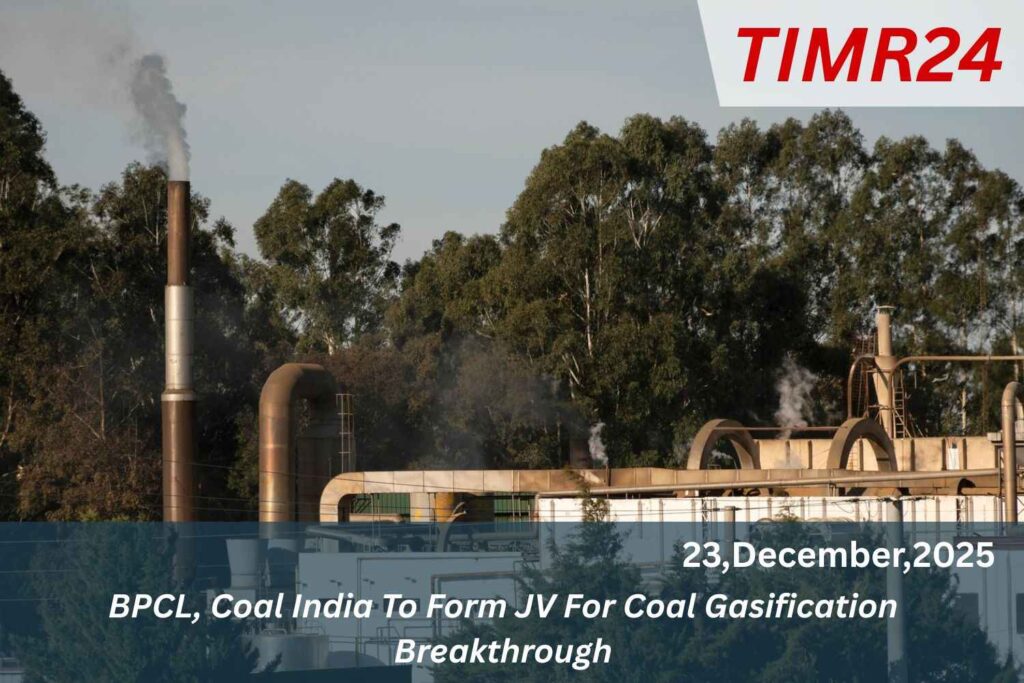
State-run Bharat Petroleum Corporation Limited (BPCL) is partnering with Coal India Limited to establish a joint venture for a coal gasification project in Maharashtra, intended to produce synthetic natural gas as a domestic alternative to imported fuel. Coal India will hold a majority stake of 51% in the joint venture, while BPCL will own the remaining 49%. The project, to be developed at Western Coalfields Limited, aims to enhance energy security and reduce reliance on natural gas imports by utilizing domestic coal resources and BPCL’s refining expertise. Relevant coal allocations and financial incentives have been planned to support the project and promote cleaner coal technologies.
Oil Imports, Enhancing Domestic
Bharat Petroleum Corporation Limited (BPCL) and Coal India Limited (CIL) are set to strengthen India’s energy transformation journey through a proposed joint venture focused on coal gasification, a move that signals a strategic shift in how the country intends to utilize its abundant coal resources. This collaboration aligns with the broader national objective of reducing crude oil imports, enhancing domestic energy security, and transitioning towards cleaner and more efficient fuel alternatives. As India continues to balance economic growth with sustainability goals, this joint venture represents a critical intersection of traditional energy resources and emerging clean technologies.
Reinforcing policy priorities outlined under India’s long-term energy roadmap and discussed extensively Coal gasification is increasingly being viewed as a bridge technology that allows coal to be used in a more environmentally responsible manner. Instead of direct combustion, coal is converted into synthesis gas, which can then be used to produce methanol, ammonia, synthetic natural gas, and other value-added chemicals. For a country like India, which holds one of the largest coal reserves globally, this technology presents an opportunity to reduce waste, lower emissions compared to conventional coal use, and diversify energy outputs.
NITI Aayog Ministry Coal
The BPCL–Coal India joint venture aims to leverage Coal India’s resource base and BPCL’s downstream refining and petrochemical expertise, creating an integrated value chain that enhances efficiency and commercial viability From a policy perspective, the proposed joint venture is in line with the Government of India’s push for coal gasification and liquefaction projects, especially for public sector undertakings. NITI Aayog and the Ministry of Coal have repeatedly emphasized coal gasification as a strategic priority to reduce dependence on imported natural gas and crude oil. This partnership also strengthens the role of public sector enterprises in driving innovation-led industrial.
Growth, a theme explored further, BPCL and Coal India can de-risk large-scale projects that may otherwise face financial and technological hurdles The economic implications of this joint venture are significant. Coal gasification plants require substantial investment but also generate (Road) long-term value by producing cleaner fuels and industrial feedstocks. These outputs are essential for sectors such as fertilizers, chemicals, steel, and transportation. Domestic production of synthetic fuels can help stabilize prices, reduce foreign exchange outflow, and support downstream manufacturing ecosystems. Additionally, such projects can create employment opportunities in mining regions.
BPCL’s Experience Refining Cleaner
Contributing to regional development and inclusive growth, particularly in coal-rich states Environmental considerations remain central to the coal gasification narrative. While coal is often associated with high emissions, gasification enables better control of pollutants and allows for carbon capture and utilization technologies to be integrated more effectively. BPCL’s experience in refining and cleaner fuel production could play a crucial role in optimizing emission standards and operational efficiency. This initiative complements India’s broader clean energy ambitions, which include expanding renewables while also improving the environmental performance of existing fossil fuel resources.
Strategically, the BPCL–Coal India joint venture may also help India strengthen its energy resilience amid global supply uncertainties. Volatility in international oil and gas markets has underscored the risks of heavy import dependence. By converting domestic coal into versatile energy products, India can buffer itself against external shocks while ensuring steady supply for critical industries. Institutions like the International Energy Agency have highlighted the importance of diversified energy sources for emerging economies, a view that supports initiatives such as this joint venture The role of technology and innovation will be decisive in determining the success of the proposed joint venture.
Encourages Domestic Capability
Coal gasification projects require advanced process control, water management, and waste handling systems to be both economically and environmentally sustainable. BPCL’s operational expertise combined with Coal India’s scale can accelerate technology adoption and localization. This approach also aligns with the Atmanirbhar Bharat vision, which encourages domestic capability building across strategic sectors In the broader industrial context, this collaboration may act as a catalyst for private sector participation and technology partnerships. Successful implementation could encourage similar ventures across the energy value chain, promoting innovation and competition.
It may also influence policy incentives, including viability gap funding and fiscal support mechanisms, which are currently under discussion by policy think tanks such as Ultimately, the BPCL and Coal India joint venture for coal gasification reflects a pragmatic approach to India’s (India) energy transition. Rather than an abrupt shift away from coal, it emphasizes cleaner utilization, technological upgradation, and economic diversification. As India continues to pursue sustainable growth, such initiatives demonstrate how legacy energy assets can be reimagined to support future-ready industrial development. Continued monitoring of this project will be crucial, as its outcomes could.
Q1. What is the objective of the BPCL–Coal India joint venture?
The joint venture aims to develop coal gasification projects that convert coal into cleaner fuels and chemicals, reducing import dependence and improving energy security.
Q2. Why is coal gasification important for India?
Coal gasification allows India to utilize its large coal reserves more efficiently while producing cleaner energy products and supporting industrial growth.
Q3. How will this JV benefit the economy?
It can reduce foreign exchange outflow, create jobs, support downstream industries, and promote regional development in coal-producing areas.
Q4. Is coal gasification environmentally friendly?
While coal-based, gasification is cleaner than direct combustion and allows better emission control and integration of carbon management technologies.
Q5. How does this project align with government policy?
It aligns with national priorities on energy security, Atmanirbhar Bharat, and cleaner utilization of domestic resources.