





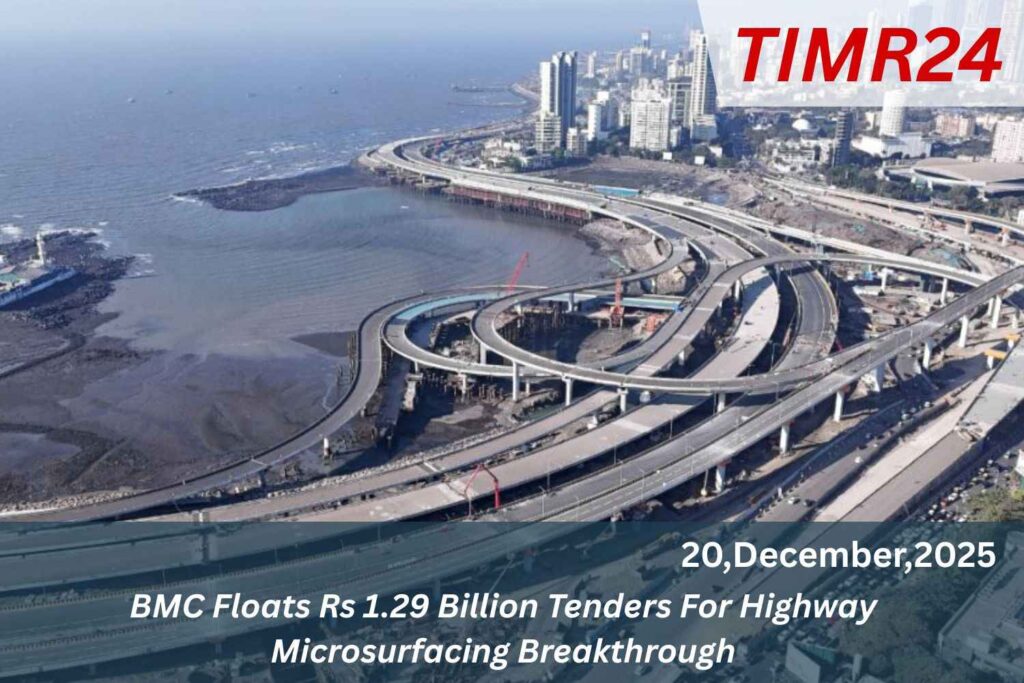
The Brihanmumbai Municipal Corporation has initiated two tenders for microsurfacing projects on the Western and Eastern Express Highways, totaling an estimated cost of Rs 1.29 billion. Rs 0.69 billion is allocated for resurfacing a 7.5 km section of the Western Express Highway, while Rs 0.60 billion is designated for a 7.9 km segment of the Eastern Express Highway. Instead of resurfacing the entire highways at once, which would disrupt traffic, the BMC aims to microsurface selected stretches annually to ensure smooth road conditions with minimal commuter inconvenience.
City Witnessing Increasing Traffic
The Brihanmumbai Municipal Corporation (BMC) has floated tenders worth Rs 1.29 billion for highway microsurfacing works, marking a significant step in strengthening Mumbai’s urban road infrastructure. This initiative comes at a time when the city is witnessing increasing traffic volumes, accelerated wear and tear of arterial roads, and growing public demand for smoother and safer commuting conditions. Microsurfacing, a preventive road maintenance technique, has emerged as a cost-effective and durable solution for extending pavement life while minimizing traffic disruptions. Through this tender, BMC aims to address surface distress on major corridors and ensure.
Microsurfacing is widely used across developed urban road networks due to its ability to restore skid resistance, seal surface cracks, and improve overall pavement performance without the need for extensive reconstruction. In Mumbai’s context, where roads endure heavy monsoon rainfall, high axle loads, and continuous traffic flow, microsurfacing provides a timely intervention to prevent deeper structural damage. By floating tenders of this scale, BMC is signaling a shift toward proactive infrastructure maintenance rather than reactive repairs, aligning with modern urban road management practices seen globally.
Mumbai’s Daily Mobility, Connecting
The Rs 1.29 billion tender package is expected to cover multiple highway stretches under BMC’s jurisdiction, particularly those experiencing surface rutting, oxidation, and reduced friction. These corridors form the backbone of Mumbai’s daily mobility, connecting residential zones, business districts, ports, and transport hubs. Improved road surfaces not only enhance driving comfort but also play a crucial role in reducing accident risks, vehicle operating costs, and congestion caused by frequent repair works. This initiative complements ongoing transport upgrades such as flyovers, coastal roads, and metro integration projects across the city.
From a technical perspective, highway microsurfacing involves the application of a polymer-modified bitumen emulsion mixed with aggregates, mineral fillers, and additives. The process allows rapid curing, enabling roads to reopen to traffic within hours. This is particularly important for Mumbai, where prolonged road closures can severely impact economic activity and daily life. According to industry standards laid out by bodies such as the Indian Roads Congress, microsurfacing enhances pavement texture and waterproofing, extending surface life by several years when applied at the right stage of pavement deterioration.
Recurring Pothole Repairs
The tender also reflects BMC’s broader infrastructure modernization agenda, which emphasizes sustainability, lifecycle cost optimization, and efficient use of public funds. Instead of recurring pothole repairs that strain municipal budgets year after year, microsurfacing offers a long-term maintenance solution that delivers better value. By investing in preventive maintenance, BMC can allocate resources more strategically across other urban development priorities such as drainage upgrades, pedestrian infrastructure, and public transport improvements. Similar approaches are being encouraged.
For contractors and infrastructure companies, the Rs 1.29 billion microsurfacing tender presents substantial business opportunities. The project is expected to attract specialized road maintenance firms with expertise in slurry and microsurfacing technologies. Participation in (MMRC) such municipal projects not only strengthens a company’s order book but also contributes to the adoption of advanced road preservation techniques across Indian cities Urban planners and mobility experts view this tender as a positive signal for Mumbai’s long-term transport resilience. Well-maintained highways are essential for ensuring reliable freight movement, emergency response.
Treatments, BMC Contributing
Efficiency, and seamless inter-city connectivity. Microsurfacing improves surface uniformity and skid resistance, which becomes particularly critical during monsoon seasons when road safety risks escalate. By prioritizing such treatments, BMC is contributing to safer urban mobility outcomes, aligning with national road safety objectives and smart city principles The economic implications of improved highway surfaces are equally significant. Smooth roads reduce fuel consumption, vehicle maintenance costs, and travel time, indirectly supporting productivity and lowering carbon emissions. In a densely populated metropolis like Mumbai, even marginal improvements in traffic.
Flow can yield substantial cumulative benefits. The microsurfacing tender also supports local employment, as execution will require skilled operators, engineers, material suppliers, and quality control professionals throughout the project lifecycle. This reinforces infrastructure development as a key driver of urban economic activity This tender also complements broader urban infrastructure narratives the BMC’s decision to float Rs 1.29 billion tenders for highway microsurfacing underscores a forward-looking approach to urban road maintenance.
By adopting modern surface treatment technologies, the civic body is addressing immediate pavement needs while laying the foundation for more resilient, safer, and cost-efficient transport infrastructure. As Mumbai continues to grow as India’s financial and commercial ( Solar) hub, such targeted investments in road quality will play a crucial role in supporting mobility, economic vitality, and overall quality of urban life.
Q1. What is the value of the BMC highway microsurfacing tender?
The total estimated value of the tender floated by BMC is Rs 1.29 billion.
Q2. What is highway microsurfacing used for?
Microsurfacing is used to restore road surface texture, improve skid resistance, seal minor cracks, and extend pavement life.
Q3. Why is microsurfacing important for Mumbai roads?
Mumbai roads face heavy traffic loads and intense monsoon conditions, making microsurfacing ideal for preventive maintenance and safety improvement.
Q4. Who can participate in the BMC tender?
Eligible contractors with experience in road maintenance and microsurfacing technologies can participate as per BMC tender guidelines.
Q5. Where can tender details be accessed?
Tender documents and updates are available on BMC’s official portal.