










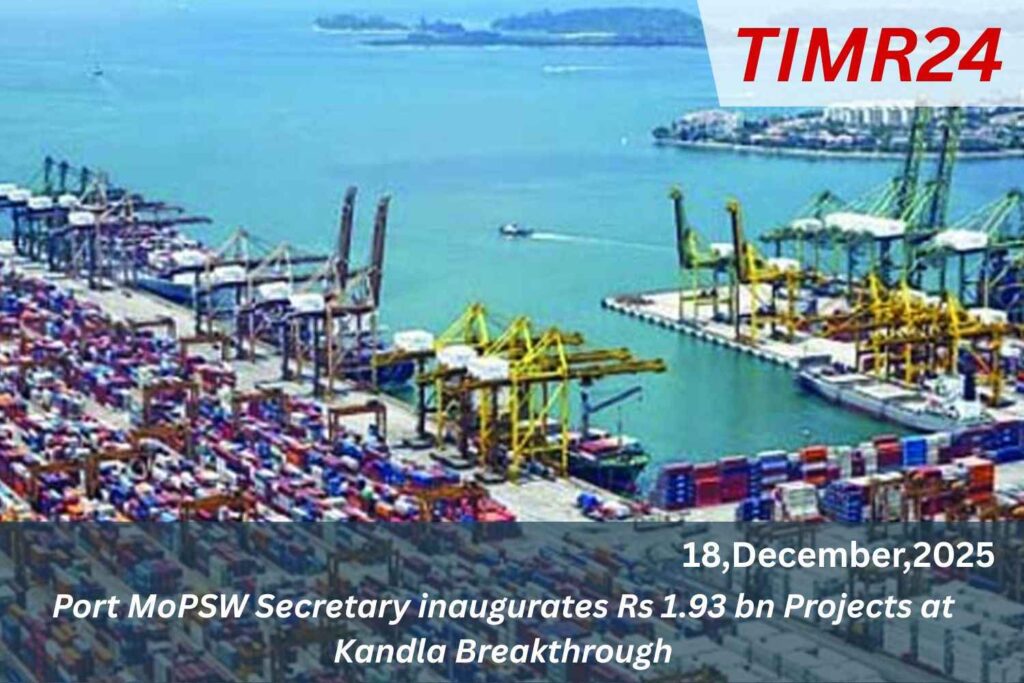
Vijay Kumar, Secretary of the Ministry of Ports, Shipping and Waterways, inaugurated multiple developmental projects valued at Rs 1.93 billion at Deendayal Port Authority in Kandla. This initiative aims to enhance port infrastructure, efficiency, and sustainability. Key projects include land reclamation for a shipyard, coastal road connectivity to National Highway 141, and a new storage facility. Kumar also introduced a fleet of green electric vehicle loaders and initiated India’s first Green Methanol Facility. Discussions on operational efficiencies and growth opportunities were held with port stakeholders during.
Modernis Maritime Infrastructure Port
The inauguration of projects worth Rs 1.93 billion at Kandla by the Secretary of the Ministry of, Shipping and Waterways (MoPSW) marks a significant step in India’s ongoing effort to modernise its maritime infrastructure and strengthen its position as a global trade hub. Kandla, officially known as Deendayal Authority, holds a strategic location on the western coast of India and serves as a critical gateway for international trade, particularly for northern and western hinterland states. The newly inaugurated projects reflect the government’s focus on capacity augmentation, operational efficiency and sustainable -led development aligned with national logistics and economic goals.
Kandla Port has historically played a vital role in India’s maritime ecosystem, handling a wide range of cargo including crude oil, petroleum products, fertilisers, salt, food grains and containerised goods. With increasing trade volumes and evolving supply chain demands has been under continuous pressure to upgrade its infrastructure and adopt modern operational practices. The Rs 1.93 billion investment is aimed at addressing these challenges through targeted development of assets, improved cargo handling systems and enhanced connectivity within the port ecosystem. These initiatives directly support the objectives outlined under.
Improving Efficiency And Turnaround
The Sagarmala Programme, which seeks to unlock the full potential of India’s coastline and waterways through port-led industrialisation and logistics optimisation One of the key aspects of the newly inaugurated projects is the emphasis on improving efficiency and turnaround time for vessels and cargo. Modern infrastructure not only reduces operational delays but also lowers logistics costs for exporters and importers, making Indian trade more competitive globally. Enhanced mechanisation, upgraded berthing facilities and improved yard management systems are expected to significantly boost productivity at Kandla. This aligns closely with India’s broader logistics reform agenda.
Which aims to reduce logistics costs as a percentage of GDP and improve the country’s ranking in global logistics performance indices on India’s modernisation initiatives can be explored through coverage on Indian modernisation The projects also underscore the growing importance of public investment in strengthening maritime infrastructure as a catalyst for regional economic development. Kandla serves industrial clusters across Gujarat, Rajasthan, Madhya Pradesh and parts of Haryana, making it a crucial between manufacturing centres and global markets. Improved capacity and reliability can directly benefit.
India’s Blue Economy
Industries such as petrochemicals, textiles, engineering goods and agri-exports. By facilitating smoother cargo movement, the contributes to the expansion of industrial activity, job creation and export growth in the region. This -led growth model is a cornerstone of India’s Blue Economy, which seeks sustainable economic development through responsible use of ocean resources Environmental sustainability has also emerged as a key consideration in port development, and the projects inaugurated at Kandla reflect this evolving priority. Modern infrastructure projects increasingly incorporate energy-efficient systems, improved waste.
Management practices and measures to reduce emissions from operations. While are traditionally energy-intensive, the adoption of greener technologies and smarter design can significantly reduce their environmental footprint. The Ministry of, Shipping and Waterways has been actively encouraging major to align with national climate commitments and sustainability targets. These efforts complement wider initiatives in logistics and infrastructure that aim to balance economic growth with environmental responsibility, as discussed in our analysis of logistics infrastructure development in India From a policy perspective, the inauguration of these projects highlights.
Attract Private investment And Enable Faster
The government’s commitment to strengthening governance and institutional capacity at major. The transition of major into autonomous port authorities under the Major Authorities Act has given like Kandla greater flexibility in decision-making, project execution and resource mobilisation. This institutional reform is designed to improve efficiency, attract private investment and enable faster implementation of infrastructure projects. The involvement of senior MoPSW leadership in inaugurating these developments signals strong administrative support and oversight, which is critical for ensuring timely completion and effective utilisation of public investments.
The economic significance of Kandla extends beyond cargo volumes and revenue generation. As a key node in India’s western maritime corridor, the plays a strategic role in strengthening trade links with the Middle East, Africa and Europe. Enhanced infrastructure at Kandla (India) can support larger vessels, diversified cargo profiles and more reliable shipping schedules, all of which are essential for maintaining India’s competitiveness in global trade. In an era of shifting supply chains and increasing emphasis on resilient logistics networks, investments in like Kandla help position India as a dependable trade partner. For a broader understanding of how port development integrates with national trade strategies.
Railways Highways Industrial Parks
The Rs 1.93 billion projects also reflect the growing synergy between central government policy authorities and regional economic planning are no longer viewed as isolated infrastructure assets but as integrated logistics hubs connected to railways, highways, industrial parks and inland waterways. Improved infrastructure enhances the effectiveness of these multimodal linkages, reducing congestion and improving cargo evacuation. This integrated approach is essential for realising the full benefits of large-scale public investment in infrastructure and aligns with the long-term vision of seamless logistics across India’s transport network.
Additional context on -led connectivity initiatives can be found in our coverage of Sagarmala projects in India In the long term, sustained investment in like Kandla is expected to contribute to India’s ambition of becoming a $5 trillion economy. Efficient maritime infrastructure supports export growth, reduces import dependency costs and strengthens supply chain resilience. As global trade continues to evolve, that can adapt to changing cargo patterns, technological advancements and environmental standards will play a decisive role in shaping economic outcomes. The inauguration of these projects is therefore not just a ceremonial milestone but a tangible step towards.
Building future-ready infrastructure that supports national development priorities Overall, the inauguration of Rs 1.93 billion worth of projects at Kandla by the MoPSW Secretary underscores the strategic importance of maritime infrastructure in India’s growth story. By enhancing (India) capacity, efficiency and sustainability, these projects reinforce Kandla role as a critical gateway for trade and industry. As India continues to invest in modern ports and integrated logistics systems, developments at Kandla serve as a clear example of how targeted public investment can drive economic growth, regional development and global competitiveness in a rapidly changing world.
Q1. What is the total investment inaugurated at Kandla ?
The MoPSW Secretary inaugurated projects worth Rs 1.93 billion aimed at upgrading infrastructure and operational efficiency at Kandla.
Q2. Why is Kandla strategically important for India?
Kandla serves as a major gateway on India’s western coast, supporting trade for multiple hinterland states and key industrial sectors.
Q3. How do these projects benefit India’s logistics sector?
The projects improve cargo handling efficiency, reduce turnaround time and lower logistics costs, strengthening supply chain competitiveness.
Q4. Are these projects aligned with any national programmes?
Yes, they align with the Sagarmala Programme and India’s broader-led development and logistics reform initiatives.
Q5. What is the long-term impact of these developments?
In the long term, the projects support trade growth, regional industrial development and India’s goal of building world-class maritime infrastructure.