













IST - Monday, April 13, 2026 3:41 pm
Hot News

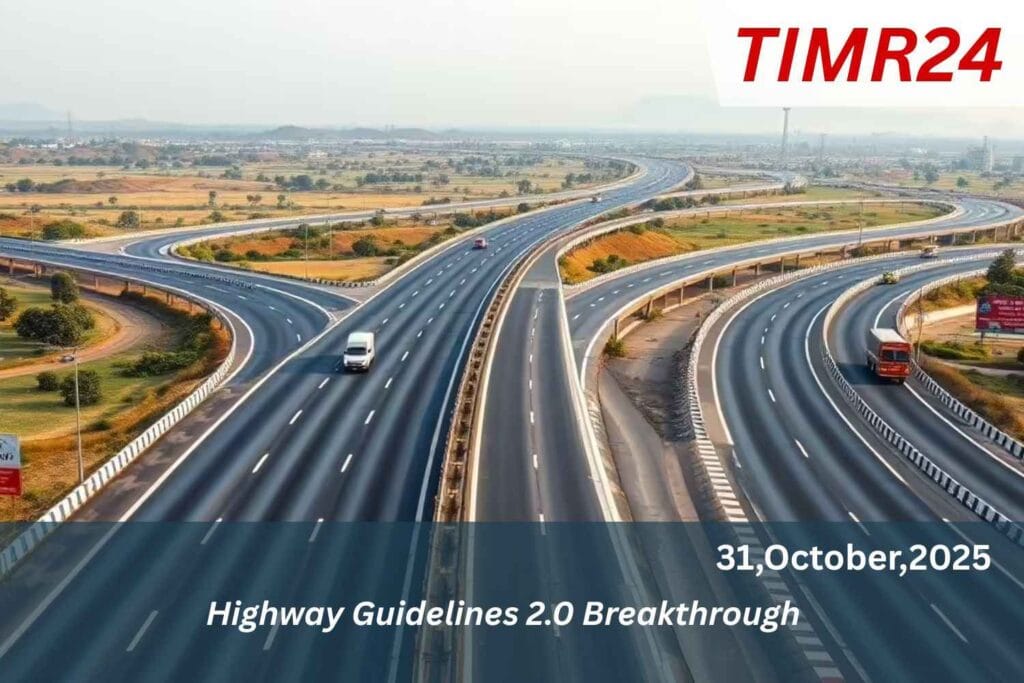
Highway Guidelines 2.0 Breakthrough

Soniya Gupta

Updated on:

2.0

In August 2025, the Public Accounts Committee, which includes members from the Lok Sabha and Rajya Sabha, released a report on the regulation of fees and user charges related to public infrastructure in the context of the Ministry of Road Transport and Highways and the National Highways Authority of India. The report reviewed accountability, subcontracting, pavement failures, emergency responses, toll reforms, service quality, and stakeholder consultations. It includes recommendations for the planning and execution of National Highway projects, focusing on safety, tolling, and user services India’s highway network is the backbone of its economy.

Connecting cities, industries, and communities across thousands of kilometers. With the launch of Highway Guidelines 2.0, the Ministry of Road Transport and Highways (MoRTH) has introduced a transformative framework aimed at reimagining road design, sustainability, and (MMRC) technological advancement. The updated guidelines represent a crucial leap from traditional construction standards toward a more integrated and future-ready highway ecosystem that supports economic growth, green mobility, and digital governance. The initiative aligns closely with national missions such as PM Gati Shakti, National Infrastructure Pipeline (NIP), and India’s Vision 2047, setting a global benchmark for infrastructure modernization.

Evolution of Highway Policy and Modernization

For decades, India’s highways were built primarily for functionality focusing on connectivity, not necessarily sustainability or safety. However, with increasing urbanization, vehicle population, and environmental challenges, the old framework became inadequate. Highway Guidelines 2.0 introduces a much-needed shift by emphasizing smarter design, digital integration, and long-term environmental responsibility. The new standards consider not only engineering excellence but also social and ecological factors. The goal is to create highways that are more resilient to climate change, reduce congestion, and enhance user experience The evolution of these guidelines also comes in response to.

Global trends in infrastructure policy. Countries like Japan, Germany, and the United States have already integrated sustainability and intelligent transport systems into their road networks. India’s adoption of Guidelines 2.0 ensures competitiveness and compliance with international best practices information on ongoing national projects which provides real-time updates on major corridors and greenfield expressways A defining feature of Highway Guidelines 2.0 is the digital transformation of road design and monitoring. The integration of Building Information Modeling (BIM), GIS-based mapping, and IoT-enabled systems allows for predictive maintenance and better asset management.

Every highway project under the new guidelines will have a digital twin a 3D model that captures terrain, material, and structural data to optimize construction quality and cost efficiency Additionally, the use of Artificial Intelligence (AI) for traffic management and data-driven planning enhances operational efficiency. This technology-driven approach ensures real-time visibility of traffic patterns, accident hotspots, and maintenance requirements India at the heart of Highway Guidelines 2.0. The initiative promotes the concept of Green Highways, ensuring minimal environmental.

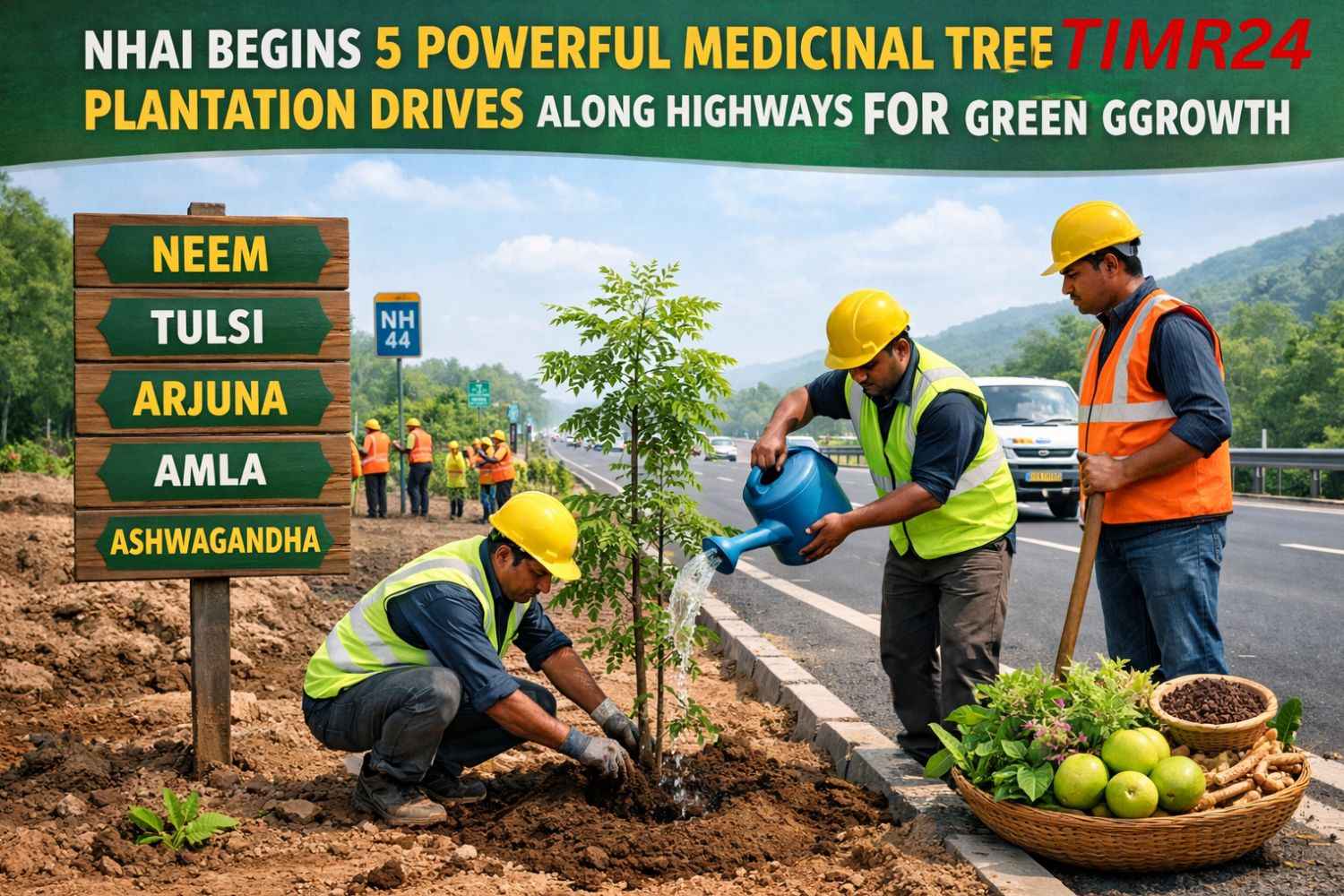
Disruption during construction. Projects must now undergo Environmental Impact Assessments (EIA) and Green Audits before approval. This means preserving biodiversity, using recycled materials, and integrating solar-powered lighting systems along highways. Water management practices such as rainwater harvesting, stormwater drainage systems, and permeable pavements have become mandatory design elements tree plantation along median strips and roadsides helps offset carbon emissions. The guidelines align with India’s commitments under the COP28 Climate Agreement, reinforcing its pledge to achieve net-zero emissions by 2070.

Road Safety and Human Centric Design

As part of the broader Renewable Infrastructure Growth in India, highways are now being designed as energy corridors that host solar farms and EV charging stations. Learn more about the green mobility transition Safety has always been a challenge on Indian roads, and Highway Guidelines 2.0 addresses this through data-based design and continuous monitoring. The new standards prioritize human-centric design elements such as smart signage, reflective lane marking, and dedicated pedestrian crossings. High-risk zones, including curves and steep gradients, must have crash barriers and escape lanes.

The guidelines also introduce the concept of Integrated Road Asset Management Systems (IRAMS) to track road health and maintenance cycles. Emergency response systems, including SOS booths, CCTV surveillance, and GPS-based distress alerts, are now compulsory on expressways and national highways. These improvements are expected to significantly reduce accidents and fatalities, advancing India’s Vision Zero goal for road safety. Further insights on design standards and road safety manuals can be found The Highway Guidelines 2.0 Breakthrough is not merely a policy change it is a catalyst for industrial transformation.

By mandating advanced materials, smart technologies, and localized production, the guidelines boost domestic innovation and Make-in-India manufacturing. Infrastructure companies can now leverage 3D printing, recycled asphalt, and modular construction methods to reduce costs and timelines The initiative also opens up new opportunities for Public-Private Partnerships (PPP), inviting private investment in design, financing, and maintenance. Global infrastructure players are expected to collaborate with Indian firms, bringing expertise and capital. This move aligns with the government’s larger strategy of building self-reliance through technology-led.

Electric Vehicle Readiness and Future Mobility

Growth More on emerging investment prospects can be found As India transitions toward cleaner mobility, Highway Guidelines 2.0 ensures that all major routes are EV-ready. Charging stations are to be installed every 40–60 kilometers along national highways, making intercity travel seamless for electric vehicle users. The policy also supports battery-swapping hubs and solar-powered rest zones, encouraging both private and commercial EV adoption the guidelines propose the integration of smart tolling systems that utilize RFID and facial recognition for smoother transactions, eliminating bottlenecks at toll plazas.

These steps align perfectly with India’s Digital India and E-Mobility Mission, ensuring that road infrastructure keeps pace with the evolving transport ecosystem Transparency and accountability form the backbone of Highway Guidelines 2.0. Every project is now monitored through the National Highways Digital Portal, which provides end-to-end visibility for stakeholders. The system enhances public trust by displaying real-time progress reports, financial updates, and contractor performance indices The long-term roadmap aligns with India’s Vision 2047, focusing on economic inclusivity, digital transformation, and environmental stewardship.

By 2047, India aims to build over 200,000 km of modernized highways powered by renewable energy and digital governance. These efforts will not only strengthen logistics and trade but also support rural development and regional connectivity The success of Highway Guidelines 2.0 depends on collaboration between government agencies, research institutions, and private enterprises. Organizations like MoRTH, NHAI, and IRC work in synergy to ensure compliance, while educational institutions provide technical research and training. International agencies, including the World Bank and Asian Development Bank, have also shown interest in supporting India’s infrastructure digitization drive.

Towards a Smarter, Safer, and Greener Future

In conclusion, Highway Guidelines 2.0 Breakthrough represents a paradigm shift in how India envisions, builds, and sustains its road infrastructure. It blends technology, sustainability, and human safety to create highways that are not just roads but lifelines of progress. By integrating eco-friendly practices, digital innovations, and industry partnerships, India is paving the way for a more connected (MMRC) and climate-resilient future. The new framework goes beyond construction it is a vision of transformation that aligns with the country’s aspiration to become a global infrastructure leader by 2047.

Q1. What is Highway Guidelines 2.0?
It is an updated framework by MoRTH aimed at modernizing India’s highway infrastructure with digital, sustainable, and safety-focused norms.

Q2. How does Highway Guidelines 2.0 improve road safety?
By enforcing design standards like smart traffic monitoring, crash barriers, and emergency response systems.

Q3. Does it support electric vehicles?
Yes, EV charging stations are mandated across major national highways to encourage e-mobility.

Q4. How is sustainability ensured?
Through eco-friendly materials, solar power integration, and environmental audits during construction.

Q5. Which agencies are involved in implementation?
MoRTH, NHAI, IRC, and various PPP partners coordinate under India’s Vision 2047 roadmap.