









IST - Saturday, February 21, 2026 3:46 am
Hot News

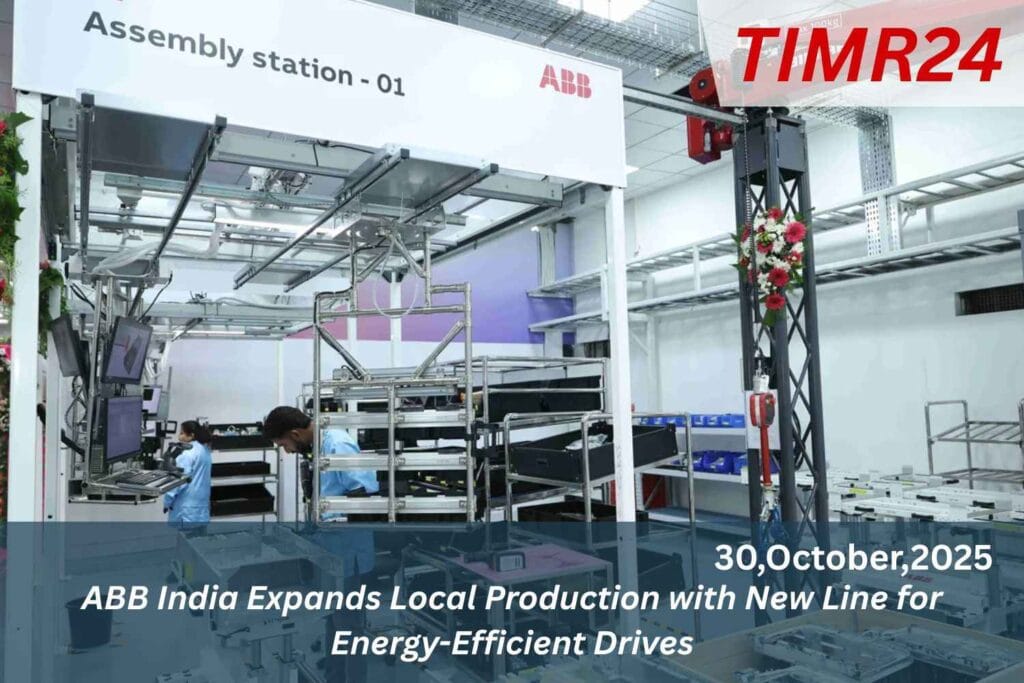
ABB India Expands Local Production with New Line for Energy-Efficient Drives

Soniya Gupta

Updated on:

India

ABB India has launched a new production line for variable speed drive (VSD) modules at its Peenya facility in Bengaluru, enhancing local production capacity by 25%. This move aligns with the Government of India’s ‘Make in India’ and ‘Atmanirbhar Bharat’ initiatives. The line uses advanced automation and digital monitoring technologies, aiming to meet the rising demand for energy-efficient drives in various industries. ABB expects to reduce delivery lead times by up to 40% and provide customized solutions. The expansion, marking 20 years of drive production in India, emphasizes ABB’s commitment to local manufacturing and sustainability, optimizing motor performance across key sectors.

India’s real estate sector is undergoing a major transformation, driven by the growing awareness of sustainability, energy efficiency, and eco-conscious urban development. According to recent industry insights, the Indian green building market is expected to reach $85 billion by FY32, marking a significant leap in the country’s efforts to combat climate change and promote environmental resilience. This transformation isn’t just an industry trend it’s a national movement aligning with India’s net-zero goals and sustainable infrastructure vision under policies like PM GatiShakti, Smart Cities Mission, and the National Infrastructure Pipeline (NIP).

The Rise of India’s Green Building Revolution

Over the past decade, India has witnessed an exponential rise in sustainable construction practices. From commercial hubs like Gurugram and Bengaluru to residential developments in Pune and Hyderabad, the emphasis on green certification through bodies such as IGBC (Indian Green Building Council), GRIHA, and LEED India—has become a symbol of quality and environmental responsibility. Developers like Godrej Properties, Tata Housing, and Mahindra Lifespaces are at the forefront of integrating eco-friendly design, renewable energy, and waste management solutions into their projects The construction industry’s shift towards green architecture is not merely about aesthetics.

Policy Push and Government Initiatives

it’s about long-term cost efficiency, resource conservation, and improved living standards. With India aiming to achieve net-zero emissions by 2070, green buildings are expected to play a pivotal role by reducing energy consumption by nearly 40% and water usage by 30–50% The Government of India has taken several measures to encourage sustainable infrastructure. The Energy Conservation Building Code (ECBC) sets benchmarks for energy efficiency, while programs such as the Smart Cities Mission emphasize the integration of renewable resources and efficient urban planning. Furthermore, the Bureau of Energy Efficiency (BEE) is promoting.

The use of energy-efficient appliances, LED lighting, and solar integration in both new and retrofitted buildings The Indian Green Building Council (IGBC), under the Confederation of Indian Industry (CII), has been instrumental in certifying more than 10,000 green projects covering over 10 billion sq. ft. of built-up area. These certifications encourage builders to use eco-friendly materials, reduce carbon emissions, and implement waste recycling mechanisms. You can read more about India’s sustainability drive on.

Economic Drivers Behind the $85 Billion Growth

The projected $85 billion valuation of green building market by FY32 reflects strong economic fundamentals. Rapid urbanization, rising disposable income, and an increasing corporate focus on ESG (Environmental, Social, and Governance) compliance are among the major drivers. Multinational companies are also opting for green-certified office spaces to attract talent and meet their global sustainability commitments. According to real estate reports, commercial buildings account for nearly 40% of India’s green certified stock, followed closely by residential and institutional sectors Moreover, the availability of green financing and government incentives has accelerated.

This transformation. Several banks and financial institutions, such as State Bank of India and HDFC Bank, now offer lower interest rates for eco-certified projects. International funding agencies like the World Bank and IFC (International Finance Corporation) are also supporting India’s green transition through grants and technical assistance Technology plays a crucial role in making buildings more sustainable and energy-efficient. Smart automation systems, IoT-enabled energy monitoring, and AI-driven building management systems are helping developers optimize electricity, water, and air-conditioning usage. Innovations in solar rooftop.

Integration, rainwater harvesting, and waste-to-energy conversion are redefining how modern buildings operate New-age materials such as low-VOC paints, fly ash bricks, and recycled steel are also gaining traction. Construction firms are adopting Building Information Modelling (BIM) to minimize design errors and ensure efficient material use. For example, companies like Larsen & Toubro (L&T) and Shapoorji Pallonji are leveraging BIM to streamline green project execution across India. More details on technology-driven infrastructure trends can be found.

Market Segments and Regional Trends

The green building market in India is expanding across all major real estate segments commercial, residential, industrial, and institutional. The commercial sector leads adoption, especially in cities like Bengaluru, Gurugram, Hyderabad, and Mumbai, where IT and corporate offices prefer energy-efficient campuses. The residential sector is catching up quickly, with (Green Building)developers promoting sustainable living communities that feature solar panels, sewage treatment plants, and green landscaping In regions like Maharashtra, Karnataka, and Tamil Nadu, local governments have introduced incentives such as property tax rebates and fast-track approvals for certified green.

Buildings The Delhi Development Authority (DDA) has also started integrating sustainability norms into its housing schemes, while Pune continues to emerge as a model city for energy-efficient housing development. Explore more about green real estate trends on IGBC platforms The environmental benefits of green buildings extend beyond energy efficiency. By reducing water waste, promoting recycling, and improving indoor air quality, these projects enhance both human health and ecological balance. Studies suggest that green-certified buildings can lower operational costs by up to 20% and significantly increase occupant productivity.

Socially, this movement supports India’s commitment to the United Nations Sustainable Development Goals (SDGs), especially SDG 11 (Sustainable Cities and Communities) and SDG 13 (Climate Action). Moreover, it fosters green employment opportunities from eco-design architects to (Mohua) renewable energy engineers strengthening India’s green economy ecosystem Despite the progress, several challenges remain. The high initial investment, lack of awareness among smaller developers, and limited technical expertise can slow down adoption in Tier-II and Tier-III cities. Additionally, the availability of certified green materials and skilled labor remains uneven.

United Nations Sustainable Development

Across regions The government and private sector must collaborate to develop capacity-building programs and financial incentives that make green construction accessible to all By FY32, as India’s green building market reaches the $85 billion mark, the sector is poised to become a cornerstone of the nation’s sustainable development journey. With increasing demand for carbon-neutral infrastructure, enhanced energy efficiency standards, and growing public awareness, the green construction movement is set to reshape India’s urban landscape The path forward lies in collaboration between policymakers, builders, financial institutions, and technology innovators.

Together, they can ensure that India not only achieves its sustainability goals but also emerges as a global leader in green infrastructure. For continuous updates on sustainable building practices and policy frameworks, readers can follow resources such as and the $85 billion green building revolution is more than an economic milestone it is a blueprint for a cleaner, healthier, and more resilient future. As environmental consciousness deepens and technological innovation accelerates, the country’s construction landscape will continue to evolve towards eco-smart, energy-efficient, and sustainable growth.

Q1. What is ABB new production line focused on?
It focuses on manufacturing energy-efficient drives for industrial automation and sustainability.

Q2. Where is the new ABB production line located?
The new line is based in Peenya, Bengaluru, one of ABB India’s key manufacturing hubs.

Q3. How does this expansion support “Make in India” mission?
It enhances local production, reduces imports, and boosts job creation within India’s industrial ecosystem.

Q4. What benefits do ABB’s energy-efficient drives offer?
They help reduce energy use by up to 25%, lowering operational costs and carbon emissions.

Q5. What industries will benefit from this expansion?
Manufacturing, infrastructure, automotive, and energy-intensive sectors will gain from ABB’s enhanced local supply.