












IST - Monday, April 13, 2026 3:41 pm
Hot News

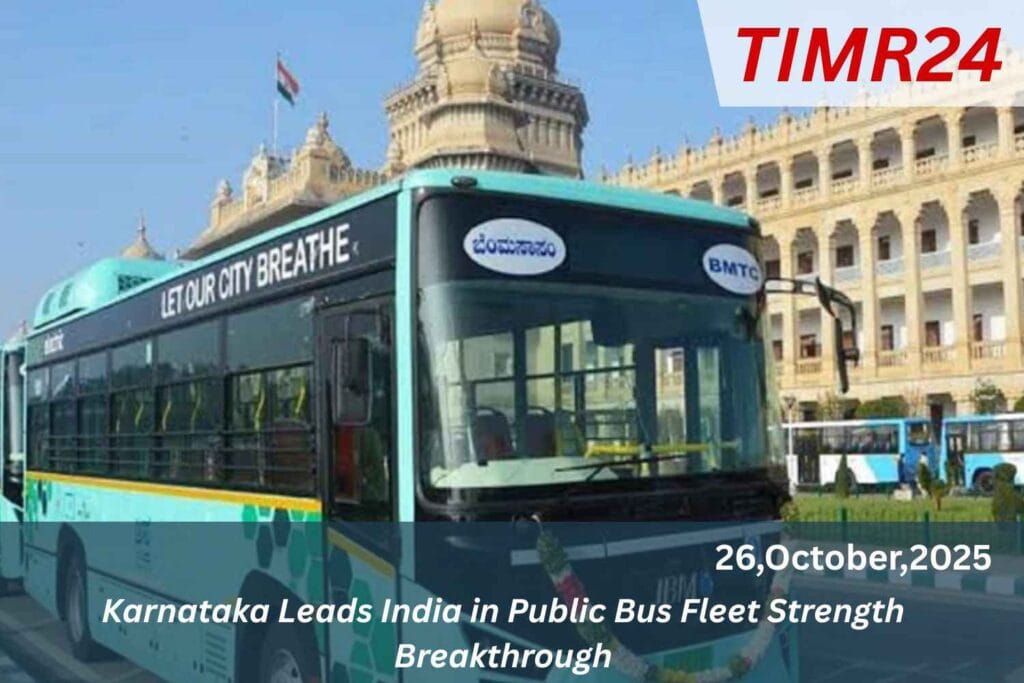
Karnataka Leads India in Public Bus Fleet Strength Breakthrough

Soniya Gupta

Updated on:

Karnataka

Karnataka leads India’s public transport sector with one of the largest bus fleets, supporting millions of daily commuters. The state government invests in improving public mobility and reducing dependence on private vehicles. Transport corporations focus on electrification and operational efficiency, aligning with India’s clean mobility and sustainable transport goals Karnataka has once again proven its dominance in India’s public transport ecosystem by becoming the leading state in public bus fleet strength in 2025. Through its consistent policies, technological advancement, and forward-thinking transport management, has achieved a milestone.

That sets a national benchmark for sustainable urban mobility. The state’s transport agencies — including the Karnataka State Road Transport Corporation (KSRTC), Bangalore Metropolitan Transport Corporation (BMTC), North West Road Transport Corporation (NWKRTC), and Kalyana Karnataka Road Transport Corporation (KKRTC) together form (Energy) (RENEWABLE ENERGY) one of the most extensive and efficient bus networks in the country. With a combined fleet exceeding 25,000 buses, including a rapidly growing number of electric and eco-friendly vehicles, Karnataka’s transport system reflects India’s progressive shift towards sustainability and modernization.

Karnataka’s leadership in the transport sector is rooted in its long-term vision of offering safe, affordable, and environmentally responsible mobility for all citizens. The government’s integrated planning through the Karnataka Transport Infrastructure Development Policy has prioritized expanding public mobility in both urban and rural regions. Bengaluru, often referred to as India’s technology capital, has become a model for urban bus services managed by BMTC, which now operates thousands of buses daily across metropolitan routes. The state’s focus is not merely on fleet size but on reliability, comfort, and environmental efficiency. This expansion in fleet strength directly supports India’s.

Sustainable Mobility: The Rise of Electric Buses

National Electric Mobility Mission Plan (NEMMP), aiming for cleaner transportation solutions across major cities. A major factor behind Karnataka’s transport breakthrough is its rapid adoption of electric buses (e-buses). The state has aggressively implemented its EV Policy 2025, which targets full electrification of public bus services in urban zones like Bengaluru, Mysuru, and Hubballi by 2030. The BMTC and KSRTC have rolled out hundreds of electric buses under central schemes such as FAME-II (Faster Adoption and Manufacturing of Hybrid and Electric Vehicles). This effort not only reduces carbon emissions but also brings operational cost.

Savings and cleaner air quality for commuters. Many of these electric buses are being developed in partnership with leading automakers such as Tata Motors, Olestra Greentech, and Ashok Leyland, further strengthening the industrial base in Karnataka To complement its growing fleet, Karnataka has also made remarkable strides in developing smart mobility infrastructure. The introduction of AI-powered route planning, GPS tracking systems, smart depots, and digital ticketing platforms ensures that passengers enjoy a seamless and efficient commuting experience. The Bengaluru Metropolitan Transport Corporation has implemented intelligent.

Transport management systems that provide real-time bus tracking, improve schedule adherence, and reduce traffic congestion. Several bus depots across Bengaluru and Mysuru have been equipped with solar-powered charging stations for e-buses, aligning with India’s National Green Mobility Mission Beyond technology, the state’s focus on sustainability is evident in the construction of green-certified depots, eco-friendly maintenance facilities, and water recycling systems for bus washing operations. The BMTC’s Shanthi Nagar depot, for instance, serves as a model facility equipped with advanced electric charging infrastructure and digital operations.

Rural Connectivity Through KSRTC

These developments highlight Karnataka’s transition from conventional diesel buses to smart, connected, and sustainable mobility systems While Bengaluru remains at the forefront of Karnataka’s transport modernization, the real strength of the state’s bus system lies in its extensive rural connectivity network. The Karnataka State Road Transport Corporation (KSRTC) operates services that reach over 90% of rural villages, ensuring that even the most remote communities have access to education, healthcare, and employment. Through well-coordinated routes, KSRTC connects rural Karnataka with major urban hubs such as Mangalore, Mysuru, and Belagavi.

The availability of luxury coaches, semi-sleeper buses, and affordable express services ensures comfort and inclusivity for all passengers. KSRTC’s role in bridging regional gaps has been instrumental in boosting rural economies and reducing migration pressures towards cities Karnataka’s progress would not have been possible without effective public-private partnerships (PPPs). Collaborations between the state government and private sector innovators have driven modernization across vehicle manufacturing, maintenance, and energy sectors. Global transport firms and Indian manufacturers alike have invested in electric mobility research centers.

Battery management systems, and charging infrastructure projects. Karnataka’s industrial hubs, particularly around Bengaluru and Takakura, have become key centers for electric vehicle production and innovation These partnerships have created thousands of employment (Olestra Greentech) opportunities, empowering both skilled and semi-skilled workers in areas like vehicle assembly, IT integration, and depot management. Moreover, the inclusion of women in transport services, especially as drivers and conductors, has given Karnataka a reputation for inclusive growth in mobility.

Digital Transformation and Passenger Experience

Passenger experience has been a top priority in Karnataka’s transport policy. The BMTC mobile app now enables users to book tickets online, track bus locations in real-time, and access fare details digitally. Integration with Unified Payment Interface (UPI) systems has made ticket purchases completely cashless, enhancing convenience and transparency. In addition, initiatives such as smart cards, contactless payments, and AI-based travel demand forecasting ensure the efficient operation of routes even during high-demand periods The expansion of Karnataka’s bus fleet has had a significant socio-economic impact. Beyond improving connectivity.

It has stimulated economic growth across multiple sectors, including manufacturing, logistics, energy, and tourism. The state’s integrated transport system supports local businesses, reduces logistics costs, and encourages investment in secondary towns. As the state expands its green fleet, energy startups and technology firms are increasingly collaborating to enhance battery efficiency and reduce maintenance expenses, creating a new ecosystem of sustainable economic growth Looking ahead, Karnataka’s transport roadmap envisions a future dominated by AI-driven transport management, zero-emission buses, and interconnected multimodal.

Systems. The government aims to transition to a 100% electric urban fleet by 2030, supported by a robust charging and maintenance network. Integration of metro, suburban rail, and bus systems will provide citizens with end-to-end connectivity and seamless travel across the state. The introduction of hydrogen fuel-cell buses is also under consideration, signaling Karnataka’s entry into the next phase of green transport evolution Karnataka’s success story in leading India’s public bus fleet strength is not merely a statistical achievement it’s a testament to visionary governance, innovation, and commitment to sustainability. By focusing equally on technology.

Environmental goals, and inclusivity, the state has created a scalable and replicable model for other regions. Whether it’s through electrification, smart infrastructure, or public-private collaboration, Karnataka continues to pave the way for a greener, smarter, and more connected India.

Q1. Why does Karnataka lead India in public bus fleet strength?
Consistent investment in transport infrastructure, technology, and green energy integration has positioned it as the leader in India’s public bus fleet growth.

Q2. How many buses are operated under KSRTC and BMTC?
As of 2025, the combined KSRTC and BMTC fleet exceeds 25,000 buses across Karnataka, including both diesel and electric variants.

Q3. What initiatives promote eco-friendly transport in Karnataka?
Karnataka’s EV Policy 2025, solar-powered depots, and partnerships with e-bus manufacturers promote sustainable mobility.

Q4. How does Karnataka’s public transport impact rural areas?
KSRTC connects 90% of rural villages, ensuring social inclusion, education access, and rural trade development.

Q5. What are Karnataka’s future public transport goals?
By 2030, aims for full electrification of its urban fleet and integrated multimodal smart ticketing.