









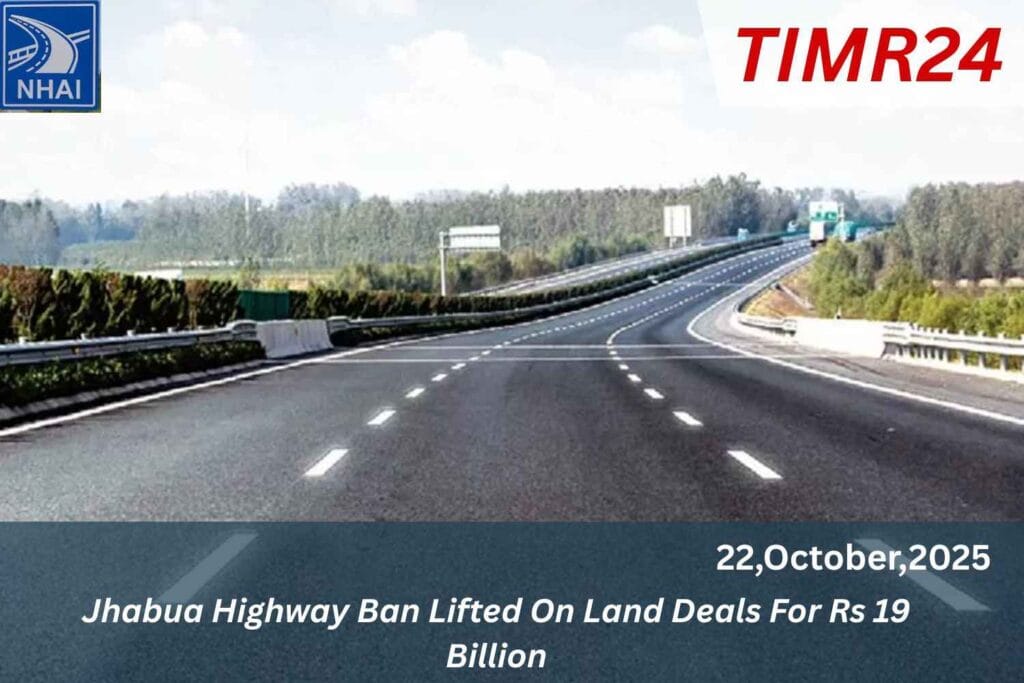
The ban on land acquisition and transactions for the construction of the Badnawar Petlawad Thandla Timarwani four-lane National Highway in Jhabua district has been lifted, allowing villagers to buy and sell land freely. The 80-kilometre four-lane highway, estimated to cost around Rs 19 billion, will connect to the Delhi Mumbai Expressway and link Madhya Pradesh, Gujarat, and Rajasthan. The project is expected to be completed before the Simhastha Kumbh Mela in Ujjain in 2028, improving regional connectivity, easing traffic, and fostering industrial growth. The lifting of restrictions has already led to a surge in land prices along the proposed route, benefiting landowners and developers.
The government’s recent decision to lift the ban on land transactions for the ₹19 billion Jhabua Highway project marks a transformative milestone in India’s infrastructure development journey. This announcement not only revives the long-delayed highway construction process but also opens a new chapter of economic growth, real estate expansion, and connectivity improvement for Madhya Pradesh and adjoining regions. The Jhabua Highway, a critical stretch in the state’s transportation network, will link rural communities with major trade and industrial centers, aligning with the national vision of building seamless road infrastructure under and National Infrastructure Pipeline (NIP).
The Background of the Jhabua Highway Project
The Jhabua Highway project, valued at approximately ₹19 billion, was initially conceptualized to enhance regional connectivity between Jhabua, Dhar, and Dahod districts while offering better access to the Delhi-Mumbai Expressway. However, a ban on land transactions had stalled progress for several years, delaying land acquisition and compensation processes. The restriction was imposed to avoid irregular land transfers during survey and alignment finalization. With the ban now officially lifted, the path is clear for the National Highways Authority of India (NHAI) and the Madhya Pradesh state government to expedite the next phase of construction.
Officials have confirmed that all administrative and technical approvals are now in place to resume full-scale work, ensuring completion within the targeted timeframe of 2027 The highway’s strategic location near industrial clusters of western Madhya Pradesh means it will play a pivotal role in promoting regional logistics and trade. Once operational, the corridor will shorten travel time between Gujarat and Madhya Pradesh, boosting freight movement and reducing transportation costs for industries in sectors such as agriculture, textiles, and minerals.
Economic and Real Estate Transformation
The lifting of the land deal ban has brought a wave of optimism across Jhabua and neighboring districts. Farmers, landowners, and local investors see this as a gateway to prosperity. Earlier, restrictions had prevented many from selling their land or participating in infrastructure projects. Now, with the restriction gone, land prices in certain areas have already started appreciating, leading to a mini-real estate revival around the highway alignment Industrial developers are also showing renewed interest in establishing logistics hubs, warehouses, and manufacturing units along the route, anticipating an influx of investment and trade opportunities. Experts believe that this decision will attract both.
Domestic and foreign investors under the further supporting the government’s goal of self-reliant economic development. The rise in infrastructure-linked employment and small-scale industries is expected to boost local income and create thousands of jobs in construction, transportation, and allied services The decision to lift the land transaction ban aligns with India’s broader infrastructure roadmap under the National Monetisation Pipeline (NMP) and Gati Shakti Integrated Plan. These programs aim to synchronize road, rail, and port connectivity for faster movement of goods and people. In Madhya Pradesh, the government has been actively encouraging public-private.
Partnerships to accelerate the pace of highway construction and enhance logistics efficiency The Jhabua Highway project will likely be developed under the Hybrid Annuity Model (HAM), ensuring a balance between public funding and private investment. This approach will help maintain quality standards and timely project execution while ensuring steady returns for investors. According to sources from the (NHAI’s), the project’s execution strategy involves multi-phase construction with advanced drainage, green belts, and digital monitoring systems for better road safety and maintenance.
Social and Environmental Impact
Beyond economic and connectivity benefits, the project holds strong social implications. Improved road infrastructure will enhance access to healthcare, education, and employment for communities residing in remote tribal areas of Jhabua. With smoother connectivity, small-scale farmers and artisans will be able to transport their products to nearby cities at lower costs, opening new markets for rural entrepreneurship.
To ensure environmentally responsible development, the NHAI has planned compensatory afforestation, rainwater harvesting systems, and eco-friendly construction practices throughout the project. The highway’s design will also include safety provisions such as service lanes, pedestrian (Indian highways) crossings, and solar-powered lighting systems to reduce energy consumption. These measures align with India’s commitment to sustainable infrastructure and carbon neutrality goals by 2070, reflecting how modern highway development is evolving toward environmental consciousness
Regional Connectivity and Industrial Growth
The Jhabua Highway will serve as a crucial connector between Madhya Pradesh and Gujarat, significantly improving interstate trade routes. Once integrated with the Delhi-Mumbai Expressway, it will become part of a powerful logistics chain linking industrial cities such as Indore, Vadodara, and Mumbai. This connectivity boost will particularly benefit small towns along the route, which are expected to witness the development of new transport nodes, fuel stations, and service centers, contributing to balanced regional development Moreover, this corridor will complement ongoing projects like the Indore-Manmad Rail Line and Atal Progress-Way (Chambal Expressway).
Creating a multi-modal transport ecosystem. The synergy of these projects will not only decongest existing routes but also expand India’s manufacturing and export potential Despite the positive outlook, the project faces challenges such as timely land acquisition, rehabilitation of affected families, and ensuring equitable compensation. Local administration has already started transparent mechanisms to address grievances and ensure fair market value for all stakeholders. By involving local panchayats and cooperative societies, authorities aim to create a model of participatory development Once completed, the Jhabua Highway is expected to become a lifeline for.
The western part of Madhya Pradesh, attracting industrial investment and tourism. Improved road infrastructure will also support rural connectivity programs such as the ensuring that rural roads are seamlessly integrated with national corridors Analysts predict that the corridor could increase land values by up to 30% in surrounding areas and attract several agro-processing and logistics firms. Furthermore, new educational institutions, healthcare centers, and townships are likely to emerge along the highway, driving holistic regional development.
Conclusion: A Step Toward Modern Infrastructure and Growth
The lifting of the ban on land deals for the ₹19 billion Jhabua Highway symbolizes more than a policy decision it represents a commitment to progress, connectivity, and inclusive growth. With clear government focus, sustainable planning, and private participation, the project is set to become a key driver of Madhya Pradesh’s economic resurgence. The renewed activity around the Jhabua corridor mirrors India’s ongoing transformation into an infrastructure-driven economy where every highway is not just a road, but a channel of opportunity, linking rural hearts to urban dreams As work resumes, optimism runs high among locals and investors alike, expecting that.
Q1. What is the total cost of the Jhabua Highway project?
The total estimated investment is ₹19 billion, including land acquisition and infrastructure development.
Q2. Why was the land deal ban imposed earlier?
The ban was introduced to prevent illegal land transactions during the initial survey and planning phase.
Q3. How will the lifted ban benefit local residents?
Residents can now sell, buy, or develop land legally, increasing employment and economic opportunities.
Q4. What is the expected completion timeline for the project?
Authorities aim to complete major phases by 2027 under the NHAI supervision.
Q5. Will the Jhabua Highway connect to other national corridors?
Yes, it will link to the Delhi-Mumbai Expressway and NH-47, improving interstate trade.