











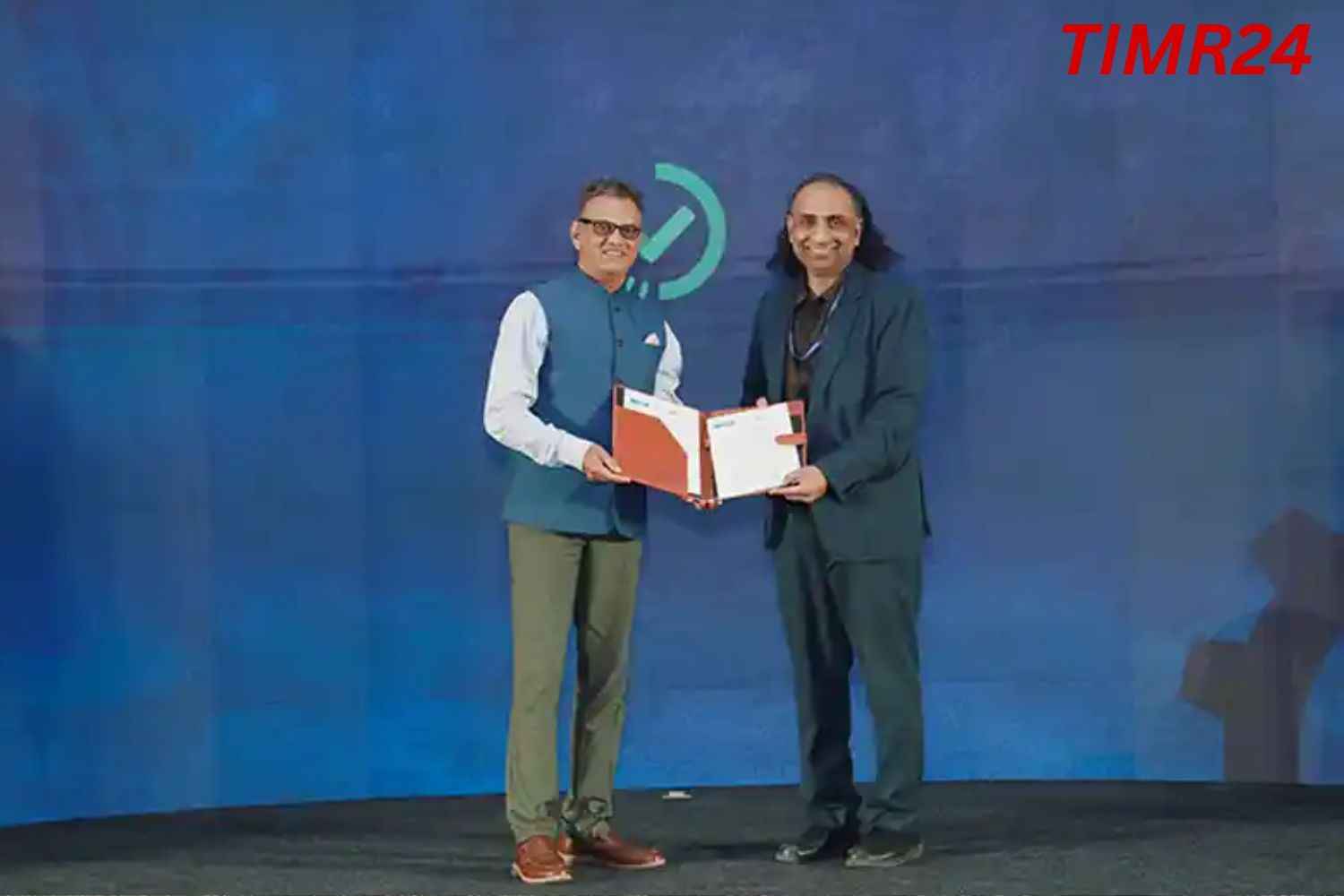


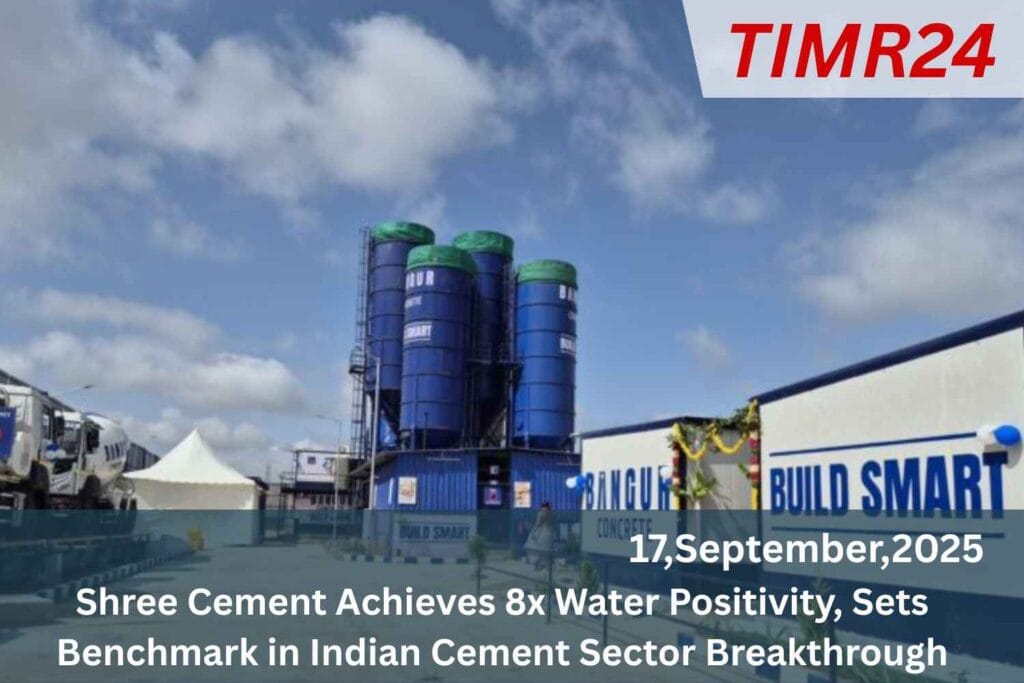
Shree Cement, a leading cement producer in India, has achieved a significant sustainability milestone by completing an independent limited assurance of its Water Accounting data and Water Positivity Index. The verification, conducted by Intertek India Pvt. Ltd., reaffirmed the company’s leadership in responsible management. Through these initiatives, Shree Cement has replenished and conserved over 19.58 million cubic meters of, making it over 8 times Positive in FY 2024-25. The Indian cement industry has long been recognized as one of the most resource-intensive sectors, heavily dependent on for manufacturing, cooling, and dust suppression.
In this context, Shree Cement’s recent achievement of becoming 8x positive has set a transformative benchmark for sustainability and industrial responsibility. This milestone means that the company is now replenishing eight times the amount of water it consumes in its operations, ensuring not only its own resilience but also contributing meaningfully to community welfare and environmental stability. The initiative positions Shree Cement as a pioneer in sustainable business practices, bridging the gap between industrial growth and ecological balance.
Shree Cement’s Sustainability Journey
Over the past decade, Shree Cement has consistently taken steps to minimize its environmental footprint. Known for its energy-efficient production methods, the company has integrated sustainability as a core part of its business model. conservation has emerged as a priority due to India’s rising concerns around scarcity and ground depletion. According to (NITI Aayog’s) nearly 600 million Indians face high to extreme stress, making the cement sector’s reliance on a critical issue. By achieving water positivity, Shree Cement demonstrates how industrial leaders can adopt a proactive role in addressing one of the nation’s most pressing challenges.
Water positivity refers to replenishing more than is withdrawn for operational use. Shree Cement has amplified this concept by achieving it at an eightfold scale. This is accomplished through harvesting structures, restoration of ponds and check dams, rejuvenation of groundwater aquifers, and recycling of wastewater within plant facilities. The company’s projects are not limited to its plants but extend into rural areas, ensuring communities benefit directly from increased access to clean water. Such efforts align closely with the reinforcing Shree Cement’s role as a global sustainability contributor The social and environmental benefits of Shree Cement’s projects go.
Far beyond compliance. Farmers in regions surrounding its plants now report improved groundwater levels, allowing better irrigation and crop yields. Villagers gain access to drinking during peak summer months, reducing migration pressures. In Rajasthan and Chhattisgarh, where Shree Cement has extensive operations, the company has built reservoirs and rainwater harvesting systems that also serve biodiversity, supporting local flora and fauna. This community-driven model transforms conservation into a shared resource, strengthening the trust between industry and society India is the world’s second-largest cement producer, and the sector accounts for a significant.
Internal Innovation and Operational Practices
Portion of the country’s industrial water use. By setting this benchmark, Shree Cement has raised expectations for peer companies like UltraTech Cement, ACC, and Dalmia Bharat to adopt similar water stewardship programs. This ripple effect could potentially reshape the industry’s sustainability trajectory. Readers interested in related industry updates can explore our coverage on and which also highlight how resource management is becoming central to corporate strategies. At the plant level, Shree Cement has invested in closed-loop water systems where wastewater is treated and reused multiple times. Dust suppression mechanisms now use treated wastewater instead of fresh.
Groundwater, and modern cooling systems ensure minimal wastage. The company also engages employees in water management awareness programs, embedding a culture of conservation within its workforce. This holistic approach ensures that sustainability is not just a corporate policy but a daily practice integrated into every process Beyond water, Shree Cement has taken significant strides in renewable energy adoption and carbon reduction. The company operates one of the largest waste heat recovery power plants in the world and is steadily increasing its share of solar and wind power. Linking conservation with energy efficiency ensures a balanced and comprehensive.
The Role of Partnerships and Collaboration
Sustainability roadmap. For context, has been encouraging industries to adopt integrated approaches to sustainability, and Shree Cement’s achievement directly reflects these policy directions. What makes this milestone especially noteworthy is the collaborative framework under which it was achieved. Shree Cement has partnered with local panchayats, NGOs, and government bodies to design and implement water projects that are context-specific. These collaborations ensure community ownership and long-term maintenance of conservation structures. By sharing knowledge and best practices, the company also enables replication of successful models across different geographies, creating a multiplier effect for water positivity in India.
While 8x positivity is a remarkable achievement, Shree Cement continues to set higher goals. The company is now focusing on digital management tools, IoT-based monitoring, and data analytics to further optimize usage. It has also committed to expanding its CSR programs (Inventio) that address sanitation, education, and healthcare, ensuring that sustainability extends beyond natural resources into holistic community development. Readers interested in similar forward-looking initiatives may check our insights on which also reflects India’s push towards sustainable industrialization.
A Benchmark for Corporate India
Shree Cement’s achievement is not just about it is about redefining what responsible business means in the 21st century. In a country grappling with climate change, rapid urbanization, and resource depletion, corporate initiatives that prioritize environmental and social outcomes are critical. This development sets a precedent for other industries such as steel, mining, and energy, proving that profitability and sustainability can go hand in hand. For further insights into global sustainability frameworks, readers can explore, which offers guidance on integrating ESG practices Shree Cement’s journey to 8x water positivity marks a pivotal moment in the Indian cement industry’s.
Sustainability narrative. By blending technology, community participation, and a deep commitment to ecological balance, the company has shown that industrial growth need not come at the cost of environmental degradation. As the industry takes note and policymakers encourage such practices, this achievement will likely serve as a catalyst for broader systemic change. The path Shree Cement has charted demonstrates that with vision and determination, India’s industrial sector can lead the world in sustainable development, ensuring that future generations inherit not just growth but also resilience and harmony with nature.
q1. What does 8x positivity mean for Shree Cement?
It means the company replenishes eight times more water than it consumes in operations.
q2. How is Shree Cement achieving positivity?
Through rainwater harvesting, groundwater recharge, wastewater recycling, and sustainable conservation projects.
q3. Why is this achievement significant for the Indian cement industry?
Cement is highly water-intensive, so Shree Cement sets a new benchmark for sustainability.
q4. How will this benefit local communities and the environment?
Villages around plant sites benefit from increased groundwater levels and better water access.
q5. What are Shree Cement’s future sustainability goals?
They aim to scale renewable energy adoption, reduce carbon emissions, and expand community development programs.