







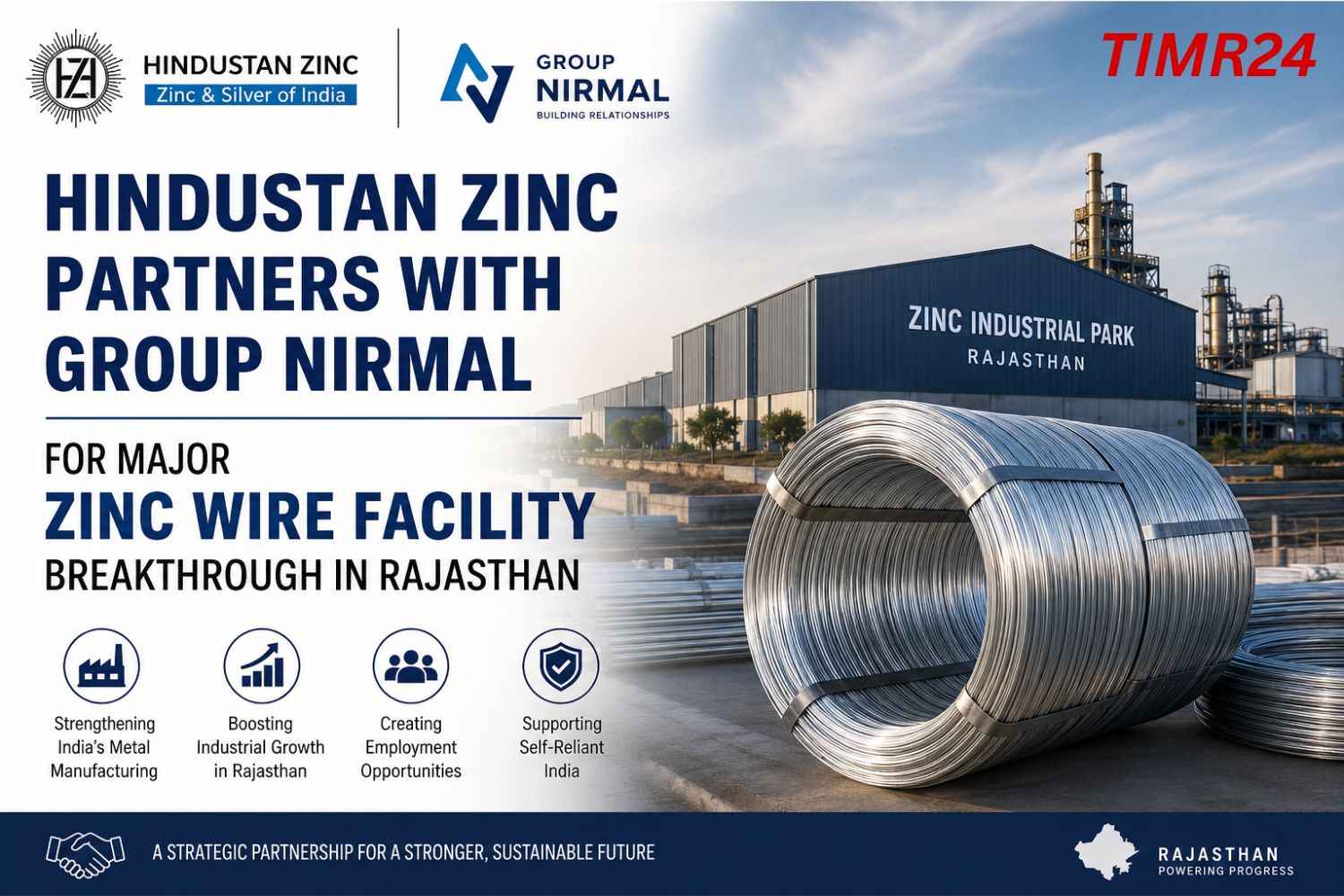




Hindustan Zinc Limited has signed a Memorandum of Understanding (MoU) with the Rajasthan Heritage Authority (RHA) to develop the Heritage Corridor at Poonchari ka Leatha in Deer, Rajasthan. The three-year agreement includes a financial commitment of ₹85 crore under Hindustan Zinc’s Corporate Social Responsibility (CSR) initiative. The project aims to preserve and promote culture and heritage through restoration of historical sites and supporting infrastructure development, including botanical gardens, horticulture, Parikrama Marg improvement, residential facilities, and demarcated complexes and walkways. The project will safeguard a living pilgrimage corridor, improve.
Safe access, and support local livelihoods. Hindustan Zinc continues to contribute to community development and cultural preservation as part of its holistic social impact projects. Heritage and culture have always been at the heart of Rajasthan, a land where every fort, palace, and street narrates tales of valor, tradition, and artistry. In a landmark initiative, Hindustan Zinc has entered into a Memorandum of Understanding (MoU) worth Rs. 85 crore with the Rajasthan Heritage Authority to establish a dedicated Heritage Corridor, a project that promises to safeguard cultural assets while fostering tourism and community development. This collaboration highlights the growing.
Preserving Rajasthan’s Cultural Legacy
Importance of corporate participation in heritage preservation and sets an inspiring example of how industrial giants can align with cultural and social responsibilities. The state of Rajasthan is synonymous with heritage, drawing millions of visitors from across the globe who come to witness its majestic palaces, sprawling forts, intricately designed havelis, and sacred temples. Yet, like many historical regions, its monuments face threats from time, weather, and urbanization. The newly announced Heritage Corridor will focus on restoring such iconic structures and integrating modern conservation practices. The emphasis is not only on physical restoration but also on.
Safeguarding intangible cultural heritage folk traditions, crafts, and community practices that are woven into the state’s identity. Initiatives like these resonate with efforts made by organizations such as the which actively supports cultural conservation across the country Tourism has long been a vital driver of Rajasthan’s economy, contributing significantly to employment and income generation for local communities. The Heritage Corridor is expected to enhance this ecosystem by offering improved visitor experiences, world-class infrastructure, and better connectivity between monuments. By showcasing restored heritage in a sustainable manner, Rajasthan can further strengthen.
Its position as a top global destination. For travellers exploring Rajasthan’s rich past, curated experiences along the Heritage Corridor could rival heritage circuits in countries like Italy or Greece. On the domestic front, this initiative ties into the vision of making cultural journeys more immersive, interactive, and community-inclusive. Hindustan Zinc has long been recognized for its commitment to Corporate Social Responsibility (CSR), focusing on education, healthcare, rural development, and environmental sustainability. This MoU demonstrates how CSR can extend into cultural preservation. Unlike traditional CSR projects, which often emphasize infrastructure or services,
Infrastructure and Economic Growth
This initiative aims to bridge the gap between heritage conservation and modern development. By channeling Rs. 85 crore into the Heritage Corridor, Hindustan Zinc is investing not only in Rajasthan’s past but also in its future. For readers interested in learning more about the company’s broader initiatives, details are available on the official Beyond cultural preservation, the Heritage Corridor will stimulate economic growth by creating new employment opportunities, particularly for artisans, guides, hospitality staff, and local vendors. Infrastructure improvements, such as enhanced roads, upgraded facilities, and digital ticketing, will ensure that both domestic and international visitors.
Can engage with heritage sites more comfortably. This transformation aligns with ongoing development projects across India, where heritage-based tourism is being positioned as a key sector to generate sustainable income and strengthen rural economies. For Rajasthan, where regions like Jaipur, Udaipur, Jodhpur, and Jaisalmer already thrive on tourism, the corridor adds another layer of attraction that blends history with modern convenience An important dimension of the project is its focus on community participation. Heritage cannot be preserved in isolation; it lives through the communities that uphold traditions and stories. The MoU envisions capacity-building programs for locals.
Enabling them to become stakeholders in conservation efforts. Traditional artisans could find renewed demand for their crafts, while folk musicians, storytellers, and performers could find structured platforms to showcase their art to tourists. This inclusive approach not only generates livelihoods but also strengthens (TVS Emerald) a sense of ownership and pride among residents. By involving communities directly, the project avoids the pitfall of turning heritage into a purely commercial showcase and instead celebrates it as a living, breathing legacy.
Sustainability in Heritage Conservation
One of the unique aspects of this initiative is its emphasis on sustainability. Rajasthan, being a state with fragile ecosystems and desert landscapes, requires careful balance between tourism growth and environmental preservation. The corridor will integrate eco-friendly practices such as renewable energy solutions, waste management systems, and water conservation techniques at heritage sites. These measures echo the global movement toward sustainable tourism, ensuring that increased footfall does not compromise the structural or environmental integrity of monuments. The blend of conservation science with eco-conscious planning positions the corridor as a forward-thinking model for heritage development.
Rajasthan has always enjoyed global recognition as a heritage hotspot, with several of its monuments, such as Jaipur’s City Palace and Jantar Mantar, recognized by UNESCO. The Heritage Corridor is likely to attract further international attention, potentially encouraging collaborations with global conservation agencies and cultural institutions. This visibility not only strengthens Rajasthan’s brand as a heritage state but also positions India as a leader in balancing tradition with modern growth. Tourists who may have once limited their journeys to popular sites like Jaipur or Udaipur could be encouraged to explore lesser-known heritage gems, thereby distributing economic benefits more evenly across the state.
A Vision for the Future
The signing of this MoU is not just about restoring monuments; it is about creating a vision for Rajasthan where heritage becomes a driver of inclusive growth. It is about weaving together the state’s glorious past with the opportunities of the present and the aspirations of the future. With corporate support from Hindustan Zinc, institutional backing from the Rajasthan Heritage Authority, and participation from local communities, the Heritage Corridor could become a transformative model for other Indian states. Similar efforts can also tie into broader national goals like “Dekho Apna Desh” under the Ministry of Tourism, which encourages Indians to explore cultural and historical destinations within the country.
For those interested in related stories, our earlier coverage on explores how sustainable infrastructure projects are reshaping the country. Similarly, our feature on highlights the intersection of business and economic growth. By reading these articles, one can trace the broader narrative of how corporate investments are influencing diverse sectors from energy and logistics to culture and tourism. The Rs. 85 crore MoU between Hindustan Zinc and the Rajasthan Heritage Authority is more than just an agreement; it is a symbol of collaboration, responsibility, and foresight. By intertwining cultural conservation with sustainable growth, the Heritage Corridor initiative promises to.
Enrich Rajasthan’s heritage, elevate its tourism, and empower its people. For visitors, it will mean richer experiences; for locals, it will mean sustainable opportunities; and for India, it (Rajasthan Tourism) will stand as proof that honouring history can create a brighter, more inclusive future.
Q1. What is the objective of the Rs. 85 crore MoU between Hindustan Zinc and Rajasthan Heritage Authority?
The MoU focuses on developing a Heritage Corridor in Rajasthan to preserve monuments, boost cultural tourism, and provide sustainable opportunities for local communities.
Q2. How will the Heritage Corridor benefit Rajasthan?
It will enhance tourism, create jobs, preserve historic architecture, and improve infrastructure around heritage sites.
Q3. Which heritage sites are included in this project?
The corridor will cover key monuments and historic locations identified by the Rajasthan Heritage Authority in collaboration with Hindustan Zinc.
Q4. How does this MoU align with sustainable development?
By blending heritage conservation with eco-friendly tourism practices, the project ensures cultural preservation without harming the environment.
Q5. When will the Heritage Corridor be completed?
The timeline will be announced jointly by Hindustan Zinc and Rajasthan Heritage Authority, depending on the scope of restoration and development phases.