







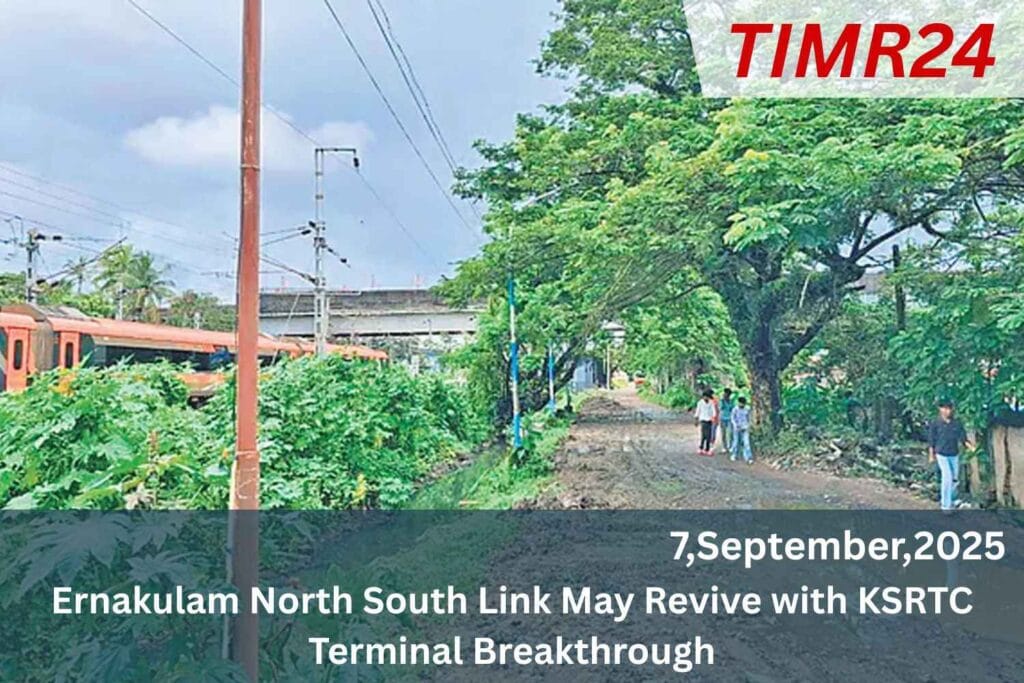
The Kerala State Road Transport Corporation (KSRTC) is developing a new terminal at Karikkamuri, a city in Kerala, which would eliminate the need for vehicles to detour around the city. The project, which would connect Ernakulam Junction and Ernakulam Town via a 2-kilometer road, has gained interest after nearly a decade of inaction. The Kochi Corporation has prepared a draft alignment plan, and a 10-meter-wide road stretch owned by KSRTC is being offered to support the road alignment. The revival of the Ernakulam North–South Link with the KSRTC terminal has emerged as one of the most anticipated developments in Kerala’s transport infrastructure, sparking discussions.
About how it could reshape connectivity in Kochi and beyond. This initiative is more than a restoration of an old link it is about redefining the way people move across the city, enhancing last-mile connectivity, and aligning with Kerala’s larger vision for sustainable urban mobility. The KSRTC terminal plays a central role in this revival, becoming a pivot for both intercity and intracity travel, and ensuring that commuters benefit from seamless, integrated transport solutions When you look at Ernakulam, the North and South regions have always been vital economic and residential zones, but their disconnection has long been a challenge for commuters. By reviving the link through the KSRTC.
Terminal, the government is addressing decades of urban congestion and transport gaps. The terminal, once modernized, will act as a hub where passengers can switch effortlessly between KSRTC buses, private operators, and even feeder services connected to metro stations. The model follows global best practices of transport integration, something that Kochi has already experimented with through (Kochi Metro Rail) but now aims to expand further The significance of this breakthrough also lies in how it ties into Kerala’s broader infrastructure push. The state has been investing in smart city projects and high-profile transport corridors, including ambitious rail initiatives like.
Which is redefining eco-friendly travel. By linking the Ernakulam terminals, authorities are not just offering a quicker route across the city but also promoting sustainable commuting. In cities like Mumbai, infrastructure projects such as the demonstrated how transformative transport corridors can be. For Ernakulam, the revival could become a catalyst for reducing dependency on private vehicles, thus curbing pollution and easing road congestion. From a commuter’s perspective, the benefits are substantial. Daily travellers who move between Ernakulam North and South for work, education, or trade often face bottlenecks. With the KSRTC terminal revival, buses can operate on shorter, faster.
Loops, connecting commuters directly to metro stations and feeder points. This level of integration means less waiting time, lower costs, and improved travel reliability. For instance, in other parts of Kerala, KSRTC has already experimented with electric and low-floor buses, and incorporating such fleets into the Ernakulam terminal could further enhance accessibility. A direct link with services ensures that intercity travellers from towns like Aluva, Thrissur, or Kottayam can disembark at the terminal and connect seamlessly to urban routes Another aspect of this revival is the economic ripple effect. History has shown that transport projects create a multiplier effect on urban.
Growth Reviving the link between Ernakulam North and South terminals will naturally boost commercial activity in surrounding neighbourhoods. Businesses near the KSRTC hub are likely to see increased footfall, and real estate development could expand as areas near the terminal become more desirable. Similar patterns have been observed in Bengaluru, where real estate around tied to metro connectivity has experienced rapid appreciation. For Ernakulam, the terminal revival could also spark investment in retail outlets, hotels, and services catering to the rising commuter base Tourism is another domain where the project could shine. Kerala is celebrated worldwide for its.
Tourism, and Ernakulam serves as the gateway for many travellers arriving to explore Kochi, Fort Kochi, and the backwaters. By enhancing connectivity, the KSRTC terminal could make it easier for tourists to move between cultural and commercial hubs. Visitors arriving at Ernakulam Junction or Town stations would have simplified access to buses, metros, and even airport shuttles. The government’s focus on tourism is already evident in initiatives promoted by and the terminal revival aligns with these objectives by removing friction in visitor movement On the governance side, the project also reflects Kerala’s commitment to collaborative development.
Much like how to strengthen education in the construction sector, the KSRTC terminal revival is expected to involve public-private partnerships. Such models ensure that infrastructure is not just built but maintained and operated efficiently over time. A transparent governance structure would also allow for phased development, ensuring minimal disruption to existing services while new facilities come online Sustainability is another pillar of the plan. Authorities have indicated that the revived terminal will incorporate green building features, energy-efficient lighting, and possibly Solar integration. The terminal could also act as a testing ground for KSRTC’s electric bus fleet, aligning with India’s.
National vision of reducing transport-related emissions. In many ways, the revival connects to larger narratives of green mobility, much like The synergy between eco-friendly design and mass transport could set a benchmark for other cities across India There are, however, challenges to be mindful of. Urban projects of this scale often face hurdles in land acquisition, regulatory approvals, and funding. Balancing commuter convenience with the interests of local businesses and residents is a delicate task. Lessons from earlier projects, such as the integration of metro and bus terminals in Thiruvananthapuram, highlight the importance of stakeholder engagement. A successful Ernakulam.
Revival will require not just technical planning but also social consensus, where commuters, local businesses, and government bodies share ownership of the change Looking forward, the Ernakulam North–South link revival has the potential to become a model for other mid-sized Indian cities. While metropolitan hubs like Delhi and Mumbai often dominate headlines with mega projects, regional cities like Kochi showcase how localized, well-planned initiatives can deliver outsized impacts. The KSRTC terminal revival is more than just an infrastructure upgrade; it is an opportunity to reshape the narrative of urban growth in Kerala Ultimately, the breakthrough lies in viewing the project.
Not as a single terminal expansion but as a holistic mobility solution. By combining modern transport infrastructure, sustainable practices, and economic foresight, the Ernakulam link revival is positioned to serve generations of commuters. As the government moves closer to implementation, (Kerala State) residents of Kochi and Kerala at large are watching closely, hopeful that this long-awaited connection will finally bridge not just the North and South of Ernakulam but also the gap between the city’s present challenges and its future possibilities.
Q1. What is the Ernakulam North South Link revival project?
It is a plan to reconnect Ernakulam’s North and South terminals with KSRTC to improve transport efficiency.
Q2. Why is the KSRTC terminal central to this project?
KSRTC provides state-run connectivity, and upgrading the terminal ensures smooth travel for lakhs of commuters daily.
Q3. How will this benefit commuters?
It will reduce travel delays, decongest city roads, and improve last-mile connections across Kochi and nearby towns.
Q4. Will this impact local businesses?
Yes, better connectivity often leads to commercial growth, real estate development, and tourism opportunities.
Q5. When is the project expected to start?
The timeline depends on government approvals and infrastructure planning stages, but discussions suggest early revival.