













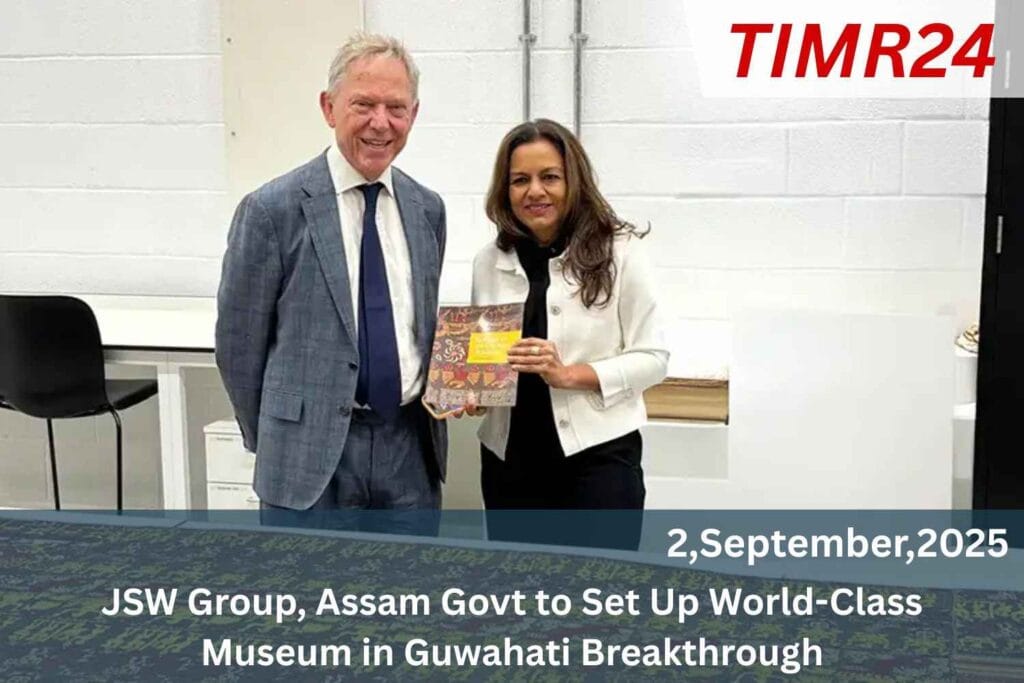
The JSW Group has partnered with the Government of Assam to establish a museum in Guwahati, India, to showcase the 17th-century devotional textile, Vrindavani Vastra. The British Museum will loan the Vastra for public exhibition in Assam from 2026-27, with the JSW Group funding the project. The Sericulture Farm in Khanapara, Guwahati, will be designed with climate-control systems and international musicological standards. The museum will continue as a world-class heritage and cultural space, positioning Guwahati for hosting international exhibitions. The announcement of a world-class museum in Guwahati, through a collaboration between the JSW Group and the Government of Assam.
Marks a turning point in the cultural and historical preservation of Northeast India. Assam, long admired for its vibrant traditions, natural beauty, and unique identity within the Indian subcontinent, will now have a landmark institution to reflect its glorious past and promising future (Hydro Projects) The museum is being envisioned not only as a hub of history and art but also as a destination that will strengthen Assam’s place on the global map of heritage tourism. For centuries, Assam has been known as the gateway to Northeast India, offering a blend of diverse ethnic communities, ancient traditions, and world-famous natural treasures like tea gardens, silk weaving centers, and wildlife sanctuaries.
Yet, despite this rich legacy, Assam lacked a modern, large-scale cultural institution that could showcase its multifaceted heritage in a way that resonates with international visitors. The proposed museum is expected to fill this gap, creating a dynamic platform where tradition meets modernity, and history blends seamlessly with innovation. The collaboration itself deserves attention, as it combines the resources, expertise, and commitment of the JSW Group with the vision and leadership of the Assam Government. The JSW Foundation, which has been actively involved in projects across India ranging from art restoration to educational development, is known for its.
Efforts in promoting culture and heritage. By joining hands with Assam, JSW is contributing to a larger movement of public-private partnerships in cultural development, a model increasingly recognized for its ability to bring sustainable impact. Similar initiatives in states like Gujarat and Maharashtra have shown that such partnerships not only preserve heritage but also create vibrant ecosystems around cultural centers, encouraging tourism, research, and employment The proposed museum will be designed as a blend of traditional Assamese architecture and modern design. Architects are expected to use local motifs, bamboo, cane, and other indigenous materials while also ensuring world-class infrastructure that matches global standards.
Inside, the museum will house multiple galleries, each dedicated to a specific theme. From tribal culture and crafts to manuscripts, ancient coins, and artifacts from Assam’s medieval kingdoms, the galleries will narrate the story of a land that has always been at the crossroads of civilizations. The museum will also embrace modern technology, including interactive digital walls, 3D holograms, and immersive storytelling techniques, allowing visitors to experience Assamese folklore, Bihu dance performances, and even simulations of wildlife habitats like Kaziranga National Park The impact of this project on Assam’s tourism industry is expected to be immense. Guwahati is already known for the Kamaya Temple.
River cruises on the Brahmaputra, and as the starting point for trips into Meghalaya, Arunachal Pradesh, and Nagaland. By adding a world-class museum to its attractions, the city will gain a cultural landmark that will appeal to both domestic and international tourists. The Assam Government has consistently focused on boosting tourism, and this project ties into that vision. It is expected that local businesses, artisans, and tour operators will benefit directly, as the museum will draw significant visitor footfall, generating income and creating new job opportunities. Apart from tourism, the museum will play a pivotal role in education and research. Students, historians, and cultural scholars will find in it a repository of knowledge that spans centuries.
Assam’s contribution to India’s freedom struggle, its ancient connections with Southeast Asia, and its unique literary traditions will all be documented in detail The museum is expected to collaborate with universities and cultural bodies to organize seminars, exhibitions, and research programs, ensuring that it remains not just a place for display but also a center for knowledge creation The significance of this project goes beyond the borders of Assam. In recent years, India has witnessed a surge in efforts to modernize its museums and cultural institutions, from the redevelopment of the National Museum in Delhi to the expansion of the Indian Museum in Kolkata.
The Guwahati museum will join this list, serving as a reminder that India’s cultural diversity is not confined to a few. Regions but extends deeply into the Northeast, a part of the country often overlooked in mainstream narratives. By establishing a world-class institution in Guwahati, the project asserts that the Northeast’s history and identity deserve equal recognition on the national and international stage This development also highlights how infrastructure and culture can go hand in hand. Just as Mumbai’s coastal road project has reshaped the city’s connectivity and Uttarakhand’s hydro projects are transforming its energy landscape, the museum in Guwahati is poised to redefine the cultural infrastructure of Assam.
In an era where global cities compete not only on economic terms but also on cultural offerings, this initiative gives Guwahati a chance to emerge as a hub of heritage tourism The museum will also focus on Assam’s living traditions. Unlike institutions that present culture as something of the past, this museum is expected to celebrate contemporary creativity as well. Modern art galleries, spaces for film screenings, and zones for live performances will ensure that the museum remains relevant to younger generations. Artists, writers, and performers from the region will find a platform to showcase their talent, bridging the gap between heritage and innovation Equally important is the project’s social impact. By generating jobs and training opportunities.
The museum will empower local communities. Artisans will find markets for their work, students will gain exposure to world-class exhibitions, and entrepreneurs will benefit from tourism-related opportunities The ripple effect of such a project is immense, as it goes beyond just showcasing history it actively shapes the present and future of the society around it. As Assam prepares for this cultural leap, there is anticipation not only among policymakers and investors but also among ordinary citizens who see in it a recognition of their identity. For decades, the Northeast has been viewed through the lens of its challenges be it connectivity, insurgency, or economic disparity.
The museum signals a new narrative, one where the region is celebrated for its strengths, contributions, and beauty. The collaboration between JSW Group and the Assam Government to set up a world-class museum in Guwahati is more than just an infrastructure project. It is a statement of pride. Vision, and cultural revival. It connects Assam’s glorious past with its promising future, offers opportunities for education, tourism, and employment, and ensures that the story of this unique land is told with the respect and grandeur it deserves. Just as (India’s Infrastructure) growth has redefined the country’s global standing, this cultural milestone will redefine.
Q1. What is the purpose of the museum in Guwahati?
The museum aims to preserve and showcase Assam’s cultural, historical, and artistic heritage.
Q2. Who is collaborating on this project?
JSW Group is partnering with the Assam Government for the project.
Q3. Where will the museum be located?
It will be established in Guwahati, the cultural hub of Assam.
Q4. What will be showcased in the museum?
Traditional art, literature, tribal culture, modern history, and digital exhibits.
Q5. How will this museum benefit Assam?
It will promote tourism, preserve history, create jobs, and boost cultural pride.