









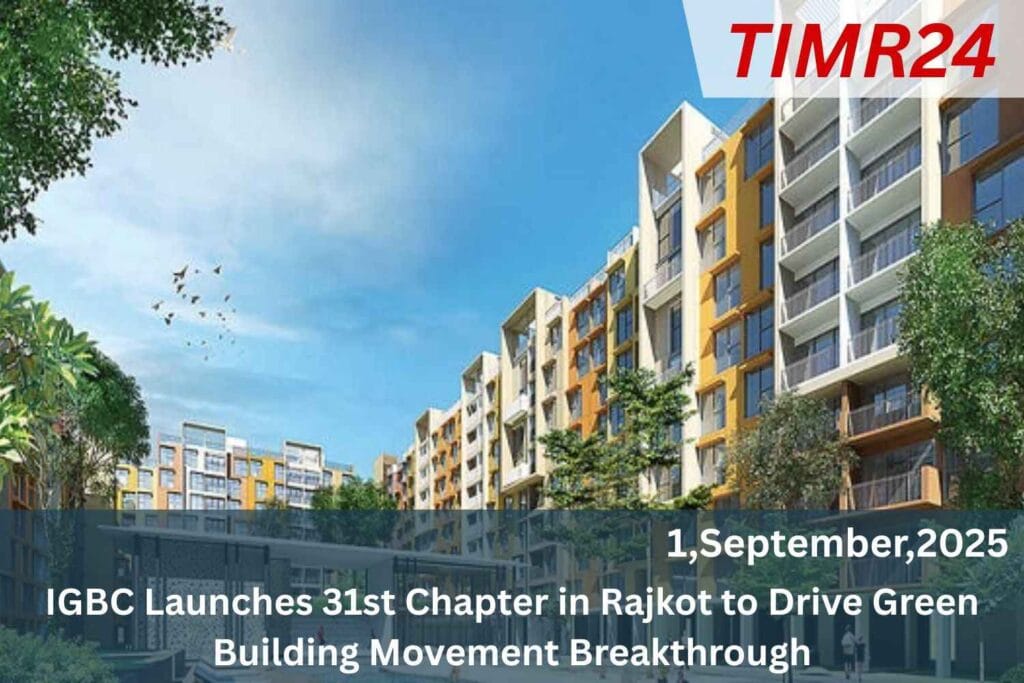
The Indian Green Building Council (IGBC) has launched its 31st Chapter in Rajkot, India, aiming to engage local stakeholders in promoting sustainable urban development. The chapter, which was attended by Shri Parshottam Rupali, former Union Minister for Fisheries, Animal Husbandry & Dairying, highlighted the importance of green buildings in Rajkot’s future development The chapter aims to accelerate the adoption of green and net zero buildings, inspire innovation in infrastructure, and position Rajkot at the forefront of Gujarat’s and India’s green transformation. The chapter also hosted a panel discussion titled “Designing Tomorrow: Green Buildings for a Sustainable Rajkot,” focusing on integrating net zero goals, energy efficiency.
Water conservation, waste management, and healthy building practices. The technical session “Towards a Greener Horizon: Revolutionizing Construction with Sustainable Solutions,” emphasized the transformative potential of sustainable building practices within the construction industry. The chapter was graced by representatives from the real estate and construction sector. The Indian Green Building Council (IGBC), an initiative under the Confederation of Indian Industry (CII), has recently launched its 31st chapter in Rajkot, Gujarat, marking a significant milestone in India’s sustainable development journey. This launch is more than a symbolic step; it represents a concrete effort to accelerate the adoption of green building practices across western India. With rapid urbanization.
Increasing construction activity, and heightened environmental concerns, cities like Rajkot are at a pivotal moment where sustainable infrastructure is not just desirable but necessary. The new chapter aims to serve as a regional hub for architects, developers, engineers, policymakers, and citizens to come together, exchange knowledge, and implement innovative solutions that prioritize environmental responsibility while maintaining economic viability. For more on IGBC initiatives (IGBC) The Indian Green Building Council has long been a cornerstone of India’s green building movement. By providing certification programs, guidelines, and educational resources, IGBC has played a crucial role in helping developers, builders, and urban planners integrate sustainable practices into their projects.
Understanding IGBC’s Role in India’s Sustainable Development
Over the years, the council has introduced various certification systems including IGBC Green Homes, Green Factories, Green Townships, and IGBC Net Zero Energy Buildings. These certifications are designed to reduce environmental impact by promoting energy efficiency, water conservation, sustainable materials, and better indoor environmental quality. The establishment of the Rajkot chapter reinforces IGBC’s mission to transform India into a global leader in green construction Rajkot, often recognized for its industrial growth and cultural heritage, has emerged as a city with expanding urban and commercial infrastructure.
The decision to launch a chapter here is strategic, reflecting the city’s potential to influence sustainable practices in the region. With its growing real estate market and industrial base, Rajkot faces challenges related to energy consumption, water management, and environmental sustainability. The IGBC chapter is designed to help local stakeholders adopt green design principles, implement energy-efficient technologies, and encourage environmentally conscious construction. As more industries and developers in Rajkot align with these principles, the city could set a benchmark for other mid-sized cities in India aiming to reduce their carbon footprint.
Impact on Residential and Commercial Real Estate
The real estate landscape in Rajkot is witnessing rapid transformation, with increasing demand for both residential and commercial projects. The IGBC Rajkot chapter is poised to influence this development by encouraging builders to pursue green building certifications. Residential projects that adopt sustainable design principles can offer healthier living environments, reduced energy consumption, and lower utility costs, which ultimately increase property value. Commercial establishments, on the other hand, can benefit from improved energy efficiency, reduced operational costs, and a reputation for corporate social responsibility. Developers in Rajkot can access detailed information on sustainable building practices and certification processes.
One of the key functions of the new chapter will be community awareness and professional capacity building. The IGBC Rajkot Chapter plans to conduct workshops, seminars, and training sessions to educate builders, engineers, and citizens about renewable energy, efficient waste management, water conservation, and sustainable urban planning. By empowering professionals and local communities with knowledge and practical tools, the chapter aims to foster a culture of environmental stewardship that extends beyond individual projects. Educational institutions, NGOs, and local government bodies are expected to collaborate with IGBC to integrate green building concepts into curricula and public outreach programs. Such initiatives not only enhance professional skills but also raise awareness among citizens about the tangible benefits of sustainable living.
Partnerships and Industry Collaboration
The success of any green building initiative depends on collaboration between multiple stakeholders. IGBC Rajkot is set to become a nexus for partnerships between industry leaders, academic institutions, government agencies, and civil society organizations. Developers can work closely with architects, energy auditors, and environmental consultants to ensure that projects meet high sustainability standards. Government policies and incentives can further accelerate green adoption, while academic institutions contribute research and innovation. By promoting such collaborations, the Rajkot chapter aims to create a strong ecosystem where sustainability is seamlessly integrated into the city’s growth trajectory.
Green construction is increasingly reliant on technological innovation. The IGBC Rajkot chapter will emphasize the adoption of advanced building technologies such as energy-efficient HVAC systems, solar energy integration, rainwater harvesting, and smart building management systems. These technologies not only reduce environmental impact but also improve the comfort, health, and productivity of occupants. Additionally, the chapter will provide guidance on using sustainable building materials, optimizing energy consumption, and minimizing construction waste. By highlighting practical examples and case studies, IGBC aims to encourage local developers to adopt technologies that align with global sustainability standards.
Sustainability Beyond Buildings Creating a Green Lifestyle
While green buildings are essential, the IGBC Rajkot chapter also focuses on promoting sustainable lifestyles. Awareness programs will encourage citizens to adopt energy-saving habits, utilize renewable energy sources, and manage waste effectively. Local communities will be motivated to participate in urban greening initiatives, water conservation programs, and other sustainability-driven activities. By fostering an (Construction) environmentally conscious culture, the chapter ensures that the impact of green building practices extends beyond construction sites into everyday life. This holistic approach supports India’s broader climate goals, including energy efficiency, carbon emission reduction, and enhanced resilience against climate change.
Sustainable construction practices not only protect the environment but also offer economic and social advantages. Green buildings in Rajkot are expected to reduce operational costs for property owners, attract environmentally conscious buyers, and create job opportunities in construction, design, and energy sectors. Socially, these projects enhance public health, provide better indoor air quality, and create safer, more comfortable living and working spaces. By balancing environmental, economic, and social benefits, IGBC’s initiatives contribute to comprehensive urban development that is equitable, efficient, and future-ready.
The launch of IGBC’s 31st chapter in Rajkot is more than a regional achievement; it represents a step forward in India’s journey toward sustainable urbanization. With the chapter actively promoting green building practices, raising awareness, fostering collaborations, and embracing technological innovation, Rajkot is poised to become a model city for sustainable development. As India continues to focus on energy efficiency, environmental protection, and carbon neutrality, initiatives like IGBC Rajkot will play a critical role in shaping the country’s green infrastructure landscape. The city’s commitment to sustainable growth could inspire other emerging urban centers to follow suit, ensuring that green development becomes an integral part of India’s future. For more details on IGBC certifications and ongoing projects.
Q1. What is the significance of IGBC launching its 31st chapter in Rajkot?
The Rajkot chapter will accelerate green building adoption in western India, focusing on sustainable construction, energy efficiency, and eco-friendly living.
Q2. Who will benefit from the IGBC Rajkot Chapter?
Builders, architects, developers, policymakers, and local communities will benefit through knowledge sharing, training, and sustainable project execution.
Q3. How does IGBC contribute to India’s green building mission?
IGBC provides certification, guidelines, and research to promote eco-friendly construction and reduce carbon emissions.
Q4. What sectors will be influenced by IGBC’s new chapter?
Residential, commercial, industrial, and public infrastructure sectors will see greater adoption of green building standards.
Q5. How can professionals and companies engage with IGBC Rajkot?
They can join as members, participate in training, attend workshops, and register projects for green certification.