








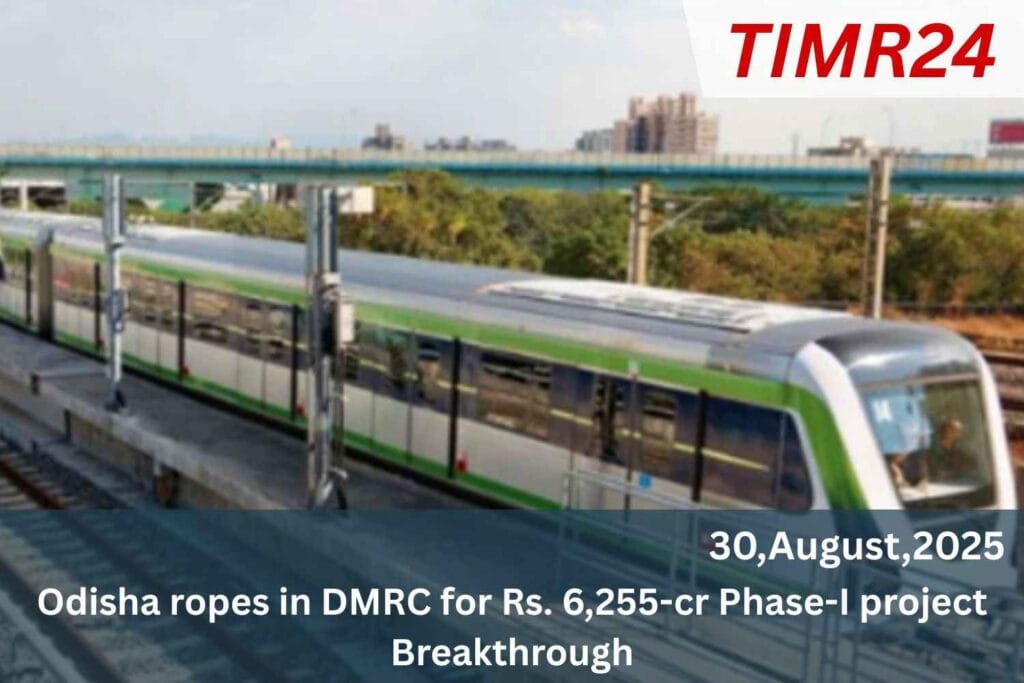
The DMRC Odisha government has appointed DMRC as the key consultant for the Rs. 6,255 crore Phase-I of the Bhubaneswar metro rail project, starting from the airport to Trishulia Square. The project, a flagship program under the government’s 5T initiative, aims to transform the transportation landscape in the state’s capital region. The Bhubaneswar Metro Rail Project, a transformative urban infrastructure initiative in Odisha, has garnered significant attention due to its scale, ambition, and the involvement of the Delhi Metro Rail Corporation (DMRC) as a key consultant. With an estimated cost of ₹6,255 crore, this project stands as the largest infrastructure investment in the state’s history. The project aims to address the growing urban mobility challenges in Bhubaneswar.
Enhancing connectivity, reducing traffic congestion, and promoting sustainable public transportation The Bhubaneswar Metro Rail Project is envisioned to be a modern, efficient, and environmentally friendly mode of transportation for the city. The first phase of the project is (BMRCL) planned to cover a 26-kilometer stretch from Biju Patnaik International Airport to Trisula Square, connecting key residential, commercial, and institutional areas. The metro system is expected to comprise 20 stations, facilitating seamless travel across the city and its peripheries.
The primary objectives of the project include:
- Reducing Traffic Congestion: By providing an alternative to road transport, the metro aims to alleviate the heavy traffic burden on city roads, leading to smoother commutes.
- Promoting Sustainable Transportation: The metro system is designed to be energy-efficient and environmentally friendly, contributing to the reduction of carbon emissions.
- Enhancing Urban Mobility: The project seeks to improve the overall mobility within the city, making travel more convenient and time-efficient for residents.
- Stimulating Economic Growth: Improved connectivity is expected to boost economic activities, attract investments, and create employment opportunities.
Role of DMRC as Consultant
In November 2023, the Odisha government engaged the Delhi Metro Rail Corporation (DMRC) as the General Consultant for the Bhubaneswar Metro Rail Project. This collaboration leverages DMRC’s extensive experience and expertise in metro rail systems, ensuring that the project adheres to international standards of quality, safety, and efficiency.
DMRC’s responsibilities encompass:
- Detailed Project Report (DPR) Preparation: DMRC is tasked with preparing comprehensive DPRs, including technical designs, cost estimates, and implementation strategies.
- Project Management: Overseeing the execution of the project, ensuring timely completion and adherence to budgetary constraints.
- Quality Assurance: Implementing rigorous quality control measures to maintain high construction and operational standards.
- Capacity Building: Training local personnel to operate and maintain the metro system effectively.
The entire cost of the Bhubaneswar Metro Rail Project is being borne by the Odisha state government, marking a significant commitment to enhancing urban infrastructure. The project is being implemented in phases, with the first phase expected to be completed by December 2027. The phased approach allows for systematic development, minimizing disruptions to the city’s daily activities.
Challenges and Mitigation Strategies
While the project holds immense potential, it also faces several challenges:
- Land Acquisition: Securing the necessary land for construction can be time-consuming and may encounter resistance from local communities.
- Environmental Concerns: Construction activities may impact local ecosystems, necessitating careful planning and mitigation measures.
- Financial Management: Managing the substantial investment requires stringent financial oversight to prevent cost overruns.
To address these challenges, the Odisha government has established an inter-ministerial committee to oversee the project’s progress. This committee is responsible for resolving issues related to land acquisition, ensuring environmental compliance, and monitoring financial expenditures. Upon completion, the Bhubaneswar Metro Rail Project is expected to significantly transform the city’s transportation landscape. The metro system will provide a reliable, fast, and comfortable mode of travel, encouraging more residents to opt for public transport over private vehicles. This shift is anticipated to lead to reduced traffic congestion, lower pollution levels, and improved quality of life for the city’s inhabitants.
Furthermore, the successful implementation of the metro project could serve as a model for other cities in India facing similar urban mobility challenges. It underscores the importance of investing in sustainable infrastructure to support urban growth and development. the Bhubaneswar Metro (Construction) Rail Project represents a bold step towards modernizing urban transportation in Odisha. With the expertise of DMRC and the commitment of the state government, the project is poised to deliver lasting benefits to the residents of Bhubaneswar, setting a benchmark for future urban infrastructure projects in the country.
Q1. What is the Bhubaneswar Metro Phase-I project?
The Bhubaneswar Metro Phase-I project is a proposed rapid transit system connecting Bhubaneswar and Cuttack in Odisha. The first phase involves constructing a 26.024 km elevated metro line with 20 stations, starting from Trisulia in Cuttack to Biju Patnaik International Airport in Bhubaneswar. The project is estimated to cost ₹6,255 crore, fully funded by the Odisha government.
Q2. Who is responsible for the project’s implementation?
The Bhubaneswar Metro Rail Corporation (BMRC) is overseeing the project. The Delhi Metro Rail Corporation (DMRC) has been appointed as the turnkey consultant for Phase-I, responsible for planning, design, and construction supervision.
Q3. What is the timeline for the project’s completion?
The project is targeted for completion within four years, with an expected operational date around 2027.
Q4. Has the project faced any challenges?
Yes, the project has encountered delays, including the termination of the initial construction contract due to prolonged execution delays. However, the state government has reaffirmed its commitment to the project, forming a sub-committee to address implementation issues and ensure its progress.
Q5. What are the expected benefits of the metro project?
The metro is expected to alleviate traffic congestion, reduce pollution, and provide a reliable and efficient public transportation option for residents of Bhubaneswar and Cuttack. It aligns with the state’s 5T initiative, aiming to transform urban infrastructure and enhance quality of life.