













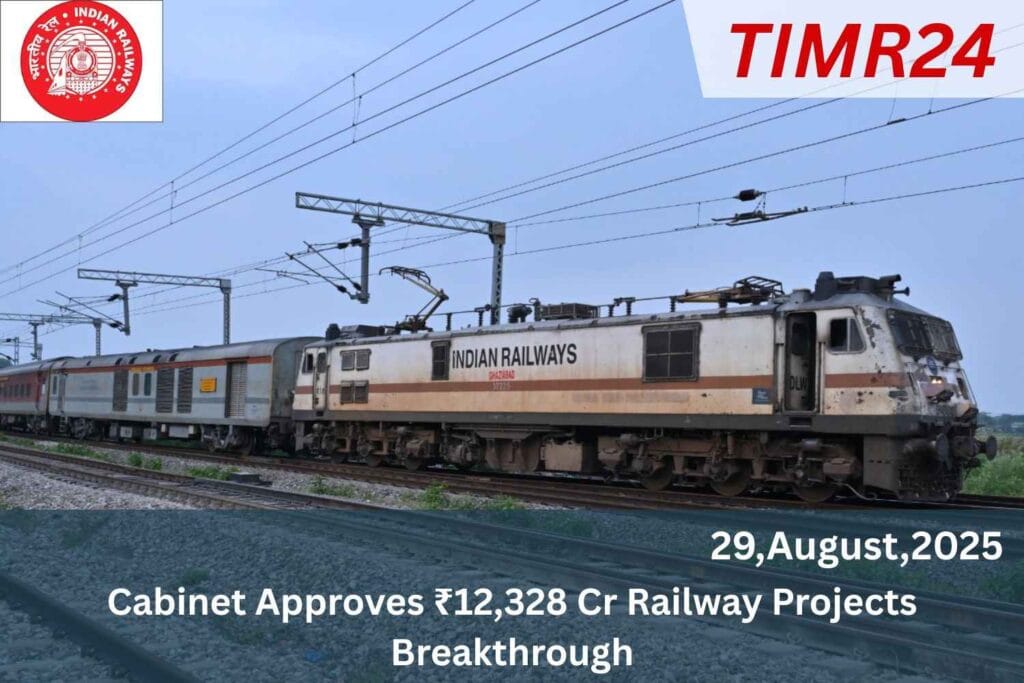
The Union Cabinet, led by Prime Minister Narendra Modi, has approved four major railway projects worth ₹12,328 crore. These include the construction of new lines, reducing logistics costs, and boosting connectivity. The projects aim to improve passenger and freight movement, reduce dependence on oil imports, and lower CO2 emissions. The projects will generate 251 lakh human-days of direct employment during construction, contributing to economic growth. The proposed new line will connect the Kutch region, adding 145 route km and 164 track km to the existing railway network in Gujarat. The projects will also benefit 866 villages and about 16 lakh population.
Multi-tracking projects will enhance connectivity to around 3,108 villages and 47.34 lakh population in Karnataka, Telangana, Bihar, and Assam. These projects are planned on the PM-Gati Shakti National Master Plan, focusing on enhancing multi-modal connectivity and logistic efficiency. The projects aim to optimize supply chains and facilitate accelerated economic growth. The Union Cabinet’s approval of ₹12,328 crore railway projects marks a major leap toward transforming India’s transportation infrastructure, enhancing regional connectivity, and accelerating economic growth. This decision comes at a time when the country is witnessing significant investments in railway modernization,
Electrification, and expansion of routes, ensuring that mobility across states becomes more efficient, sustainable, and future-ready. Much like the recent (RVNL) that is paving the way for next-generation rail technology, this Cabinet nod highlights the government’s consistent focus on upgrading the railway sector with long-term benefits for both passengers and industries. One of the most crucial aspects of this Cabinet approval is the expansion of railway lines across key regions, which will not only reduce congestion on existing routes but also enhance passenger convenience and freight movement. With new lines being laid and existing ones being doubled, the railway network will witness increased capacity, allowing trains to operate at higher frequency and reduced delays.
The move mirrors similar projects like where infrastructure development has been prioritized to decongest major routes, thereby reducing travel time and enhancing efficiency. By investing in these railway projects, the government ensures that growth is not limited to urban hubs but reaches semi-urban and rural regions, fuelling balanced economic development.
Electrification for a Sustainable Future
Sustainability remains at the core of India’s infrastructure push, and railway electrification plays a vital role in achieving this target. A large portion of the ₹12,328 crore investment will be directed toward electrifying railway tracks to reduce dependency on fossil fuels and cut down carbon emissions. This aligns with India’s commitment to achieving net zero emissions by 2070, while simultaneously reducing operational costs for the railways. Electrification also means smoother, faster, and quieter train operations, improving passenger experience. Such forward-looking initiatives are in line with projects like the which emphasizes eco-friendly transit solutions. Together, these measures reflect a clear vision of creating a green and sustainable transport ecosystem in India.
The approval of railway projects worth over ₹12,000 crore is not just about transport it’s about economic transformation. Industries heavily rely on efficient logistics, and railways remain one of the most cost-effective and reliable options for moving bulk goods. With the proposed projects, industries such as steel, cement, coal, and agriculture will benefit from faster freight corridors, reducing logistic costs and boosting competitiveness. For instance, companies like (Patel Engineering) which recently raised funds through non-convertible debentures, stand to gain as railway infrastructure creates a smoother flow of raw materials and finished goods. Moreover, improved connectivity between industrial clusters and ports will significantly enhance India’s trade efficiency.
Regional Connectivity and Passenger Comfort
Another key area of focus in the approved projects is regional connectivity, which is crucial for bringing remote regions into the mainstream economy. By connecting smaller towns and rural belts with metropolitan hubs, the railway expansion projects will enable greater access to education, healthcare, and employment opportunities. This will also promote regional tourism, as better rail infrastructure allows visitors to travel more comfortably and economically. The move echoes similar initiatives such as the aims to open new gateways for regional and global connectivity. For passengers, the modernization of stations, introduction of advanced signaling systems, and faster trains will bring comfort, safety, and convenience to everyday travel.
Massive infrastructure projects such as this do not just benefit passengers they also create thousands of jobs during their construction and operational phases. From engineers to construction workers, technicians to suppliers, the multiplier effect of such large-scale investments extends across multiple sectors of the economy. Additionally, the emphasis on modern railway technology will require training programs and skill development initiatives, providing opportunities for India’s youth. Similar to the created local employment opportunities while improving infrastructure, the ₹12,328 crore railway projects are poised to generate significant socio-economic benefits through employment.
Boost to Regional Economies
The regions covered under these railway projects will witness direct economic benefits as connectivity improves. Farmers will be able to transport perishable goods faster, industries will have better access to raw materials, and small businesses will benefit from increased passenger traffic. This decentralization of growth ensures that development does not remain restricted to major metros. For example, highlighted how a single terminal upgrade can transform local trade and commerce. Similarly, the newly approved railway projects will enhance the economic vitality of multiple states by bridging connectivity gaps.
Apart from economic and passenger benefits, enhanced railway infrastructure also contributes to national security. Efficient and modern railway lines are vital for rapid troop mobilization, supply chain management during emergencies, and disaster relief. The modernization and electrification of tracks approved in this project will allow faster, more secure movement of goods and personnel. This aligns with India’s recent emphasis on strengthening maritime and border infrastructure, as seen in With upgraded rail networks, the nation strengthens its resilience to both economic and security challenges.
Integration with Other Infrastructure Projects
India’s development vision thrives on integration of road, rail, air, and maritime networks. The ₹12,328 crore projects are not standalone; they integrate with ongoing metro expansions, expressways, and airport developments to create a seamless transport ecosystem demonstrates how older infrastructure is being replaced with modern alternatives to ensure smoother connectivity. Similarly, the newly approved railway lines will link seamlessly with highways, industrial corridors, and ports, reducing bottlenecks and enabling multimodal logistics.
The Indian Railways, often termed the lifeline of the nation, has been undergoing rapid transformation under multiple government programs. The recent approval of ₹12,328 crore worth of projects reflects the long-term vision of creating a world-class railway system. With modernization of rolling stock, high-speed corridors, AI-driven traffic management, and smart ticketing systems, the railway sector is set to emerge as the backbone of India’s economic and social development. Much like that reshaped the construction sector, this approval marks a milestone that will reshape how Indians travel and how goods are transported across the subcontinent.
The Cabinet’s approval of ₹12,328 crore for railway projects is more than just an infrastructure announcement—it is a roadmap toward inclusive and sustainable growth. By expanding rail networks, electrifying tracks, boosting regional economies, and integrating with other infrastructure projects, India is ensuring that the benefits of development reach every corner of the country (NHAI) These initiatives promise improved passenger comfort, faster freight movement, greener transport, and stronger national resilience. As India continues to invest in its transport backbone, projects like this serve as a reminder that railways remain the true engine of progress, driving both connectivity and prosperity across the nation.
Q1 What is the total cost approved by the Cabinet for new railway projects?
The Union Cabinet approved projects worth ₹12,328 crore to enhance India’s railway infrastructure.
Q2 What are the key focus areas of these projects?
The projects emphasize electrification, doubling of lines, modernization of stations, and capacity expansion.
Q3 How will these projects benefit passengers?
Passengers will experience reduced travel time, improved safety, modern stations, and more comfortable journeys.
Q4 What economic benefits are expected from these railway projects?
Industries will gain from cost-effective logistics, faster freight movement, and better access to ports and markets.
Q5 Do these projects align with sustainability goals?
Yes, the focus on electrification supports India’s net-zero emissions target while reducing fuel costs and carbon footprint.