







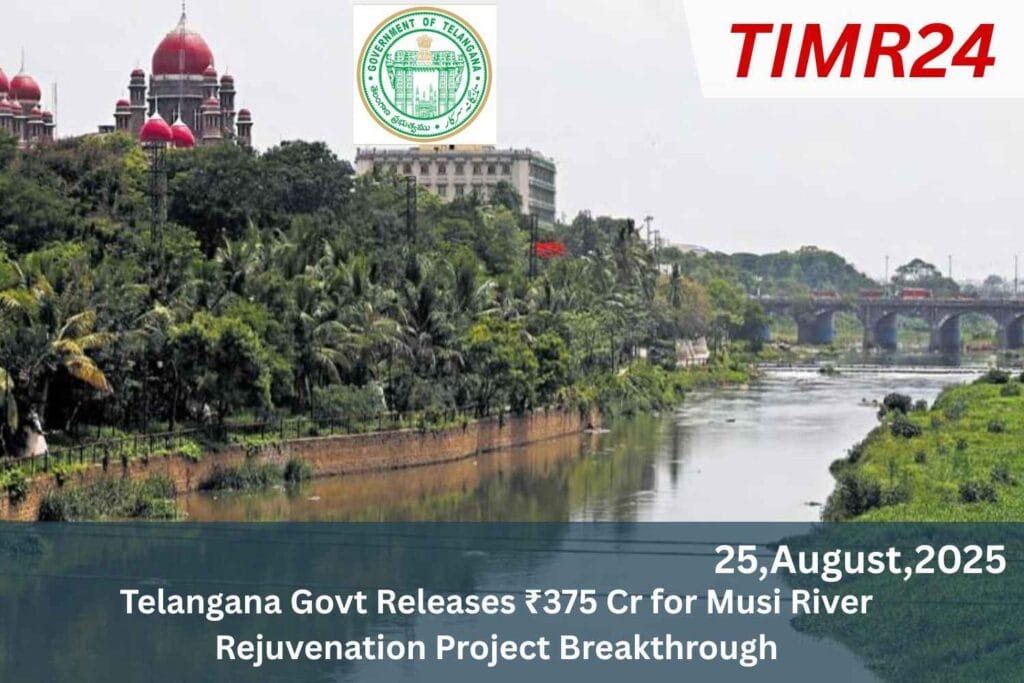
The Telangana government has released ₹375 crore to the Musi Riverfront Water Development Corporation Ltd (MRDCL) for project implementation, reaffirming its commitment to the Musi ecosystem. The initiative aims to revive the Musi ecosystem, drive economic growth, and promote sustainable urban development. IT and Industries Minister D. Sridhar Babu emphasized progress in greenery (Water Development) and Water conservation. The Musi has been a lifeline for Hyderabad for centuries, yet rapid urbanization and industrial growth left it heavily polluted. To address this issue, the Telangana government has sanctioned ₹375 crore for the Musi River Rejuvenation Project, a comprehensive plan
Project Vision and Objectives
Designed to restore the river’s ecological balance and transform it into a modern urban riverfront. The project will draw inspiration from successful models such as while tailoring solutions to Hyderabad’s unique challenges. The Musi River rejuvenation plan envisions a cleaner, greener, and more sustainable Hyderabad. The primary objectives include:
- Establishing new sewage treatment plants (STPs) to ensure untreated sewage does not enter.
- Reviving aquatic biodiversity and green belts along the riverbanks.
- Developing urban front spaces for recreation, tourism, and cultural activities.
- Strengthening flood management systems to prevent damage during heavy rainfall.
The ₹375 crore investment is not just about environmental improvement but also about boosting Hyderabad’s economy and quality of life. Cleaner improve public health, reduce waterborne diseases, and attract tourism. Additionally, the development of promenades, parks, and cultural hubs along the Musi will generate employment opportunities and encourage small businesses.
The Musi project will be implemented with coordination between multiple agencies:
- Greater Hyderabad Municipal Corporation (GHMC) for city-level planning.
- Hyderabad Metropolitan Development Authority (HMDA) for urban development.
- Irrigation Department for water flow and flood management.
- Partnerships with NGOs and environmental groups for eco-restoration.
With rising concerns about climate change, the project emphasizes eco-friendly approaches. Plantation drives, wetlands restoration, and eco-park creation will make the Musi zone an ecological hotspot within the city. Moreover, sewage treatment technology will ensure the river water is suitable for irrigation and non-drinking uses. The rejuvenation project will be executed in (Telangana’s) phases over 3–5 years, with visible improvements expected within the first 18 months. Once completed, Hyderabad will boast one of India’s most advanced urban riverfronts, balancing heritage, modern infrastructure, and environmental conservation.
The Musi Rejuvenation Project will focus on cleaning the polluted water, improving sewage management, constructing front infrastructure, and boosting green cover along the riverbanks. This project is expected to benefit lakhs of Hyderabad residents by ensuring cleaner water, improved flood management, and better quality of life. With dedicated funding, the project aligns with Telangana’s long-term urban development and environmental sustainability goals. It also emphasizes modern front beautification projects similar to Sabarmati front in Gujarat. Stakeholders including GHMC, HMDA, and local communities will actively participate in making the Musi River a thriving eco-zone. Learn more about the project’s vision, timeline, and impact on Hyderabad’s growth story.
Q1. What is the Musi River Rejuvenation Project?
It is an initiative by the Telangana government to clean, restore, and beautify the Musi River in Hyderabad with an allocated budget of ₹375 crore.
Q2. How will the ₹375 crore be used?
The funds will be utilized for sewage treatment plants, riverfront development, eco-restoration, flood prevention, and public recreational spaces.
Q3. Which agencies are involved in the project?
The project involves GHMC, HMDA, Telangana Irrigation Department, and Hyderabad Urban Development authorities.
Q4. What are the expected benefits of this project?
Cleaner river water, reduced pollution, improved biodiversity, better flood management, and enhanced urban lifestyle.
Q5. When is the Musi River project expected to be completed?
The project will be executed in phases over the next 3–5 years.