




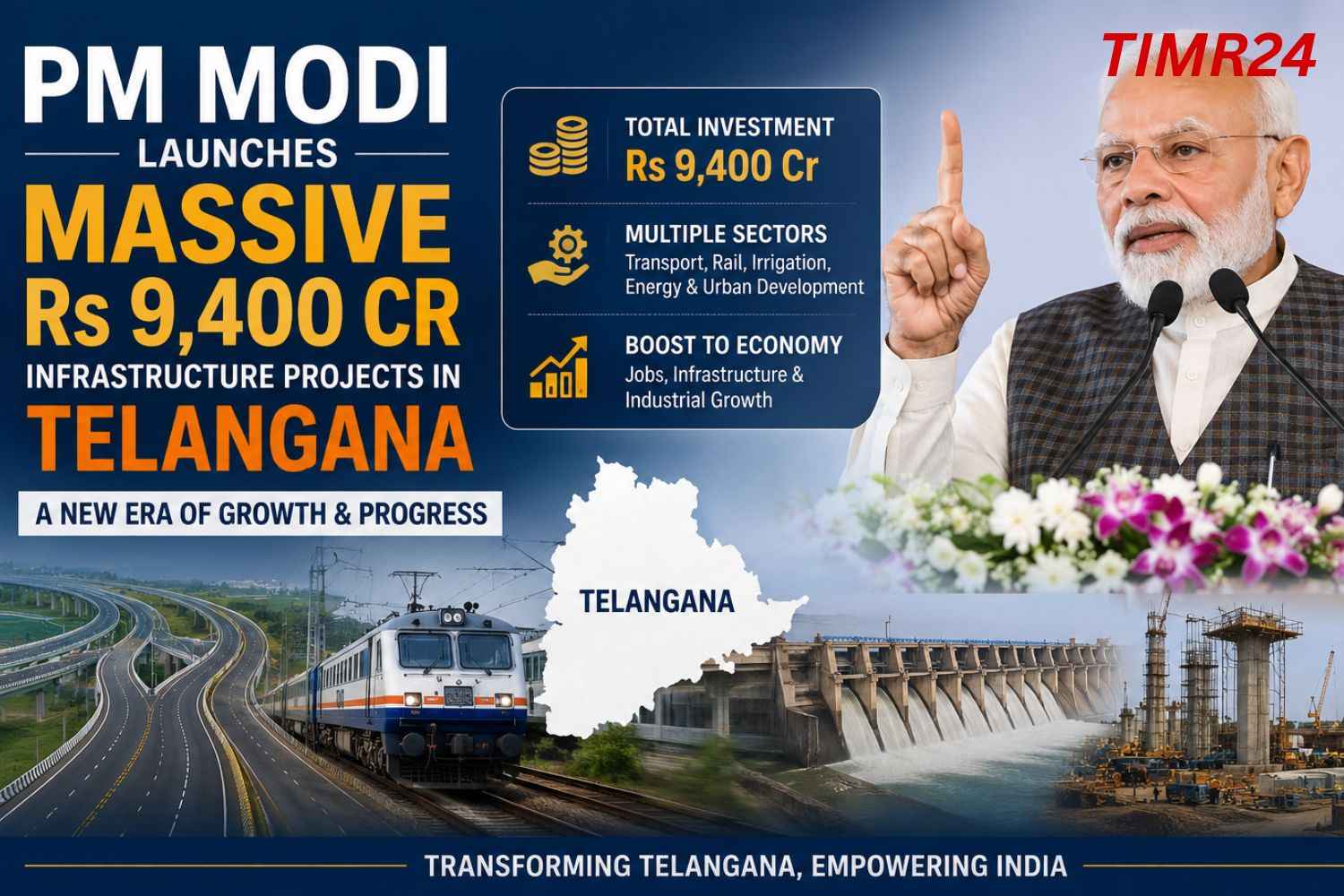
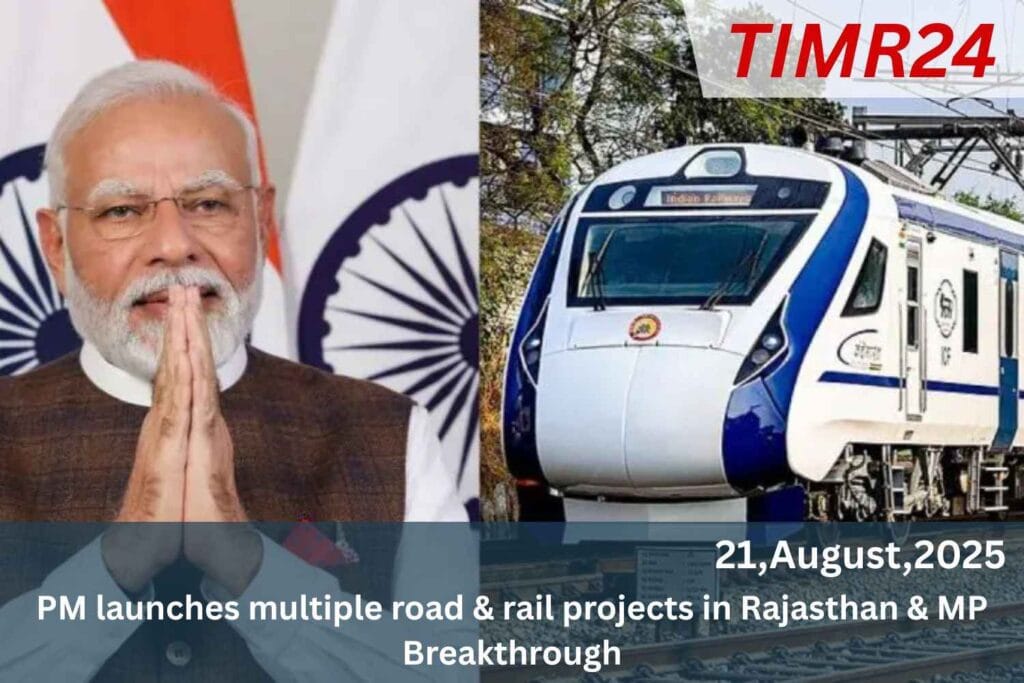
Prime Minister Narendra Modi has initiated several road, rail, and aviation projects in Rajasthan and Madhya Pradesh. In Rajasthan, he launched construction work worth Rs. 5,000 crore, including the construction of the state-of-the-art New Terminal Building at Jodhpur Airport. The project will cater to 35 lakh passengers annually, enhancing connectivity and tourism. Modi also launched new train services, such as the Runicha Express and heritage train, and dedicated rail projects to the nation. In Madhya Pradesh, he completed road projects, including upgrading roads and donating road and rail projects to the nation. India’s infrastructure push received a significant boost as the Prime
Minister inaugurated multiple road and rail projects across Rajasthan and Madhya Pradesh, two states that play a central role in connecting the western and central regions of the country. The announcement marks another milestone in the government’s ongoing vision of creating seamless mobility corridors, reducing travel time, and strengthening regional economies. These projects, strategically distributed across both states, are not just about building highways and railway tracks but about shaping a long-term ecosystem where logistics, trade, tourism,
Local livelihoods are interwoven with development. Much like the recently launched (Road Project) these initiatives reflect the government’s determination to bridge infrastructure gaps and enhance multi-modal transport efficiency. One of the biggest highlights of the new projects is the emphasis on connectivity for rural and semi-urban pockets of Rajasthan and Madhya Pradesh. While both states have rich cultural heritage and vibrant industries, their economic potential has often been slowed by inadequate transport facilities. By laying down new rail lines and modernizing existing routes, the projects are expected to give an edge to the movement of agricultural goods, minerals.
Manufactured products. Similarly, road expansions in regions that connect smaller towns to industrial clusters are likely to ease freight flow, replicating the success seen in projects like that focused on regional accessibility. This approach underlines the government’s strategy to ensure that development is not concentrated in metropolitan areas alone but trickles down to smaller districts. Equally important is the focus on high-speed connectivity. With dedicated freight corridors and expressway-grade highways being part of the blueprint, the projects aim to make Rajasthan and Madhya Pradesh vital arteries of India’s logistics network. This becomes especially significant when.
The context of India’s ambitious goal of becoming a $5 trillion economy, where faster movement of goods directly impacts competitiveness. The new infrastructure also complements ongoing works which is designed to integrate green mobility solutions with conventional transport. By aligning new rail and road initiatives with upcoming smart transport technologies, the government is signaling a holistic development pathway. Beyond trade and logistics, the projects hold social importance as well. Railway modernization, for instance, is expected to improve passenger experience, reduce delays, and open up new routes that directly connect smaller towns with bigger cities like Jaipur.
Indore, Bhopal, and Udaipur. This not only makes travel more convenient for daily commuters and tourists but also creates opportunities for education and employment, as better transport means access to better institutions and industries. The road projects, on the other hand, are expected to enhance road safety through the adoption of modern engineering standards, similar to innovations being tested in (NHAI’s) With highways designed for speed and safety, the government hopes to reduce accidents and improve overall traffic efficiency.
From a regional development perspective, the timing of these projects is also crucial. Rajasthan, with its tourism-driven economy, and Madhya Pradesh, with its strong agricultural and mineral base, stand to benefit in unique ways. Improved roads leading to heritage destinations like Udaipur, Chittorgarh, and Khajuraho will likely boost tourism revenue, while faster rail freight will allow farmers and traders to access markets without worrying about spoilage and delays. This aligns with the pattern seen in projects like the where modern infrastructure directly contributed to economic efficiency. By connecting industries, farms, and markets, these road and rail networks serve as lifelines for balanced development.
Another dimension to the breakthrough is job creation. Large-scale infrastructure projects are labor-intensive during the construction phase and open long-term employment opportunities once operational. Thousands of engineers, workers, and contractors are already engaged in the building process, while indirect jobs in transport, hospitality, and supply chain management will emerge once the networks are fully functional. This multiplier effect on employment is an often-overlooked but essential benefit of infrastructure expansion, and one that is expected to particularly uplift rural populations.
In the larger policy framework, these projects in Rajasthan and Madhya Pradesh are part of a nationwide agenda where infrastructure serves as the backbone of growth. By synchronizing road, rail, port, and air development, India is moving towards a unified logistics ecosystem. Much like the which introduced a breakthrough in material transport, the current projects showcase how innovation and vision come together to reshape connectivity. The Prime Minister’s emphasis during the launch also highlighted sustainability and long-term planning, where modern infrastructure will be designed to accommodate future needs of green mobility, digital monitoring, and climate resilience.
In conclusion, the launch of multiple road and rail projects in Rajasthan and Madhya Pradesh represents more than just new construction it symbolizes a broader transformation in how India envisions connectivity. By addressing bottlenecks, enabling faster transport, and creating opportunities for inclusive growth, the projects are set to transform the socio-economic landscape of both states. Just as earlier initiatives like the underscored urban mobility, these new projects underline regional integration, setting the stage for a future where infrastructure is not just a facilitator but a driver of national progress.
Q1 What projects were launched by the PM in Rajasthan and MP?
Multiple road and rail projects to improve regional connectivity and growth.
Q2. How will these projects benefit people?
They will reduce travel time, enhance trade, and boost local economies.
Q3. Which states are covered under the projects?
Rajasthan and Madhya Pradesh.
Q4. Are these projects part of a national plan?
Yes, they align with India’s infrastructure development vision.
Q5. When will the projects be completed?
Timelines vary, but construction has been fast-tracked for early delivery.