






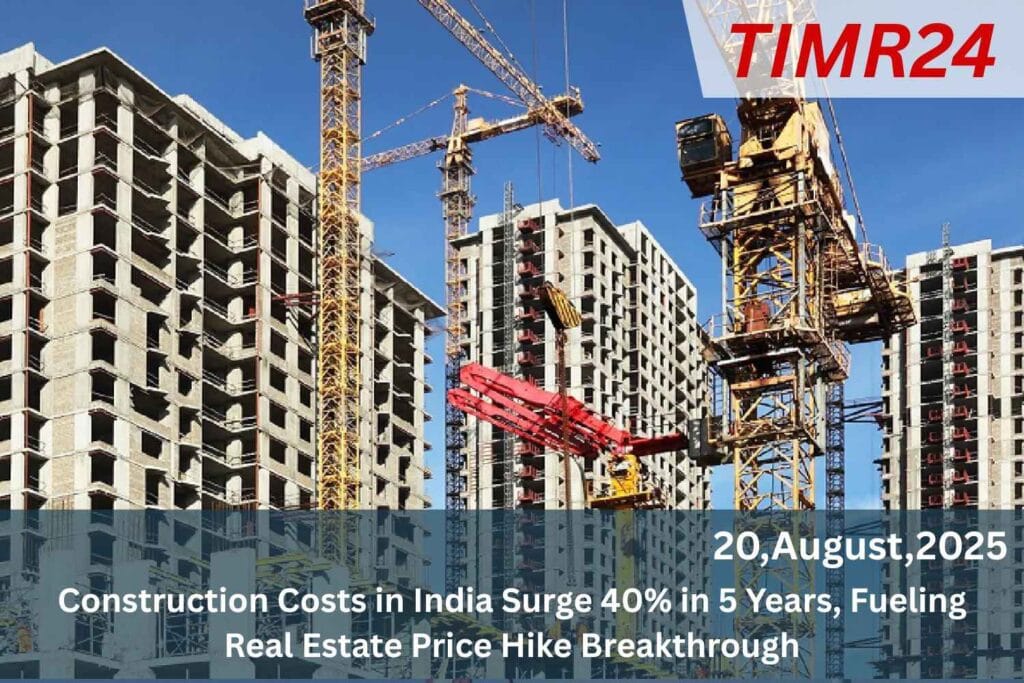
The cost of residential real estate construction in India has increased by 40% between 2019 and 2024, with average Grade A project costs in tier-1 cities rising 27.3% in just three years. Key drivers include soaring raw material prices, higher labor costs, logistics and compliance expenses, and global supply chain disruptions. Affordable housing faces the sharpest impact, with its share in new launches dropping from 40% in 2019 to just 12% in 2025 Over the last five years, India’s construction and real estate sector has witnessed a remarkable transformation, largely driven by a steep increase in construction costs. Reports suggest that costs have surged by nearly 40%, directly impacting.
Property prices across metros and tier-2 cities. This sharp rise has created ripple effects not only for homebuyers and investors but also for developers and policymakers. The surge is attributed to a combination of rising raw material prices, supply chain disruptions, labour shortages, and evolving regulatory norms. Together, these factors have reshaped the landscape of India’s real estate industry. One of the biggest contributors to this surge is the steep increase in raw material costs. Steel, cement, aluminium, and sand the backbone of construction have seen significant price hikes For instance, steel prices touched record highs in recent years due to global supply chain
Disruptions and increased export demand. Similarly, cement manufacturers faced higher energy and freight charges, pushing the overall cost upward. The dependency on imported raw materials like aluminium has also added volatility to pricing. For a deeper insight into raw material market trends, one can explore government updates and (Steel Publications) Another major factor fuelling the rise in construction expenses is the increasing cost of labour. The pandemic not only triggered mass migration of workers but also created a shortage in key skill sets within urban construction hubs. Developers were forced to pay higher wages to retain workers,
while additional investments in worker welfare, safety, and housing facilities increased expenditure. Even as labour gradually returned to metros, demand for better pay and improved working conditions has kept costs elevated. Internal reports such as those from the indicate a growing need for skilled construction labour to manage this challenge effectively. The direct result of higher construction costs has been an upward push in real estate prices. Cities like Mumbai, Delhi-NCR, and Bengaluru have seen property rates rise steadily, while even emerging markets such as Lucknow, Indore, and Coimbatore are experiencing higher entry costs for buyers.
Affordable housing, which was a priority segment under government initiatives like Pradhan Mantri Awes Yojana has been particularly hit as developers struggle to keep unit prices within the targeted budget range. For readers interested in understanding housing policy interventions, references to provide useful context The surge in prices has also reshaped buyer psychology. Many potential homebuyers are reconsidering under-construction projects due to fears of delays and escalating costs, preferring ready-to-move-in properties instead. Investors, on the other hand, are diversifying into emerging tier-2 cities where land acquisition
Policy Measures and the Way Forward
Costs are relatively lower. This shift has opened new growth corridors in India’s real estate map, making cities like Jaipur, Surat, and Nagpur attractive destinations for both residential and commercial projects. Internal links to “emerging real estate markets in India” articles can further guide readers exploring investment opportunities. Government policies will play a crucial role in balancing the construction cost surge with the need for affordable housing and sustainable urban growth. Initiatives such as the reduction of GST on certain construction inputs, incentives for affordable housing, and increased focus on digital approvals aim to ease the burden on developers.
Additionally, adoption of green building materials and advanced construction technologies like precast structures and modular building methods can bring long-term cost efficiency. Developers and buyers can also benefit from tracking updates through the (Real Estate) which regularly highlights industry concerns and solutions.
Future Outlook for India’s Real Estate Sector
While the immediate impact of rising construction costs has led to higher property prices, the long-term outlook remains cautiously optimistic. Urbanisation, rising incomes, and demand for better housing continue to fuel growth. Developers are increasingly experimenting with innovative financing models and partnerships to manage costs. At the same time, buyers are adjusting their preferences, with greater focus on value-for-money projects and community living. Internal links to “real estate trends in 2025” can provide additional context for readers tracking the sector’s future trajectory.
The 40% surge in construction costs over the past five years has fundamentally altered India’s real estate landscape. While it has brought challenges for developers and homebuyers alike, it also signals a shift towards more resilient, technology-driven, and policy-supported growth. With careful planning, government support, and adoption of innovative building practices, the sector can balance affordability with sustainable expansion. For investors and buyers, understanding these dynamics is crucial to making informed decisions in an ever-evolving property market.
Q1. Why have construction costs in India risen by 40% in 5 years?
Costs surged due to inflation in raw materials, labour charges, and supply chain disruptions.
Q2. How does the rise in construction costs affect real estate buyers?
Higher construction costs lead to increased property prices, impacting affordability.
Q3. Which materials contributed most to the cost surge?
Steel, cement, and sand saw the steepest price hikes, driving overall construction expenses.
Q4. Will real estate prices continue to rise in India?
Experts suggest gradual increases, but government policies and demand will shape trends.
Q5. How can buyers and investors adapt to rising costs?
Exploring under-construction projects, affordable housing schemes, and early investments can help.