












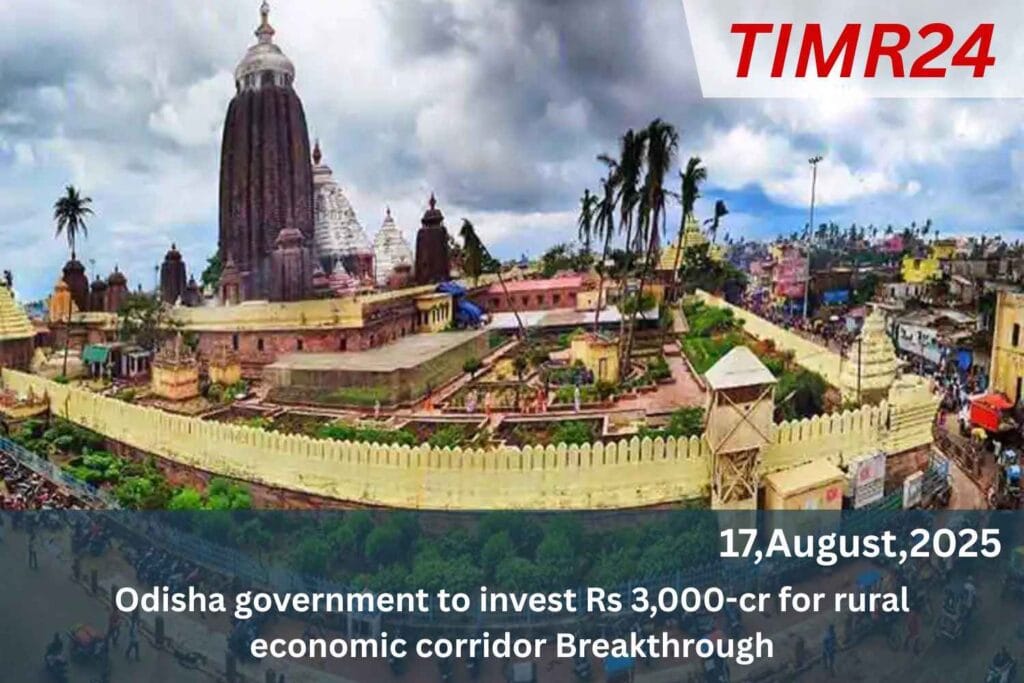
Odisha Government plans a five-year programme to develop advanced infrastructure, aiming to enhance industrial corridors, ports, and tourism destinations, with an estimated Rs 3,000 crore spent The Government of Odisha has recently announced an ambitious plan to invest Rs. 3,000 crore in the development of a rural economic corridor, a move that marks a significant breakthrough in the state’s approach to inclusive growth and sustainable development. This initiative is designed to bridge the gap between urban and rural economies, ensuring that the benefits of industrial growth, infrastructure development, and employment generation reach even the remotest parts of the state.
The Rural Economic corridor is not just about roads and connectivity but also about empowering small farmers, local entrepreneurs, artisans, and micro-industries to find better access to markets and resources By aligning this project with Odisha’s existing policies on rural development, agriculture modernization, and skill training, the state hopes to create a robust ecosystem that promotes self-reliance and reduces migration pressures on cities A key aspect of the corridor is the focus on infrastructure and connectivity Roads highways, and logistics hubs will be developed to ensure that agricultural produce and locally manufactured goods can reach larger markets in Bhubaneswar, Cuttack, and other major cities, as well as ports like Paradip and Dhamra.
This improved connectivity will also allow smoother integration with national economic corridors, making Odisha a more attractive destination for industrial investment. In fact the corridor is being planned in alignment with the (National Logistics) and the PM Gati Shakti Mission, which emphasizes coordinated infrastructure development across states. For communities, this will mean quicker access to healthcare, education, and financial services, thereby reducing socio-economic disparities between urban and populations. Another crucial element is the promotion of rural industries and agri-businesses. Odisha has a rich tradition of handloom weaving, handicrafts, and agro-based products, but these sectors often remain underdeveloped due to lack of organized supply chains.
Through this corridor, the government aims to establish clusters of small-scale industries, cold storage facilities, and food processing units. Farmers cultivating rice, pulses, and horticulture crops will be able to benefit from better warehousing and modern techniques of value addition These clusters will not only encourage local employment but also open doors for women-led self-help groups and tribal cooperatives, empowering communities with entrepreneurial opportunities For readers interested in Odisha’s broader industrial efforts, this investment complements the state’s push for that focus on balanced regional growth The corridor also ties into Odisha’s vision for sustainable development and renewable energy. Rural areas along the corridor are being considered for solar energy projects, bio-energy initiatives, and eco-friendly industrial clusters.
This move aligns with India’s national climate commitments and will ensure that growth does not come at the cost of environmental degradation. By integrating clean energy solutions into the corridor, the state hopes to set an example of how development can go hand in hand with environmental stewardship From a social perspective, the corridor will also emphasize skill development and employment generation. Young people from villages will receive training in modern farming, food processing, digital marketing, and logistics management, which will prepare them for both local and global opportunities. Odisha has been strengthening its skill ecosystem under the Odisha
Skill Development Authority, and the rural corridor will serve as a practical platform to connect trained youth with real job markets This effort could significantly reduce the trend of out-migration from rural Odisha to other states in search of livelihoods Another important dimension is the to the (Government of Odisha’s) integration with tourism and cultural heritage. Odisha’s rural belts are home to unique crafts, traditional festivals, and unexplored natural landscapes. By creating eco-tourism hubs and rural artisan markets within the corridor, the state can attract both domestic and international tourists, thereby adding another layer of revenue generation for local communities.
Regions near Puri, Konark, and Chilaca can see integrated development where rural tourism blends with economic activity, creating holistic growth models Overall, the Rs. 3,000-crore rural economic corridor is not just a financial investment but a visionary step toward building a balanced economy where rural Odisha becomes an equal participant in the state’s growth story. With connectivity, industry promotion, renewable energy, and skill development forming the core pillars, the corridor could redefine how rural development is approached in India. If implemented effectively it will not only improve the standard of living in villages but also strengthen Odisha’s position in the national economic framework. By ensuring that rural communities have direct access to opportunities,
Q1. What is the Odisha rural economic corridor project?
It is a ₹3,000 crore initiative to boost rural infrastructure, industries, and livelihoods.
Q2. How will this project benefit rural areas?
It will create jobs, improve connectivity, and support local businesses.
Q3. Which sectors are prioritized in the corridor?
Agriculture, small-scale industries, logistics, and rural infrastructure.
Q4. Who is funding the project?
The Odisha government with planned support from public-private partnerships.
Q5. When will the project be implemented?
Work will begin in phases from 2025 to ensure sustainable rural growth.