



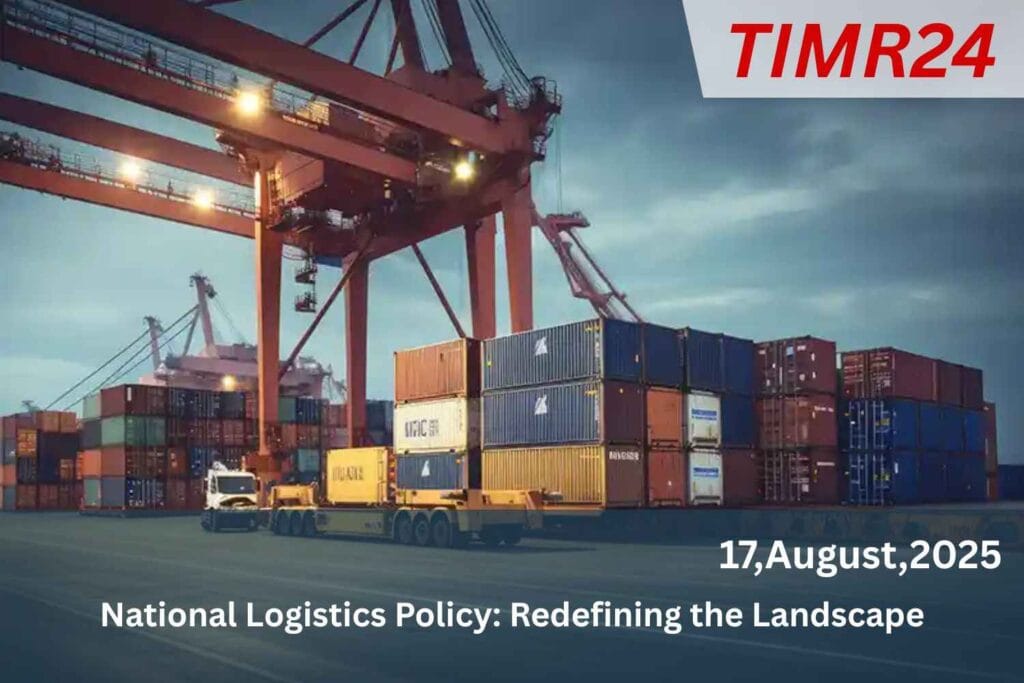
The National Logistics Policy (NLP) has significantly improved India’s logistics industry by prioritizing infrastructure development, digitization, and skill development. Investments in ports, roads, and rail connectivity have led to improved goods movement and reduced transit times, enhancing overall efficiency. The policy has also led to a significant improvement in India’s Logistics Performance Index (LPI) ranking, now standing at 38th position in 2023. The ULIP platform has successfully integrated 33 governmental platforms, attracting global investments and positioning India as a top-ranking international logistics hub. India’s rise in the World Bank’s Performance Index from 44th place in 2018 to 38th out of 139 countries in 2023 is a testament to the NLP’s effectiveness.
The policy has also integrated various modes of transportation through multimodal logistics parks, dedicated freight corridors, and FDI in warehousing and technology adoption. The policy has successfully brought all government agencies together, aiming to provide Ease of Logistics (ELOG) and guide the logistics sector’s development. India’s National Policy (NLP) 2022, unveiled by the (Logistics) Government, marks a transformative chapter in the nation’s economic journey redefining how goods move, records flow, and industries thrive. At its core lies a bold mission: to reduce logistics costs from approximately 13–14% of GDP to global benchmarks of 7.5–10% by 2030, thereby enabling India to climb from 44th to top 25 (or even top 20) in the Performance Index (LPI).
Achieving this calls for both high-tech digital integration and strategic infrastructure modernization. The policy’s foundation is built upon four keystones: the Integration of Digital Systems (IDS) unifies 30 legacy systems across seven departments roads, railways, aviation, customs, trade, and commerce unlocking real-time data interoperability the Unified Interface Platform (ULIP) consolidates digital services into a single portal, emulating the convenience of UPI for trade and logistics operations Ease of (ELOG) ensures speedy resolution of industry issues by allowing stakeholders to directly raise operational challenges with authorities and the System Improvement Group (SIG) continuously monitors and evaluates projects’ performance, with stakeholder coordination across ministries facilitated by a Network Planning Group (NPG).
But NLP’s vision stretches well beyond digital architecture it is tightly woven into India’s physical infrastructure tapestry. Aligned with PM Gati Shakti, India’s national master plan for multi-modal connectivity, NLP leverages corridors like Bharatmala, Sagarmala, and inland corridors to reimagine the flow of goods across road, rail, waterways, and ports instance, Multi-Modal Logistics Parks (MMLPs) are being developed as integrated freight hubs enabling seamless transfer between transport modes, equipped with warehousing, customs zones, and value-added services reducing handling time, storage costs, and vehicular congestion In parallel, the Sagarmala initiative is unlocking port-led development and enhancing rail–road connectivity to ports to cut logistics bottlenecks for EXIM cargo. Meanwhile,
Dedicated Freight Corridors (DFCs) are easing rail freight congestion and slashing travel times, with one improvement reducing freight speeds from ~26 km/h to 70 km/h and delivery times being halved NLP is also working hand-in-glove with environmental sustainability and sectoral equity. India has already earmarked 10 high-impact highway segments exclusively for zero-emission trucks, in sync with its broader aim of decarbonizing logistics and achieving net-zero emissions by 2070 Innovations extend to logistics operations, with firms like Allcargo Gati aligning with NLP and PM Gati Shakti by building green logistics parks, integrating MSMEs, and connecting with the Open Network for Digital Commerce (ONDC) for seamless digital trade outreach At the same time,
The government has signalled a bold target of reducing total logistics costs to just 9% of GDP by end of 2025, nudging closer to global peers like the US and Europe (at ~12%) and China (at ~8%) Through this policy, NLP is also nurturing capacity and innovation from bolstering human resource development and logistics education to digitizing export–import processes via portals such as e-sachet and enabling paperless customs The strategy includes state engagement via LEADS (Ease Across Different States) index to foster local coordination and benchmarking The result is a logistics ecosystem that is more inclusive, flexible, and resilient—with improved speed, reduced costs, and enhanced sustainability.
In sum, the National Policy doesn’t just set targets it is creating a smart, coordinated, and green logistics network that’s foundational to India’s competitiveness. By bridging digital platforms, transport modes, environmental goals, and stakeholder collaboration, the policy is merging aspirations with action ensuring trade flows are as swift as they are sustainable, empowering MSMEs, boosting exports, and steering India toward economic resilience and global integration.
Q1. What is the National Policy?
It is a government initiative to improve supply chain efficiency and reduce costs in India.
Q2. When was the policy launched?
The National Policy was launched in September 2022 to modernize India’s logistics sector.
Q3. What are the key objectives of the policy?
Its goals include reducing costs to single digits, improving infrastructure, and promoting digital integration.
Q4. How does it benefit businesses?
It enhances supply chain speed, reduces costs, and helps Indian businesses compete globally.
Q5. Which sectors are impacted by the policy?
It impacts trade, manufacturing, e-commerce, agriculture, and overall economic growth.