










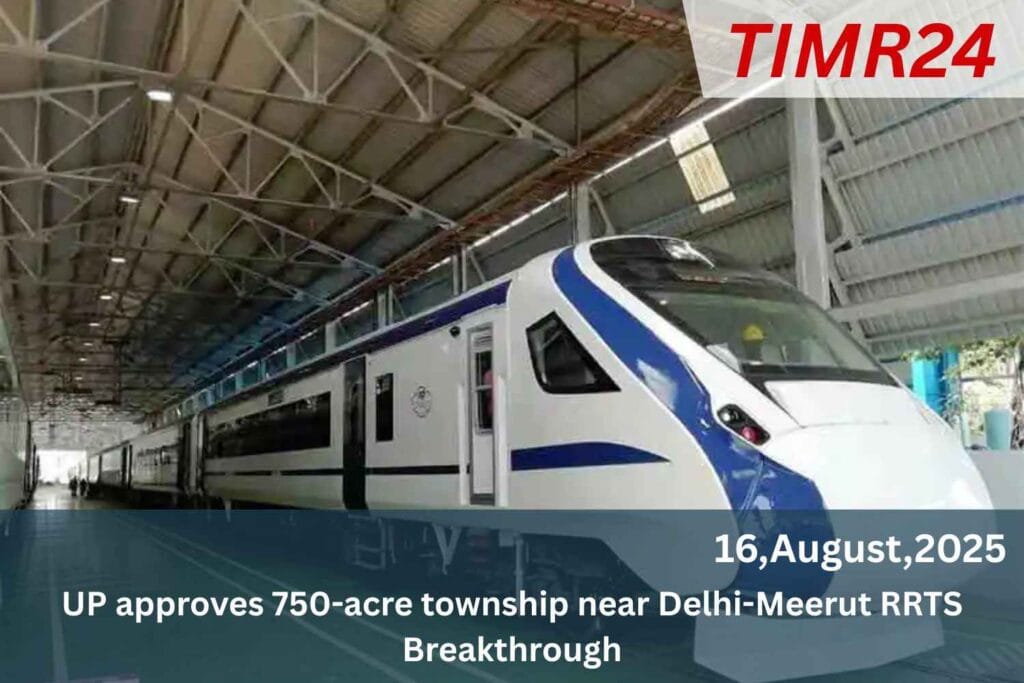
UP Approves Uttar Pradesh government Meerut Development Authority’s 750-acre township in Partiture, serving as Delhi-Meerut rail transit entry point. The township aims to enhance infrastructure and facilitate transit-oriented development, costing around Rs 2,000 crore. In a landmark development, the Uttar Pradesh urban development ministry has granted approval to the Meerut Development Authority (MDA) for establishing a pioneering 750-acre township at Partiture, poised to become the strategic gateway where the Delhi–Meerut RRTS corridor culminates in Meerut (Construction) This initiative reflects a forward-looking embrace of transit-oriented development (TOD), aligning with global urban planning models that prioritize walkable, mixed-use neighbourhoods proximal to mass transit hubs.
Central to the township’s realization is a visionary financing approach. Land acquisition costs, estimated at approximately ₹2,000 crore, will be supported by the UP government through a 50% interest-free long-term loan This underscores a commitment to catalysing sustainable infrastructure without burdening private developers. Further bolstering the financial foundation, the project will occur in two phases, with an initial tranche of ₹500 crore already approved, awaiting final cabinet sanction in Lucknow The National Capital Region Transport Corporation (NCRTC), overseeing the Delhi Meerut RRTS, is positioned to benefit from and contribute to this project. The township’s proximity to the RRTS
Corridor not only enhances the commercial viability of the rapid rail system, but also opens avenues for value-capture financing (VCF) a mechanism where increased land values and economic spillovers around transit infrastructure are monetized to fund development This synergy encapsulates the twin pillars of contemporary infrastructural strategy: transit efficiency and land-use optimization. Envisioned as more than just a transit-adjacent zone, the township promises a dynamic, integrated urban ecosystem, blending residential, commercial, and recreational spaces. By embedding TOD principles, the design aims to reduce vehicular reliance, encourage active mobility, and create a vibrant urban fabric where homes, offices, markets, and leisure spots are just a short walk or ride from transited.
Meerut Development Authority (MDA)
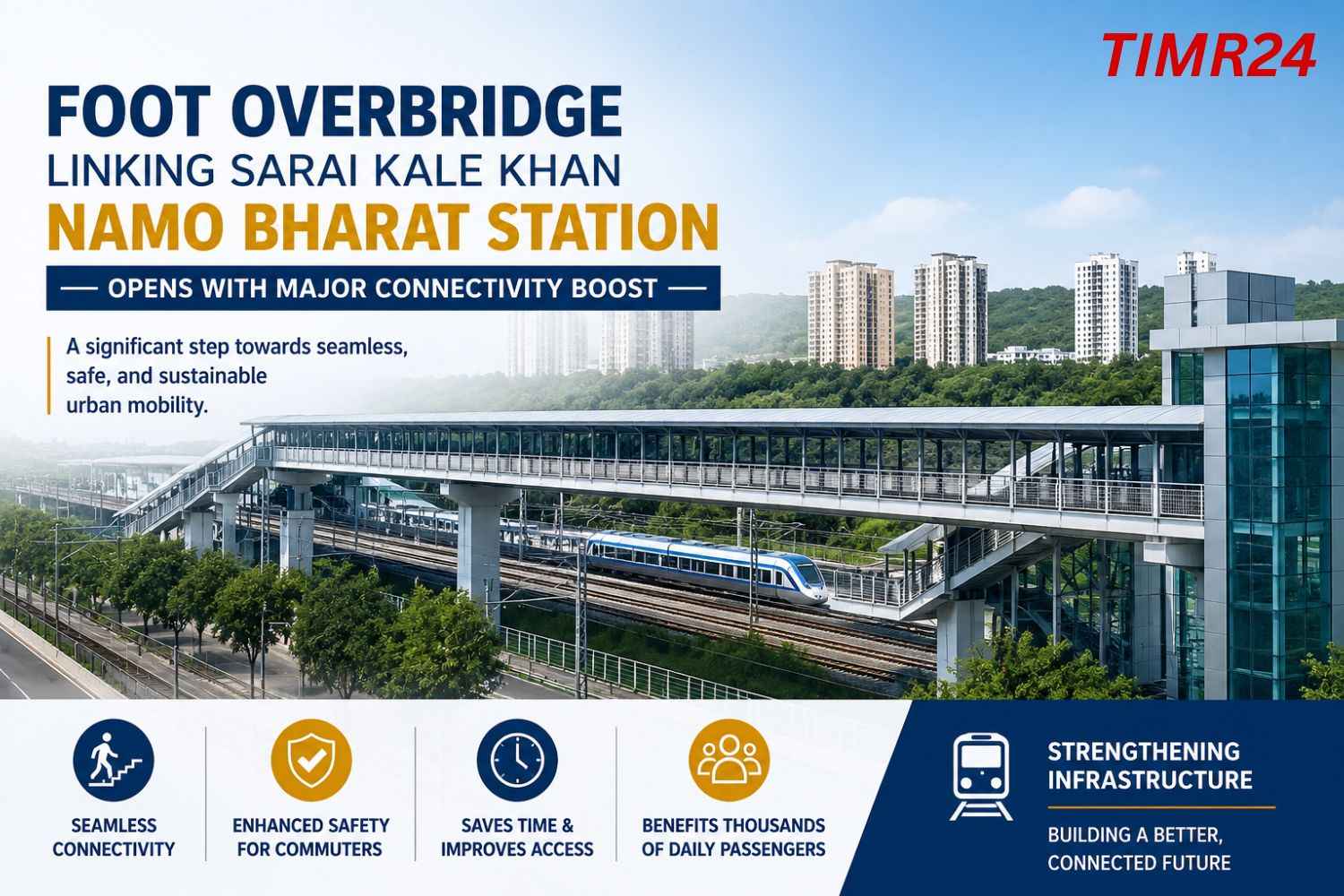
In essence, this township may stand as a proof-of-concept for high-density, sustainable neighbourhoods that support and are supported by transit infrastructure This development is ideally timed with the near-completion of the Delhi–Meerut RRTS, which is slated to be fully operational by mid-2025. Spanning approximately 82 km between Delhi and Meerut and capable of speeds up to 160 km/h, the corridor has already seen significant progress: 55 km of the route are functional, with the remainder undergoing final trials and security clearances Its rapid rollout is set to dramatically reduce travel times and enhance regional connectivity. Placing the township at the Partiture entry point ensures it becomes a natural processing zone for urban expansion around the new corridor.
greenfield townships
Through integrated land-use planning, spaces around the transit node could emerge as well-planned, high-density localities modelled on international TOD exemplars This alignment promises not just streamlined commuter access but also a pedestrian-friendly, aesthetically pleasing urban nucleus The approval of this township dovetails with broader efforts in Uttar Pradesh to roll out greenfield townships across the state. Ahead of the festive season, the state government is set to launch over a dozen such townships in key cities Aligarh, Jhansi, Mathura, Agra, Meerut, and more—as part of a ₹6,000-crore corpus under the Mahamari Sheri Vistara Yojana official (NCRTC) Positioned within this expanded urban agenda, the Partiture township serves as a flagship project, informed by TOD and VCF frameworks.
As the project moves forward, its phased implementation will allow for adaptive planning, with learnings from early stages informing subsequent development. The infusion of government equity through interest-free loans and seed funding accelerates land acquisition and infrastructure roll-out, while aligning developer incentives with public interest. The deliberate inclusion of integrated mixed-use planning ensures the township evolves into a lively, self-sustaining neighbourhood, not just a satellite settlement.
In essence, the UP-approved 750-acre Partiture township represents a confluence of visionary urban planning, progressive financing mechanisms, and landmark transit expansion. Anchored by the soon-to-be operational Delhi–Meerut RRTS corridor, it aims to define a new blueprint for future townships: efficient, inclusive, environmentally attuned, and economically vibrant. By internalizing lessons from TOD and VCF strategies, it holds the potential to catalyse a transformative chapter in regional urban development one where transit and habitation evolve hand-in-hand.
Q1. What is the new township project?
A 750-acre township approved by UP near the Delhi-Meerut RRTS corridor.
Q2. Where will it be located?
Near the Delhi-Meerut RRTS route, ensuring fast metro connectivity.
Q3. Who is developing the project?
The UP government in collaboration with private developers.
Q4. What facilities will it offer?
Housing, commercial hubs, green spaces, and modern infrastructure.
Q5. When will construction begin?
Work is expected to start after final planning and clearances in 2025.