

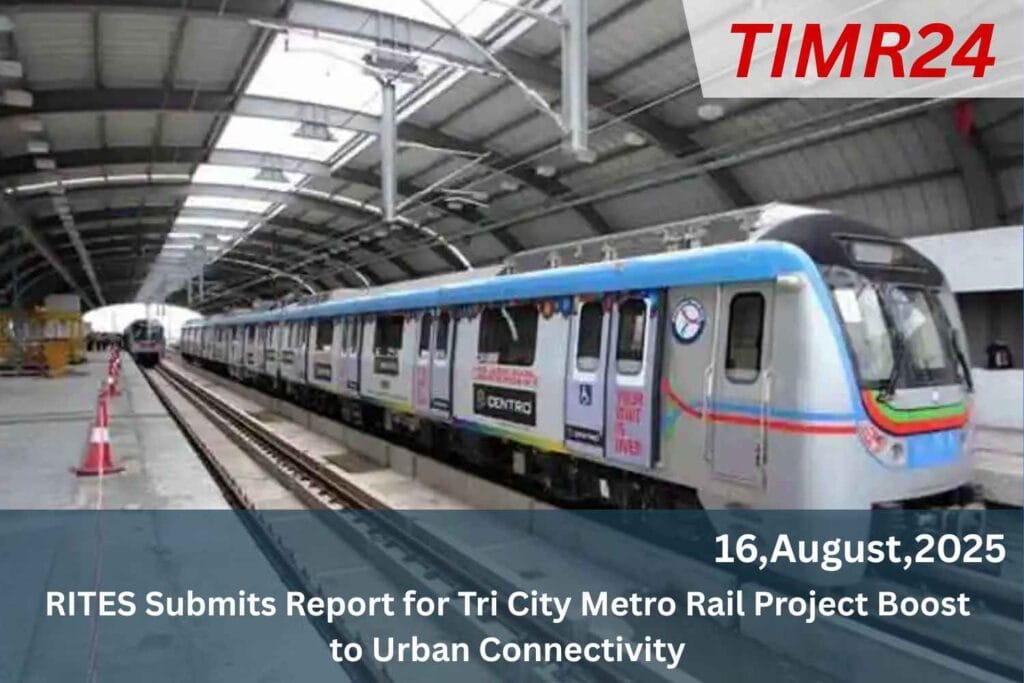
The Chandigarh Metro Project, a 77 km long project, has gained momentum after a half-decade of discussions. The first phase will cover Mohali, Chandigarh, and Panchkula, with phases spanning 30 km, 34 km, and 13 km. The project’s inception report acknowledges mutual agreement on timeline and plan of action. The Tri City Metro Rail Project has taken a major step forward with the submission of the Detailed Project Report (DPR) by Rail India Technical and Economic This much-anticipated public transport initiative will connect the three key urban centres of Chandigarh, Mohali, and Panchkula, aiming to transform daily commuting for thousands of residents. The DPR
Outlines technical specifications, cost estimates, route alignments, and potential environmental impacts, marking the beginning of an infrastructure milestone for the region The vision for the Tri City Metro is rooted in addressing the growing transportation challenges in the Chandigarh Capital Region. Over the years, rapid urbanisation, increasing private vehicle ownership, and limited high-capacity public transport options have contributed to rising traffic congestion. The proposed metro system will serve as a sustainable alternative, promoting cleaner air and reduced road traffic. Authorities have highlighted that the project aligns closely with the National Urban Transport Policy and India’s larger push towards integrated, multimodal urban transit systems. For policy references, readers can explore (Chennai Metro).
According to RITES, the DPR is not just a technical document it’s a strategic blueprint. It includes proposed corridors, interchange points, depot locations, and integration with other public transport systems. The report also considers passenger load forecasts, projected ticket pricing, and operational models. In addition, it addresses land acquisition needs, rehabilitation plans for affected areas, and energy-efficient train technologies. The plan’s emphasis on green building practices and energy conservation mirrors recent metro developments like the (Infrastructure), where advanced regenerative braking systems and solar power integration have become standard.
One of the most significant impacts of the Tri City Metro will be the drastic reduction in travel time between major destinations. Current road travel between Chandigarh’s city centre and Mohali’s industrial areas often takes over 45 minutes during peak hours. The metro is projected to cut this to under 20 minutes. This improvement in accessibility is expected to attract investment, create job opportunities, and enhance the overall quality of life. The project also aligns with India’s climate goals by reducing carbon emissions through a shift from private cars and two-wheelers to electric-powered metro trains. The DPR suggests the system will operate on renewable-energy-backed electricity, potentially making it one of the greenest metro projects in the country.
While the DPR submission marks a crucial milestone, the project’s realisation will depend on securing approvals and funding. The state governments of Punjab and Haryana, along with the Chandigarh Administration, are expected to jointly finance the project, supplemented by central government support and possible loans from international agencies such as the Asian Development Bank. RITES’ report suggests a phased construction approach, ensuring that certain priority corridors are completed early to offer partial service while the remaining network is built. This approach mirrors successful rollouts like where operational segments start generating ridership even before full network completion.
Integration with Existing Transport Systems
The Tri City Metro will be designed to integrate with existing bus rapid transit systems, railway stations, and airports. Smart ticketing systems, including QR code-based entry and unified travel cards, will allow passengers to switch seamlessly between modes of transport. The DPR also proposes dedicated cycle parking facilities and pedestrian-friendly station designs to encourage last-mile connectivity. This integration focus reflects lessons learned from projects like where multi-modal connectivity has played a vital role in increasing ridership. With the DPR in the hands of the respective governments, the next step involves a thorough review by technical committees and stakeholder consultations. Environmental clearances and public hearings will also be conducted to address concerns and incorporate feedback.
Urban planners have stressed that community involvement is key to the project’s success. Past experiences have shown that early engagement with residents and businesses can ease the implementation process and ensure smoother land acquisition. Updates on the progress of the Tri City Metro will likely be made available on official channels as well as through infrastructure news portals This metro project represents more than just a transport solution it’s a commitment to sustainable, inclusive, and future-ready urban living. By linking three growing urban centres through efficient and eco-friendly transit, the Tri City Metro is poised to become a benchmark in India’s public transportation evolution.
Q1. What is the tri-city metro rail project?
A planned metro system connecting Chandigarh, Mohali, and Panchkula for improved public transport.
Q2. Who prepared the report?
RITES (Rail India Technical and Economic Service) prepared the Detailed Project Report (DPR).
Q3. What is the estimated cost of the project?
The cost will be finalized after government review and approval of the DPR.
Q4. How will it benefit the region?
It will reduce traffic congestion, cut travel time, and promote eco-friendly transport.
Q5. When will construction begin?
Construction will start after DPR approval, funding allocation, and tender finalization.