







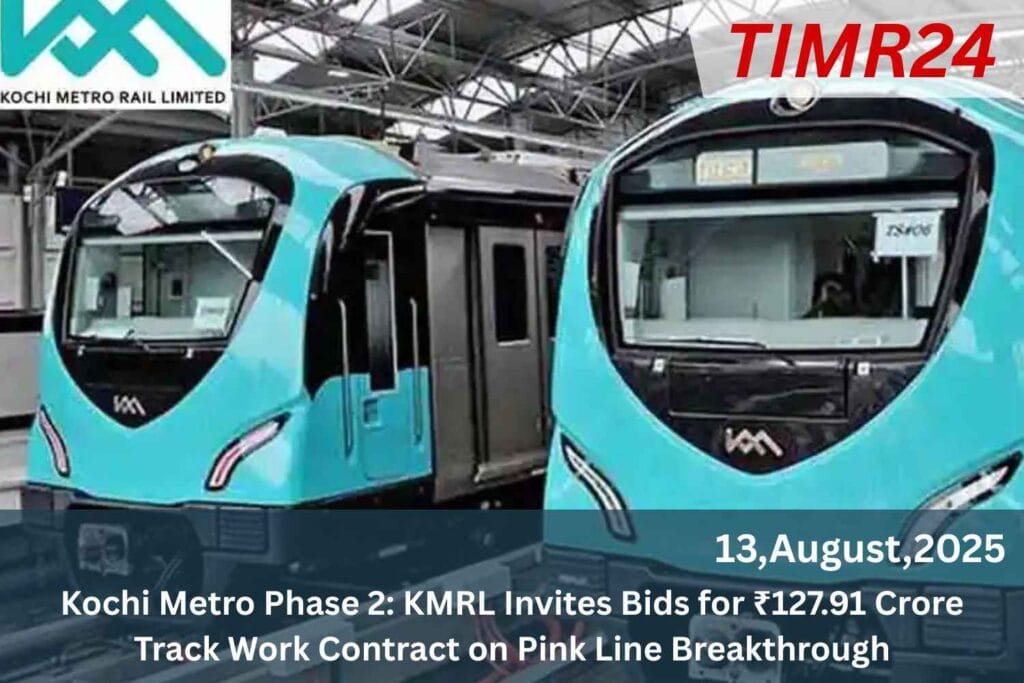
Kochi Metro Rail Limited has invited bids for a ₹127.91 crore track work contract for Line 2 (Pink Line) of Kochi Metro Phase 2. The 11.2 km corridor will run from JLN Stadium to Info park II, covering 11 stations. The scope of work includes design, supply, installation, testing, and commissioning of standard gauge ballast less track and connections. The project is being implemented in two phases, with completion expected by June 2026 and December 2026. The Kochi Metro Rail Limited (KMRL) has taken another significant step in expanding its network under Phase 2 by inviting bids for the ₹127.91 crore track work contract on the Pink Line.
This development is a key milestone in enhancing urban connectivity in Kerala’s largest city (Infopark) The Pink Line is designed to cater to the fast-growing Kakinada corridor, which houses several IT parks, including Info park. Once operational, this corridor will serve thousands of daily commuters, offering faster, cleaner, and more sustainable transit options. The Pink Line under Phase 2 will connect JLN Stadium to Info park, passing through strategic locations such as Kapoor, Polarization, and Kakinada. This route is crucial because Kakinada has emerged as the IT hub of Kochi, attracting a high daily inflow of professionals. The proposed track work contract covers supply, installation, and commissioning of ballasted and ballast less tracks for elevated sections.
Bidding Details Scope of Work & Timeline
The ₹127.91 crore tender is part of KMRL’s aggressive infrastructure expansion plan. The scope includes civil work preparation, procurement of track materials, installation, and integration with signalling systems. Contractors must have prior experience in large-scale metro projects to qualify. The deadline for bid submission and technical evaluation will follow the tender’s official schedule. This expansion will boost the local economy by improving access to Infopark, reducing traffic congestion on Seaport–Airport Road, and cutting travel times significantly. It will also enhance property values along the corridor and promote eco-friendly public transport adoption. By providing a reliable metro link to IT employees, Phase 2 is expected to reduce reliance on private vehicles, thereby decreasing fuel consumption and emissions (Mumbai Metro Line).
Like other urban transport projects, this contract may face challenges such as land acquisition delays, supply chain disruptions, and monsoon-related construction slowdowns. However, KMRL’s track record in delivering projects under tight deadlines gives confidence that such risks will be managed effectively. Once completed, the Pink Line will integrate seamlessly with the existing metro network, offering direct interchange at JLN Stadium station. It will also support feeder services, including electric buses and cycle-sharing systems, to improve last-mile connectivity. This expansion reflects KMRL’s long-term vision of creating a fully connected, sustainable urban transport ecosystem.
The ₹127.91 crore tender includes procurement of rails, track laying, and integration with metro signalling systems. Qualified bidders must have experience in large metro projects. The submission deadline and evaluation stages will follow the official tender schedule This project will reduce traffic congestion along the busy Seaport–Airport Road and improve accessibility to Infopark, one of Kerala’s largest IT employment hubs. Faster, reliable metro service will encourage more people to switch from private vehicles to public transport, cutting emissions and easing road.
q1. What is the latest update on Kochi Metro Phase 2?
KMRL has invited bids for ₹127.91 crore track work on the Pink Line.
q2. What is the route of the Pink Line?
The Pink Line connects JLN Stadium to Infopark via Kakinada.
q3. Which company will execute the work?
The contractor will be selected after the bidding process.
q4. When will the project be completed?
Completion timelines will be announced after awarding the contract.
q5. How will Phase 2 benefit commuters?
It will improve travel to Kochi’s IT hub and reduce road congestion.