








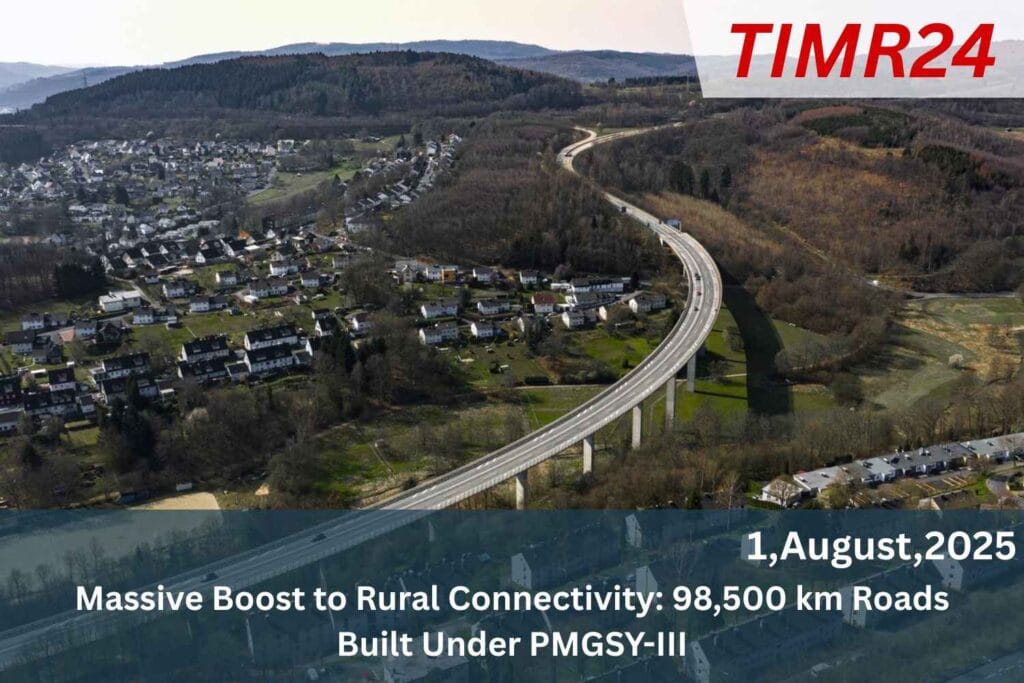
The Pradhan Mantri Gram Sadak Yojana-III (PMGSY-III) was launched in 2019 to upgrade 1.25 lakh km of rural roads, with 15,972 roads sanctioned as of July 2025, with 11,727 roads and 1,373 bridges completed across India, including Gujarat. India’s rural connectivity mission under the Pradhan Mantri Gram Sadak Yojana Phase III (PMGSY-III) has achieved a major milestone with the completion of over 98,500 kilometres of roads across the country. This transformative development not only enhances accessibility to remote regions but also catalyses rural growth by integrating villages into the national economy.
Infrastructure & Connectivity Goals
PMGSY-III, launched in 2019, aims to consolidate 1,25,000 km of rural roads by 2025, with a focus on connecting Gramin Agricultural Markets (GrAMs), schools, health centres, and higher-order rural hubs. The roads are constructed using advanced technologies and are aligned with climate-resilient standards, improving longevity and quality. These roads are vital for improving last-mile connectivity, particularly in tribal and backward districts. The program has also embraced innovations such as waste plastic roads and geo-textile solutions, enhancing sustainable construction practices. (RoadInfrastructure)
State-wise Progress
States such as Uttar Pradesh, Madhya Pradesh, Bihar, and Rajasthan have led the charge, collectively contributing to more than 60% of the completed roads. Notably, north-eastern and Himalayan states have also made significant headway despite difficult terrains. Special emphasis was placed on Left-Wing Extremism (LWE)-affected areas, with road construction serving both developmental and strategic objectives. The roads are proving to be lifelines, ensuring timely delivery of services and improving law enforcement accessibility. (Rural Roads infrastructure)
Employment & Economic Impact
Beyond infrastructure, PMGSY-III has been instrumental in generating rural employment. Through programs like Mahatma Gandhi National Employment Guarantee Act (MGNREGA), local workers are engaged in construction and maintenance, resulting in direct and indirect job creation. Additionally, the connectivity has stimulated local economies by facilitating smoother transport of agricultural produce to markets and reducing input costs for farmers. Women, too, have benefited significantly through increased access to education, health, and livelihood opportunities.
Technology Integration & Monitoring
The Ministry of Development has deployed real-time digital monitoring tools such as OMMAS (Online Management, Monitoring and Accounting System) and Meri Sadak App, allowing citizens to report road quality issues. Geo-tagging and drone monitoring have further streamlined transparency and accountability in the implementation process. These digital tools ensure efficient project tracking and grievance redressal, boosting public participation in rural governance.
Way Forward
As the program moves towards its 2025 target, the focus is now on timely project completion, strengthening maintenance mechanisms, and ensuring high-quality standards. Coordination between the central and state governments remains crucial, especially in funding, environmental clearances, and land acquisition. The success of PMGSY-III serves as a model for inclusive infrastructure growth and lays the foundation for Viksit Bharat@2047, aligning with the nation’s vision for a developed and self-reliant rural India.
q1. What is PMGSY-III?
PMGSY-III is the third phase of the Pradhan Mantri Gram Sadak Yojana, launched to upgrade rural roads and improve connectivity to key rural infrastructure like markets, schools, and health centres.
q2. How many kilometres of rural roads have been completed under PMGSY-III?
Over 98,500 kilometres of rural roads have been completed across India as of 2025 under PMGSY-III.
q3. Which states have seen the most progress under PMGSY-III?
Uttar Pradesh, Madhya Pradesh, Bihar, and Rajasthan are among the leading states in road completion under the scheme.
q4. What are the benefits of rural road development under PMGSY-III?
The scheme improves mobility, boosts local economies, enhances access to education and healthcare, and creates jobs in rural areas.
q5. How is the quality of road construction monitored under PMGSY-III?
The government uses tools like the OMMAS portal, geo-tagging, drones, and the Meri Sadak app for real-time monitoring and public feedback.